
Collect Lincoln
Guides
Reference material for collectors of Lincoln-era Americana, written from the pieces themselves rather than repeated from price lists.
World Coins
The 1908 Austria 100 Corona: Scarcity, Restrikes and What Sets the Price
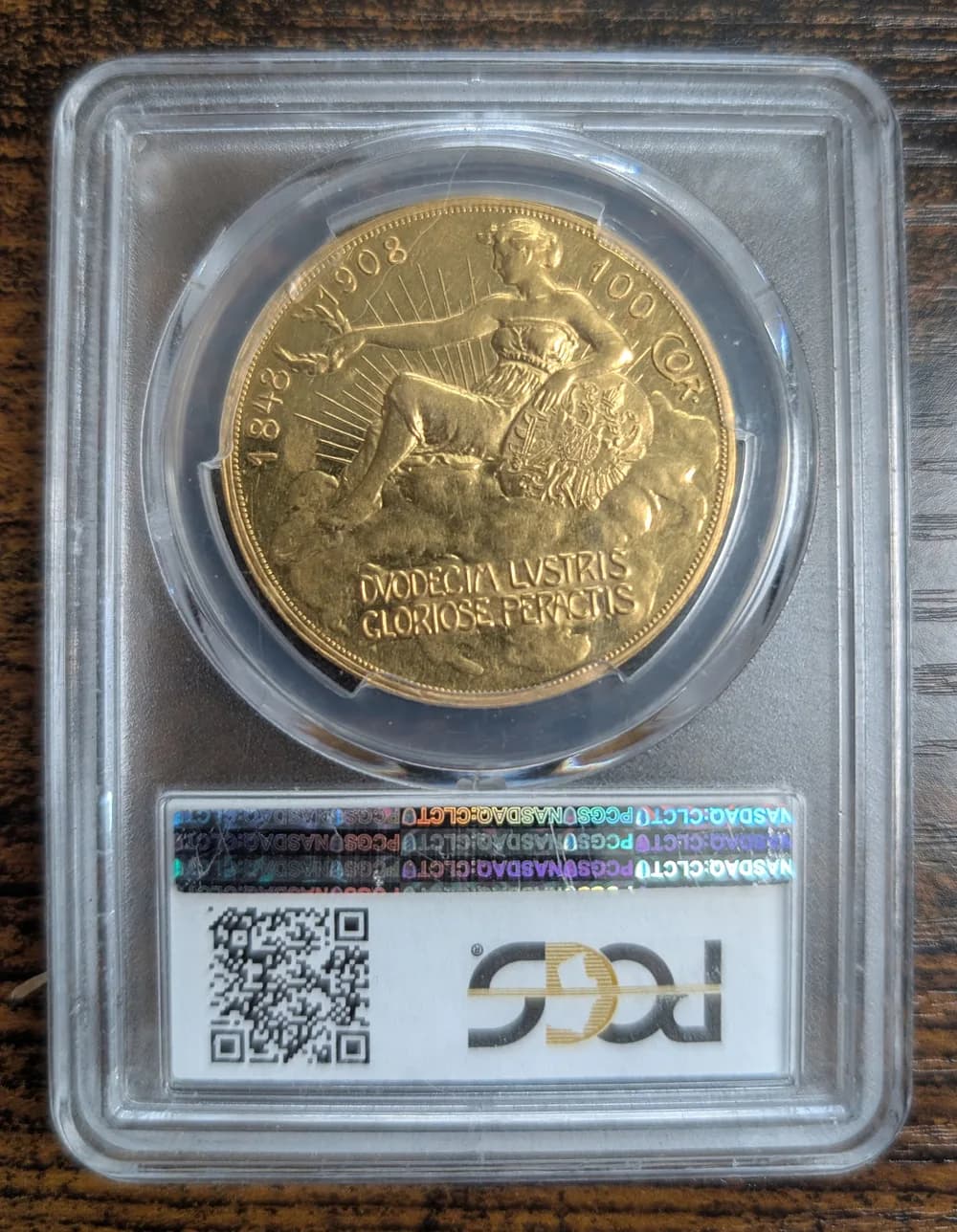
The 1908 Austrian 100 corona, known to collectors as Lady in the Clouds, is a one-year gold commemorative struck for the sixtieth anniversary of Franz Joseph I's reign. It carries 0.9802 troy ounces of fine gold and was designed by the Vienna medalist Rudolf Marschall. The decisive fact for a buyer is not the design but the striking: Austria restruck the type officially for the bullion market long afterwards, so most 1908-dated examples in existence were not made in 1908. Separating an original from a restrike is what determines the price, and it is not something a photograph can settle.
9 min read
Provenance
What 'Ex DeWitt' Means on a Campaign Medal
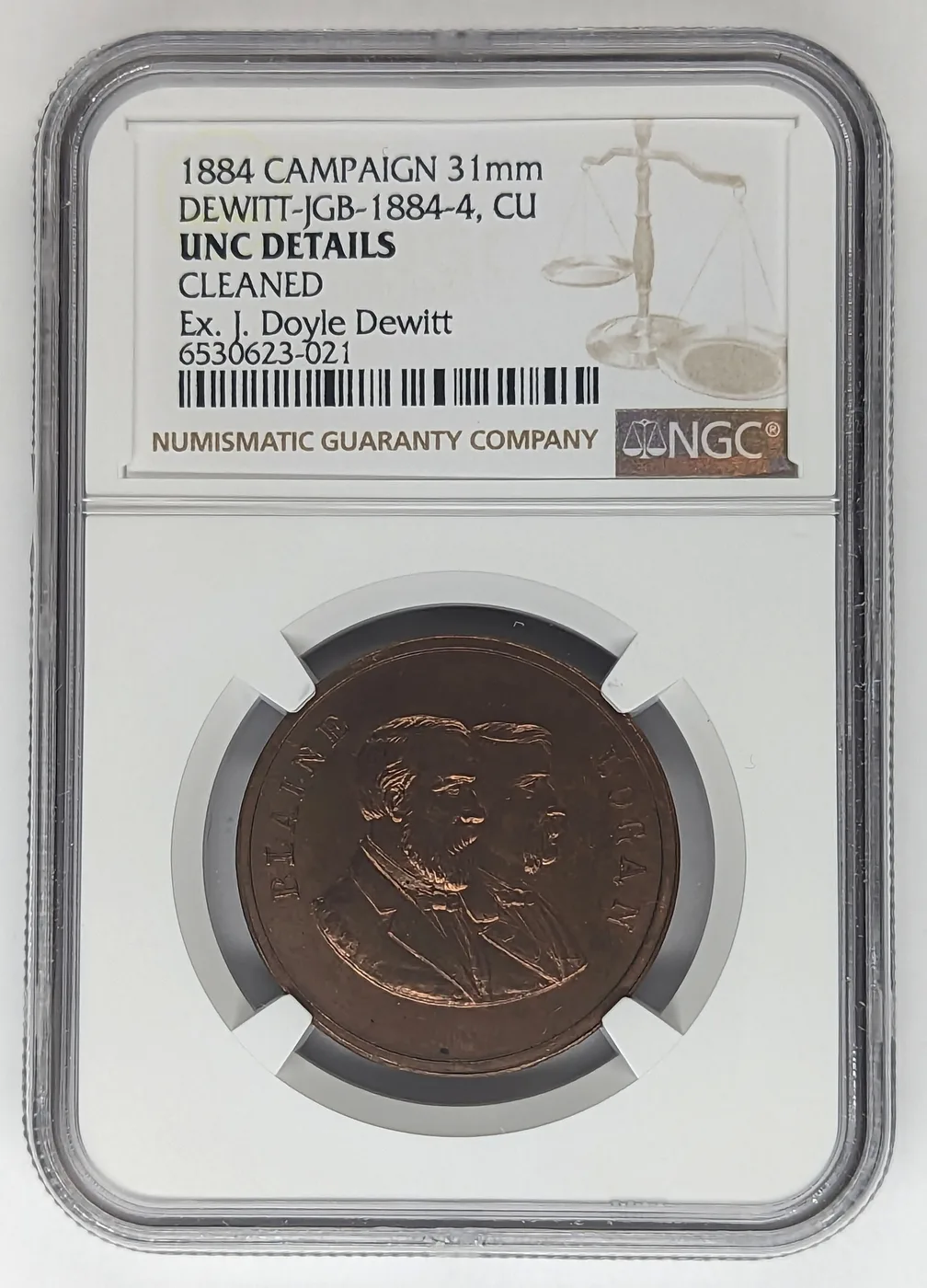
A line reading Ex. J. Doyle DeWitt on a certification label means the medal in the holder traces back to the collection of the man who wrote the catalog those medals are numbered by. DeWitt assembled more than 25,000 pieces of American political material, published the descriptive list collectors still cite, and left the collection to the University of Hartford. Understanding that line tells you where a piece has been, why its catalog number exists, and why it reached the market when it did.
7 min read
Collecting Basics
Why One Campaign Medal Exists in Several Metals
A campaign medal catalog number describes a design, not an object. The same dies were regularly used to strike the design in brass, copper, white metal and gilt, and each of those is a separate collectible piece with its own scarcity, its own grade and its own price. Reading a catalog number without reading the metal alongside it is the most common way collectors buy the wrong medal.
7 min read
Autographs
Collecting John F. Kennedy Autographs: Letters, Cut Signatures and the Secretarial Problem
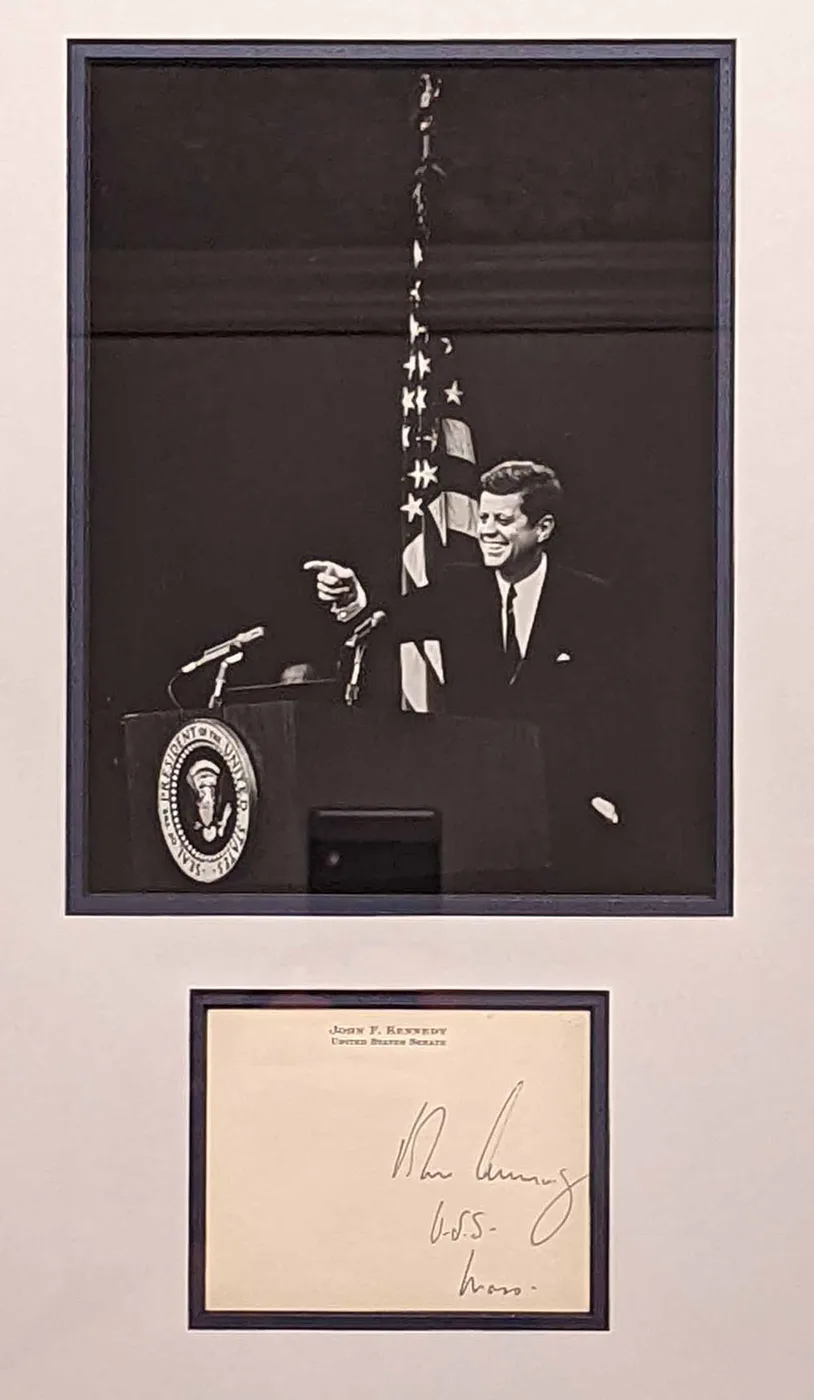
A John F. Kennedy autograph is one of the most forged and most secretarially signed of any twentieth-century American figure, which makes third-party authentication less a nicety than a precondition of the purchase. The material divides sharply by form: a handwritten letter in his own hand sits at the top, a typed letter signed as President below it, and a cut signature or signed card below that. Understanding why those tiers exist, and why a White House-era signature is harder to trust than a Senate-era one, is most of what separates a good buy from an expensive one.
11 min read
Autographs
Collecting Franklin D. Roosevelt Autographs: Twelve Years, Four Terms and a Signature That Aged
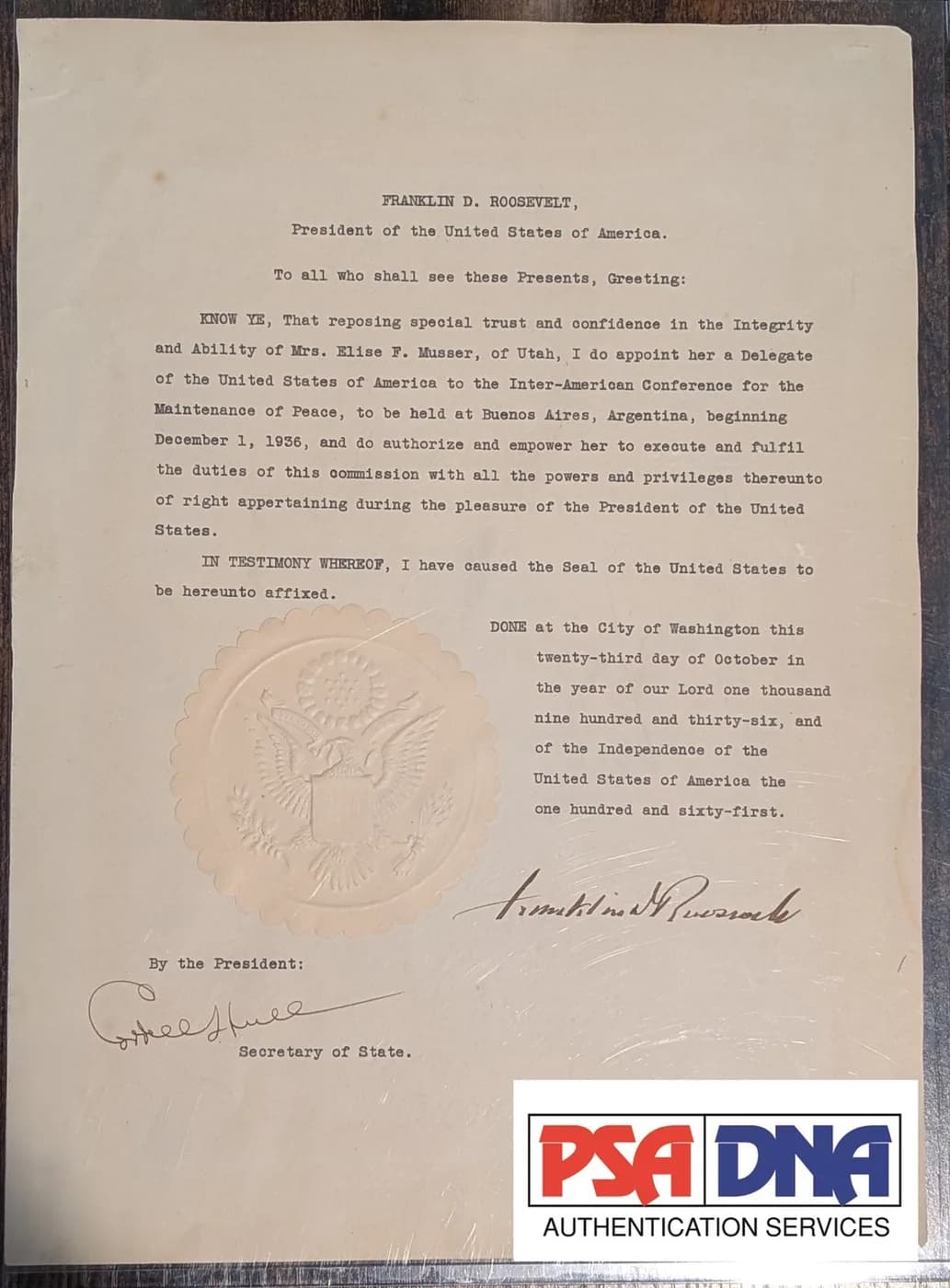
Franklin D. Roosevelt signed more official paper than any president before him, twelve years in office across four elected terms, spanning the Depression and the Second World War. That volume cuts both ways for collectors: genuine Roosevelt signatures are more available and more affordable than Kennedy's, but the same volume forced heavy use of secretarial signers and mechanical aids. His hand also visibly deteriorated in the final years as his health failed, which is both an authentication tool and a dating tool if you know how to read it.
10 min read
Grading
What a 'Details' Grade Means on a Campaign Medal
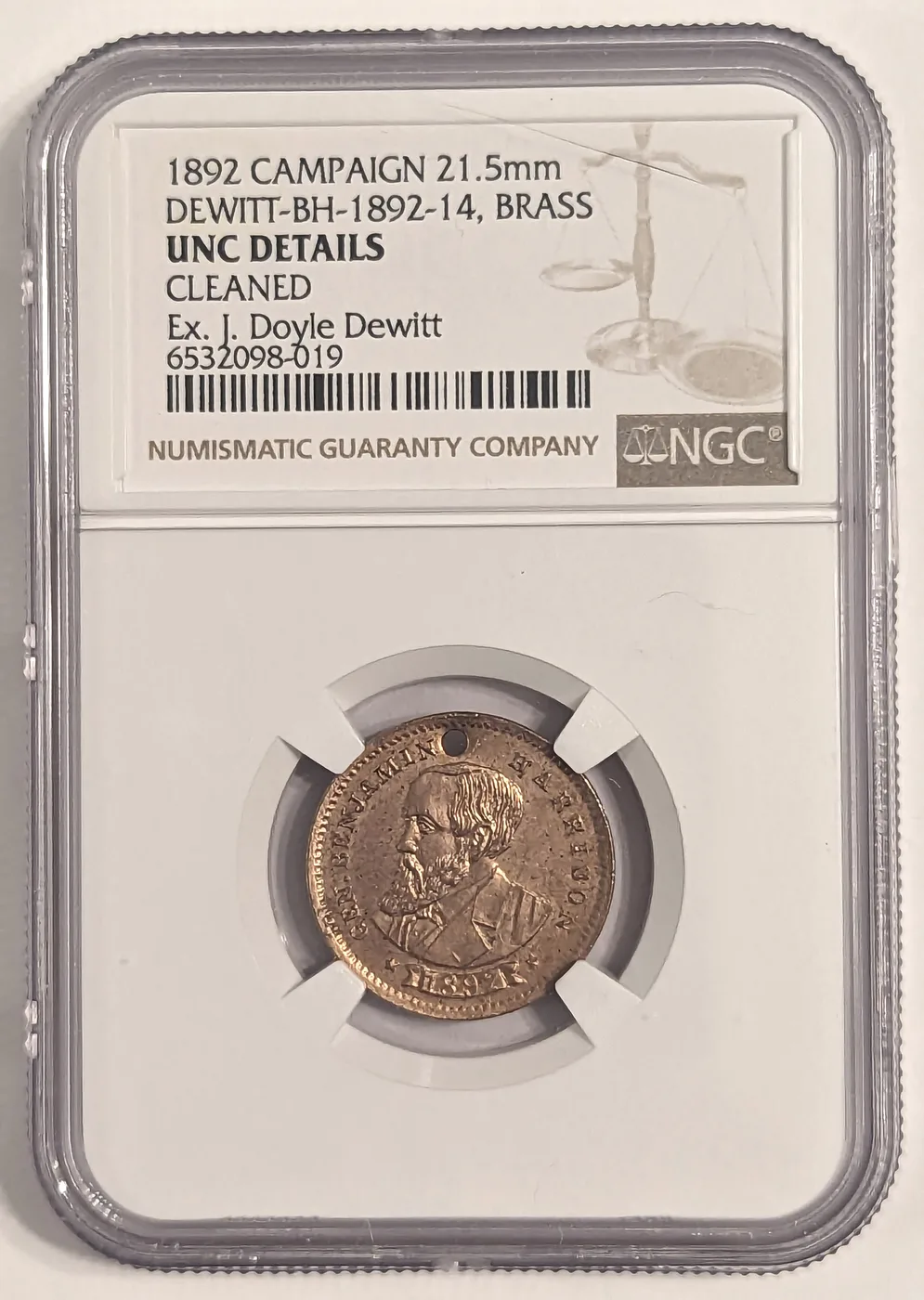
A holder reading UNC Details or XF Details is telling you two separate things: the piece is genuine, and something about it prevented a numeric grade. Cleaning is the most common cause, followed by damage such as bending, mounting or corrosion. The label states the problem plainly, and on scarce campaign material a Details piece is often the only way to own a design at all.
7 min read
Autographs
Collecting Theodore Roosevelt Autographs: The Most Written President
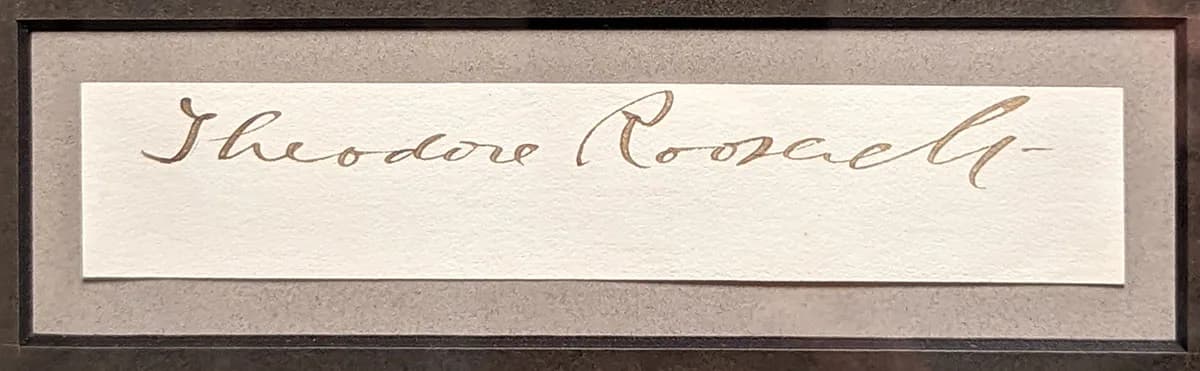
Theodore Roosevelt wrote more than any other American president, around forty books and an estimated correspondence running to six figures of letters, which makes his autograph unusually obtainable for a figure of his stature. He signed Theodore Roosevelt or T. Roosevelt, never Teddy, a nickname he disliked and never used himself. That single fact disqualifies a certain class of fake immediately. The collecting decisions that matter are period, form, and whether a piece connects to the presidency, the Bull Moose campaign of 1912, or the writing life that ran alongside both.
10 min read
Tokens & Medalets
The 1860 'We All Have Our Hobbies' Witch Medal: Satire in Struck Metal
A witch riding a broomstick, the legend WE ALL HAVE OUR HOBBIES, and an 1860 date: this is political satire compressed into a piece of struck silver the size of a coin. It belongs to a nineteenth-century American tradition of satirical medalets that mocked candidates, causes and cranks in the same year that the country elected Abraham Lincoln and began to come apart. Cataloged under a Miller number rather than a DeWitt one, it sits in the store-card and token literature rather than the political-medal literature, a distinction that matters when you go looking for comparables.
7 min read
Campaign Medals
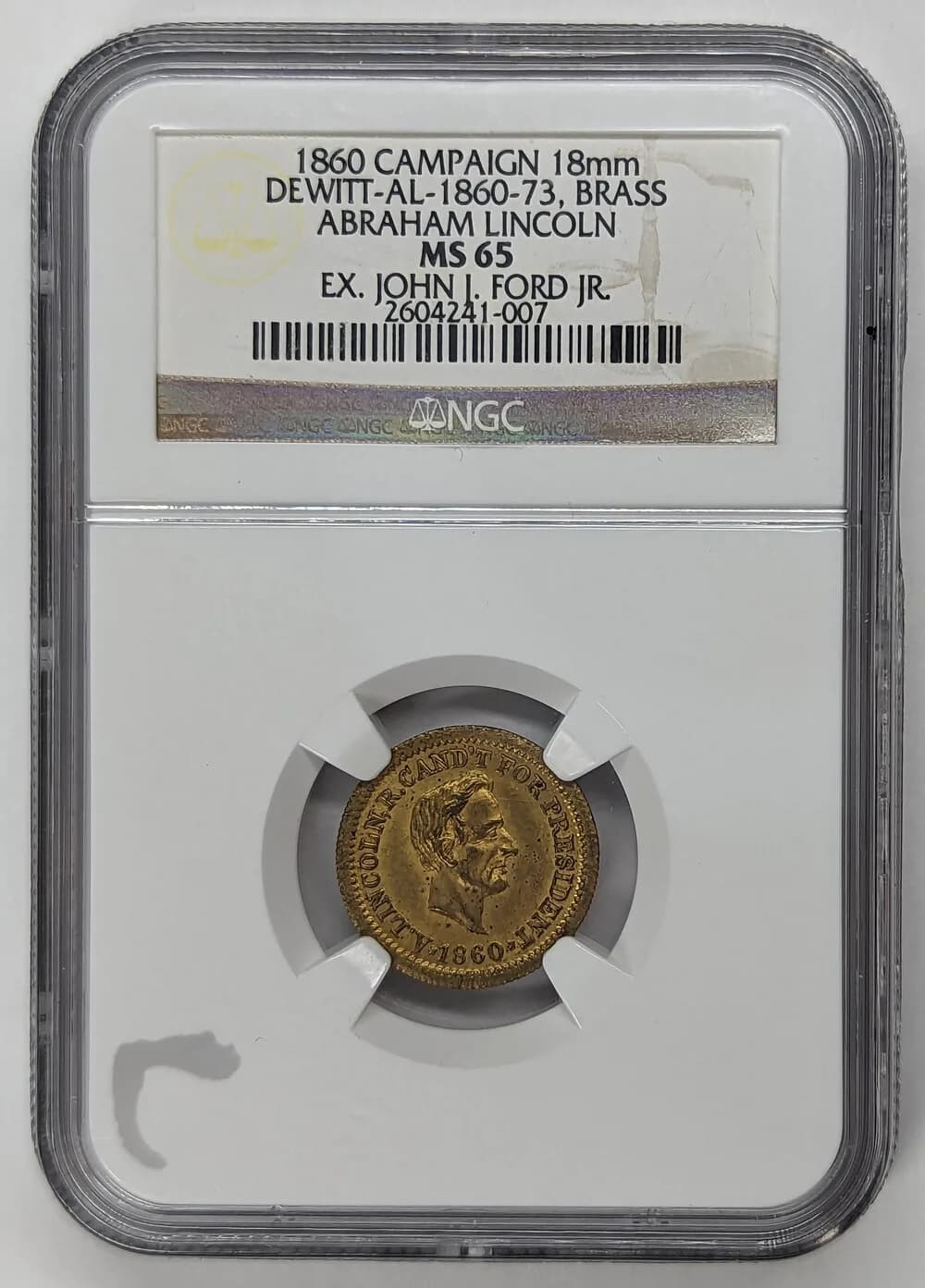
The 1860 Election in Campaign Medals: Lincoln, Douglas and a Country Splitting
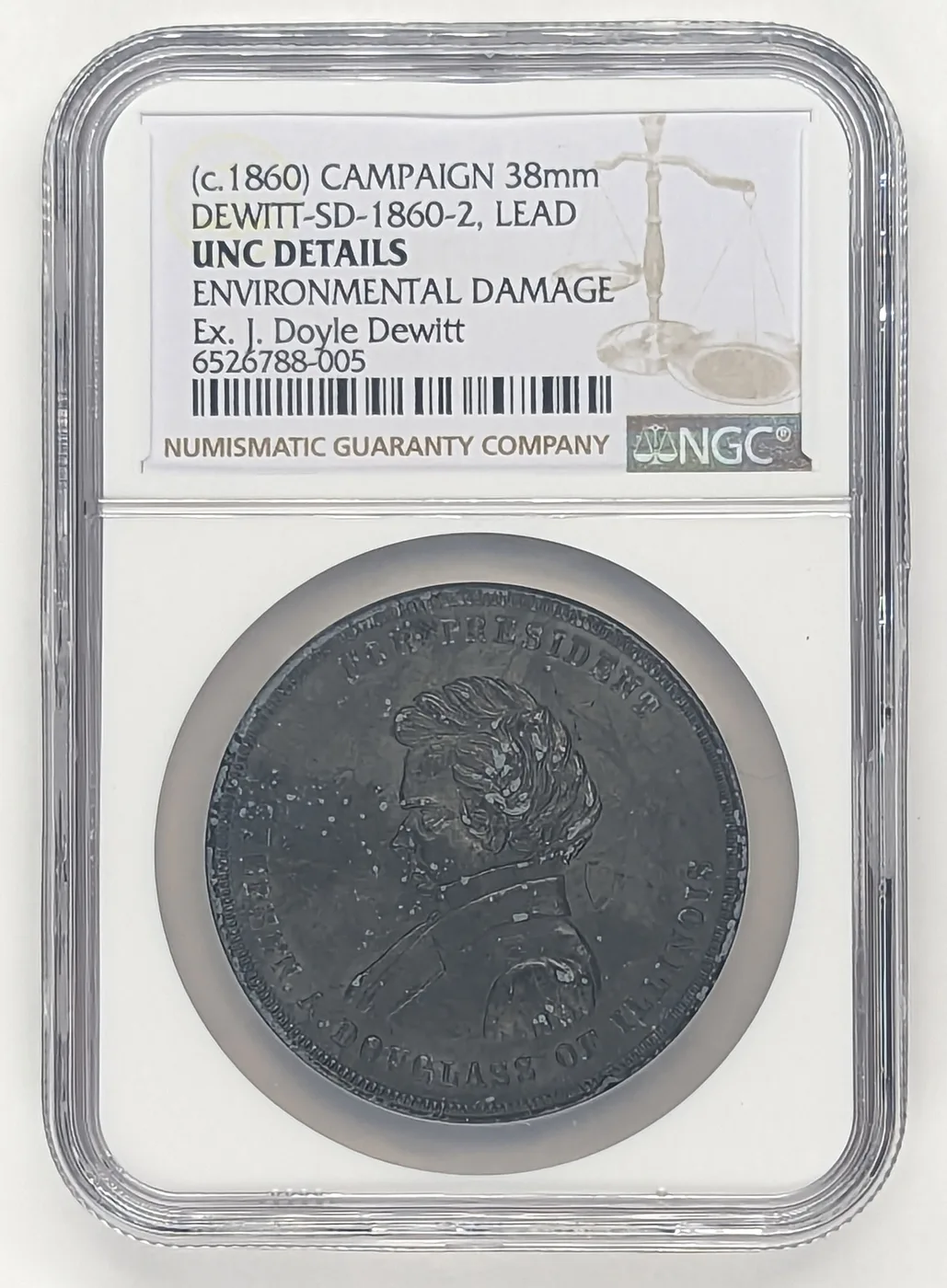
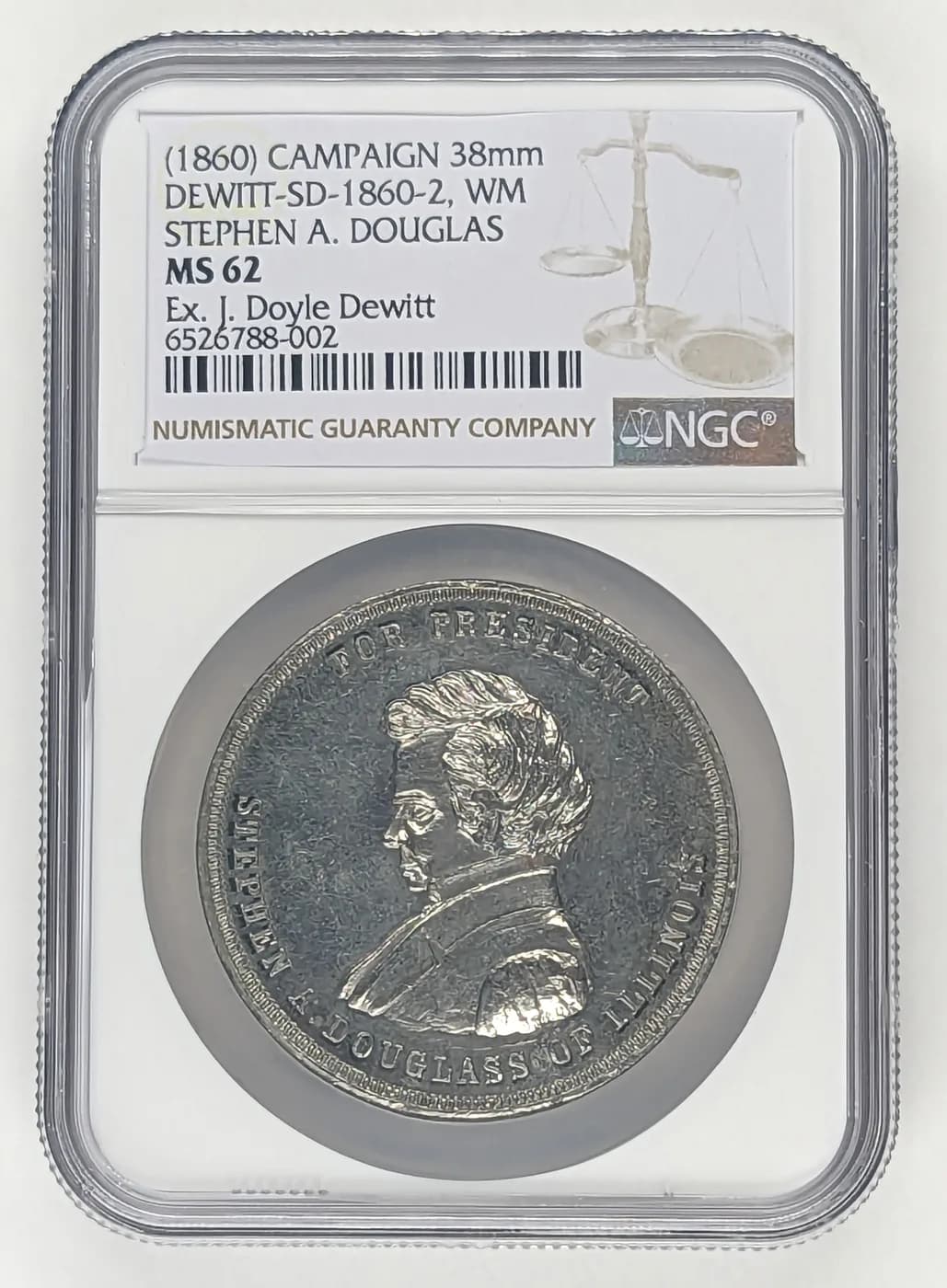
The 1860 presidential election produced the richest body of campaign medals in American history, because four tickets were competing at once and the stakes were the survival of the union. Lincoln's medalets, cataloged under DeWitt AL 1860 numbers, and Douglas's under SD 1860, are the two northern series a collector is most likely to encounter. They were struck in white metal, brass, copper and occasionally lead, worn on coats and carried in pockets, and they are the closest thing surviving to the physical texture of that campaign.
8 min read
Campaign Medals
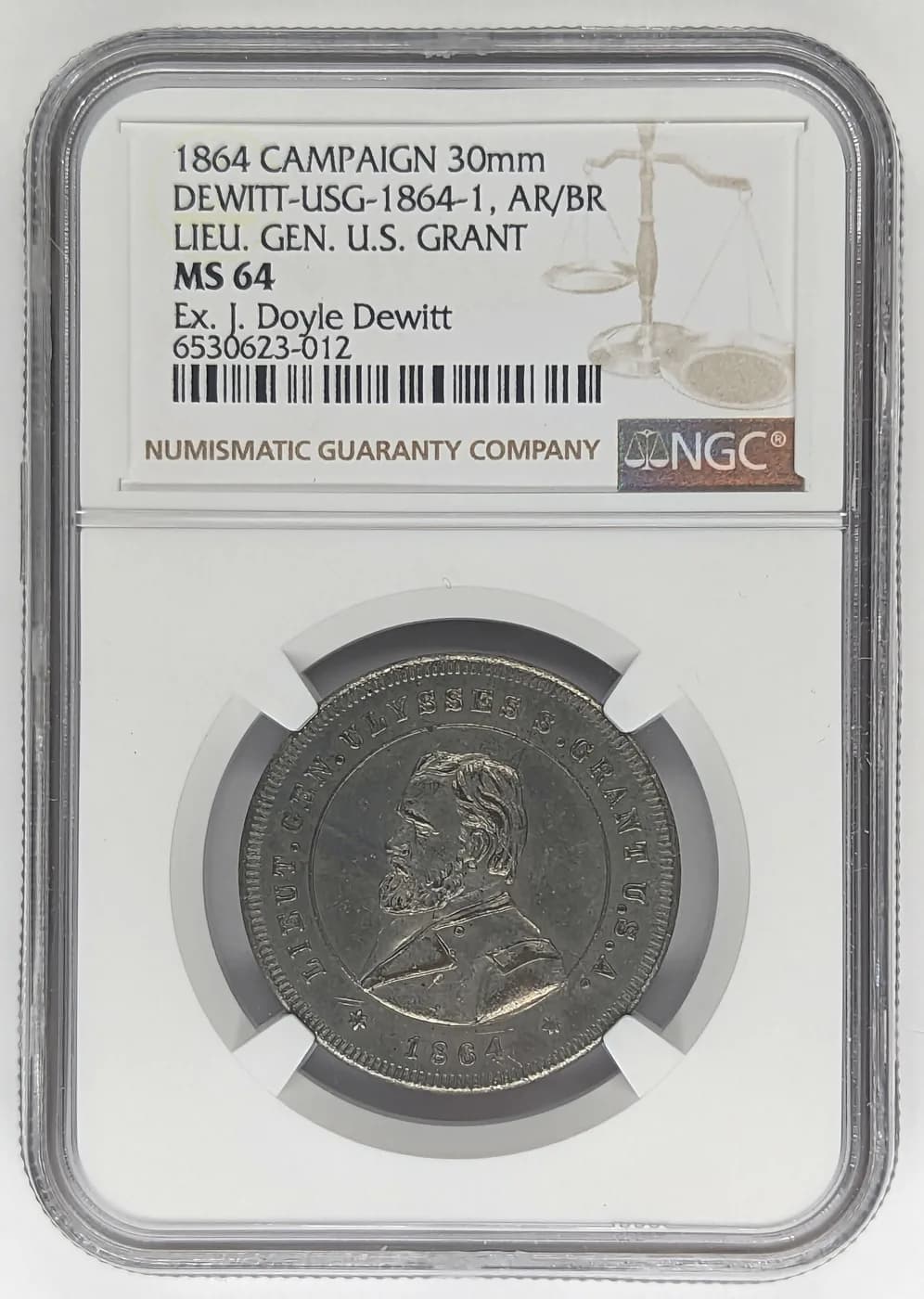
Ulysses S. Grant Campaign Medals: From General to Candidate, 1864 to 1868
Grant is unusual among nineteenth-century candidates because medals bearing his portrait were being struck while he was still a serving general, before he was a candidate for anything. That gives the DeWitt USG series an unusual shape: 1864 pieces that are as much wartime commemoratives as campaign advertising, and 1868 pieces produced for the presidential run that followed. Understanding which is which changes how you read the cataloge and what you should expect to pay.
7 min read
Campaign Medals
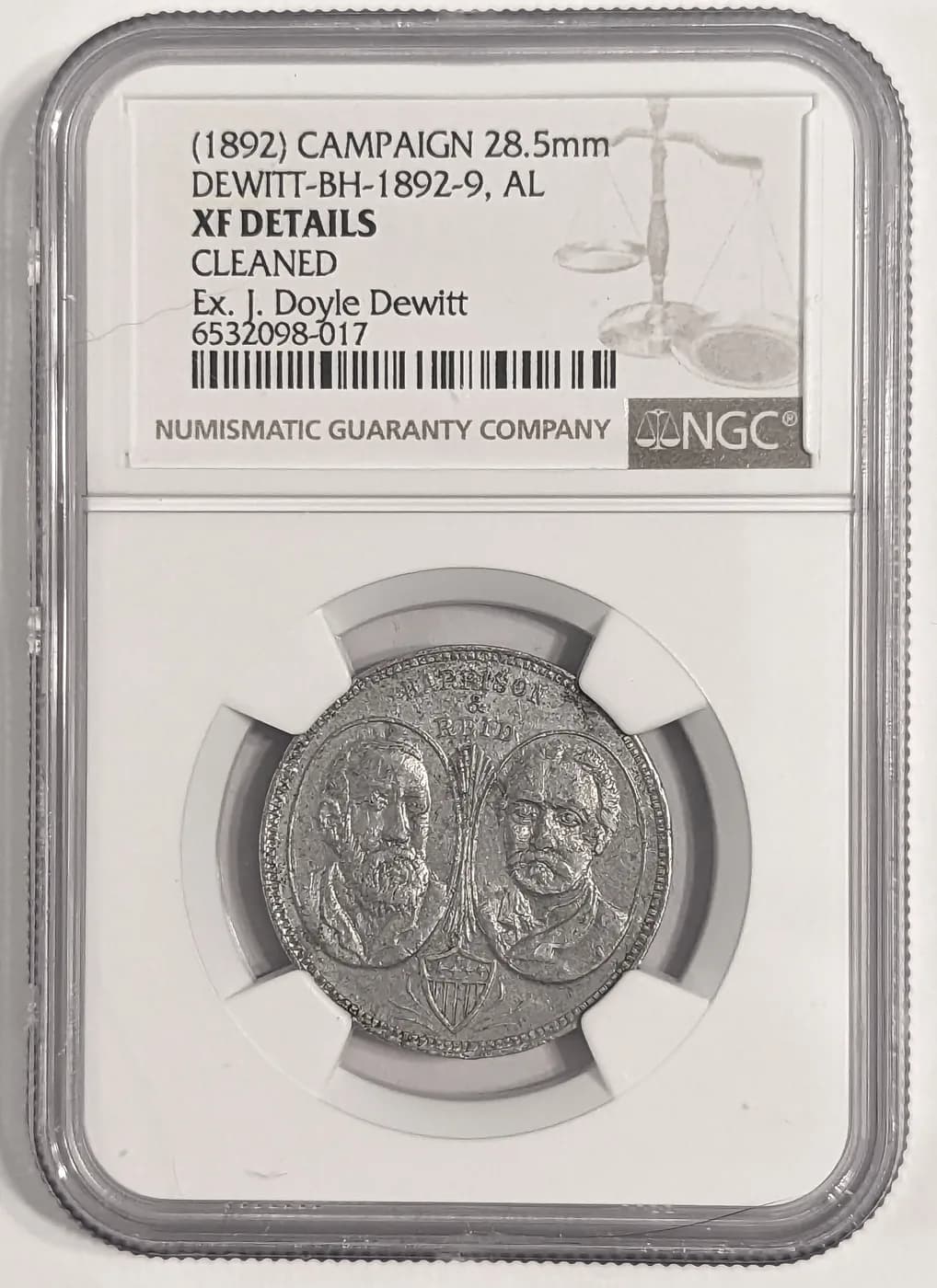
Gilded Age Campaign Medals: Cleveland, Blaine and Harrison, 1884 to 1892
Three elections in eight years, two of them decided by margins thin enough to turn on a single state, and one man who won, lost and won again. The campaigns of 1884, 1888 and 1892 produced the deepest run of campaign medals in the DeWitt cataloge, struck in more metals and more design variations than any earlier period. For a collector this is the sweet spot of nineteenth-century political Americana: abundant enough to build a real collection, varied enough that the variations mean something.
8 min read
Exposition Medals
Collecting American World's Fair Medals and Tokens: A Field Guide
Between 1876 and 1939 the United States staged a series of world's fairs that each produced their own currency of souvenirs, official award medals, privately struck so-called dollars, exhibitor tokens, ribbons and badges. Collecting them means learning two cataloges, Hibler and Kappen for the dollar-sized pieces and the exposition literature for everything else, and understanding that an official medal and a concessionaire's token are very different objects that sat side by side on the same fairground.
11 min read
Exposition Medals
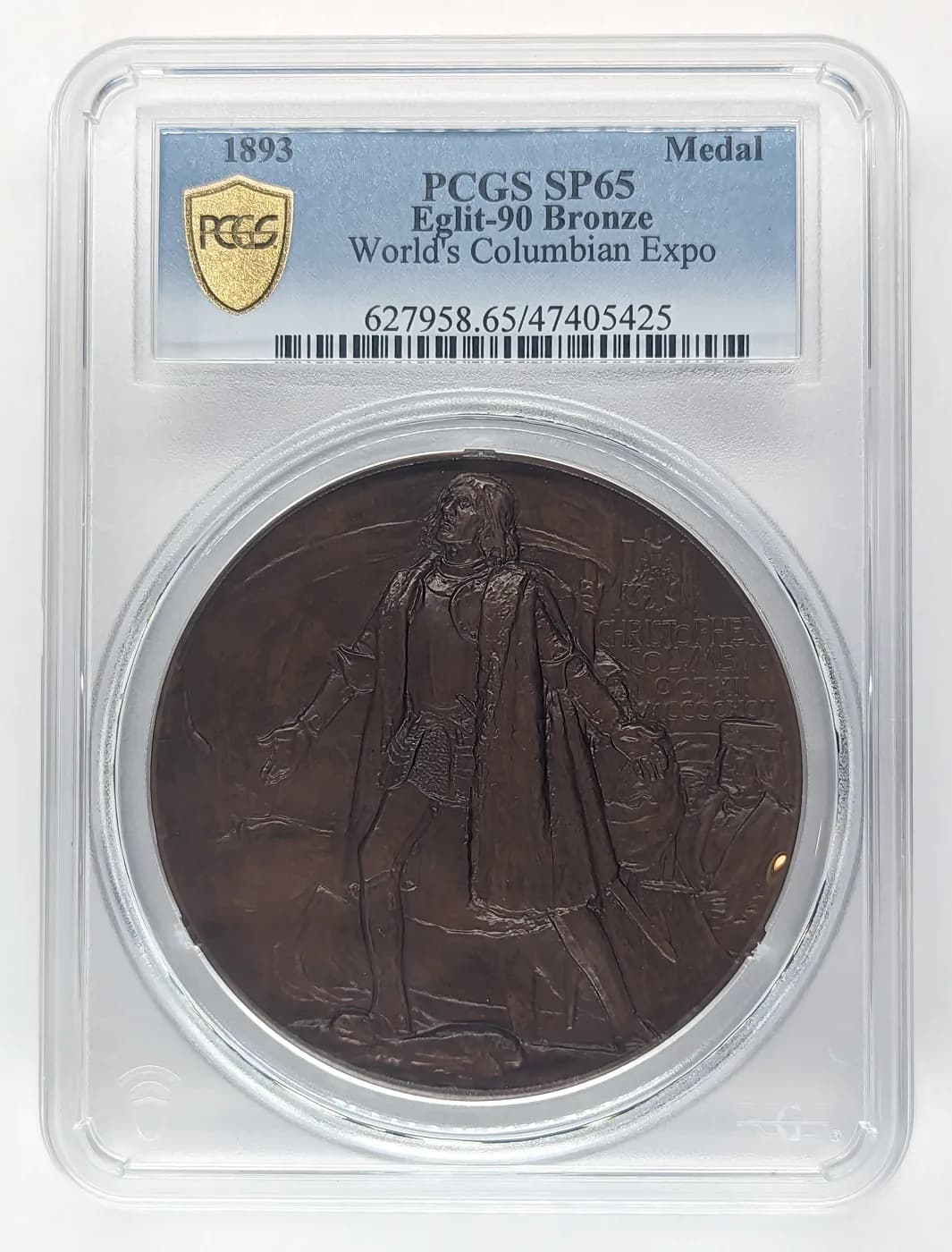
The Saint-Gaudens Columbian Exposition Medal: The Award That Had to Be Redesigned
Augustus Saint-Gaudens designed the official award medal for the 1893 World's Columbian Exposition, and his original reverse, featuring a nude youth, was rejected after objections on grounds of propriety. The replacement reverse was cut by Charles E. Barber, Chief Engraver of the US Mint. The result is the most artistically significant American medal of the nineteenth century and a documented case of public taste overruling a major sculptor. Understanding which reverse you are looking at is the first thing to establish on any example.
10 min read
Exposition Medals
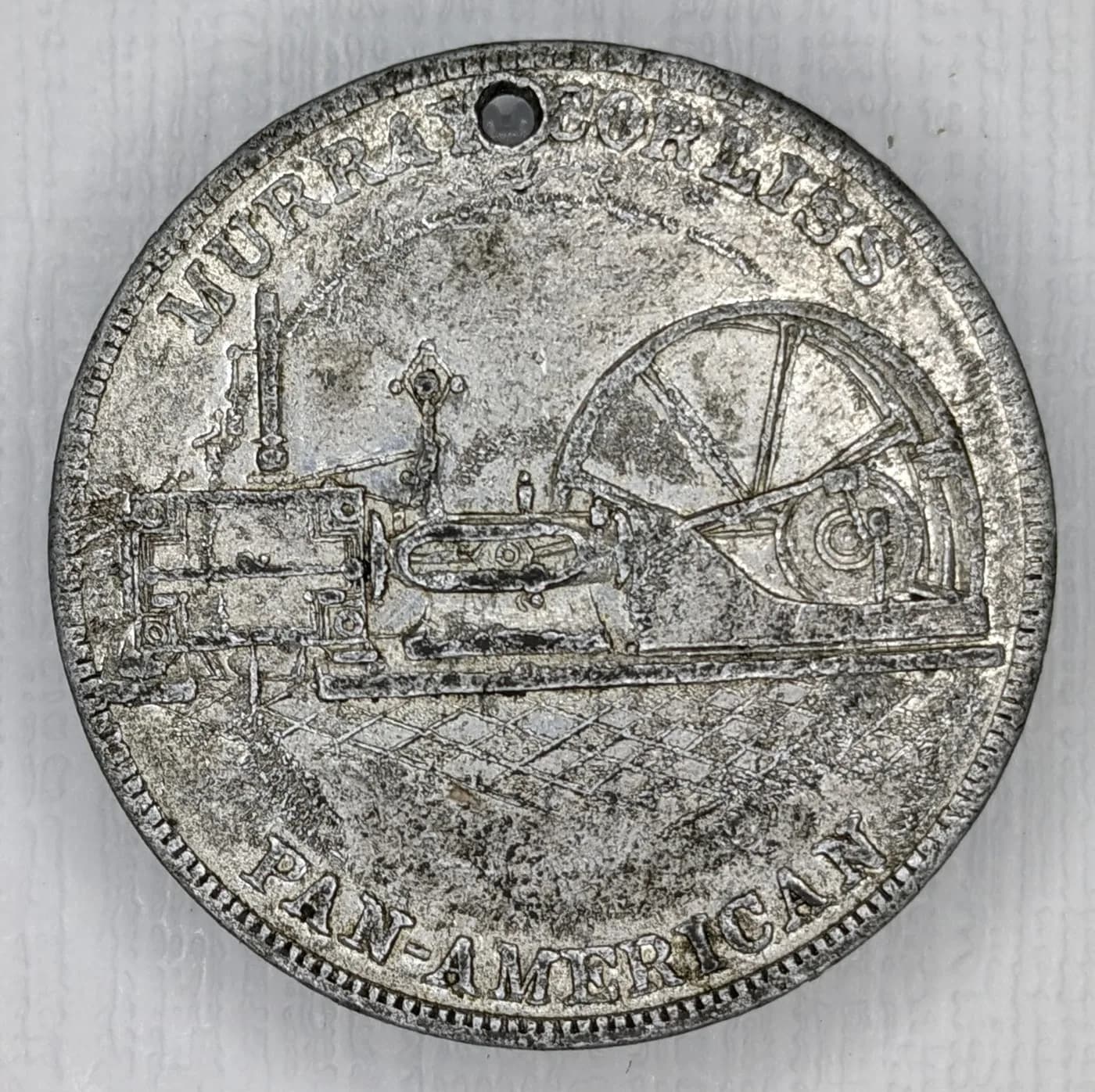
1901 Pan-American Exposition Collectibles: The Fair Where a President Was Shot
The Pan-American Exposition opened in Buffalo in May 1901 as a celebration of electricity and hemispheric trade. On 6 September, William McKinley was shot at the fair's Temple of Music; he died eight days later, and Theodore Roosevelt was sworn in as president in a Buffalo house. Every souvenir struck for that exposition was therefore made for one event and is now collected for another. It is the only American world's fair whose material carries that particular double meaning.
10 min read
Exposition Medals
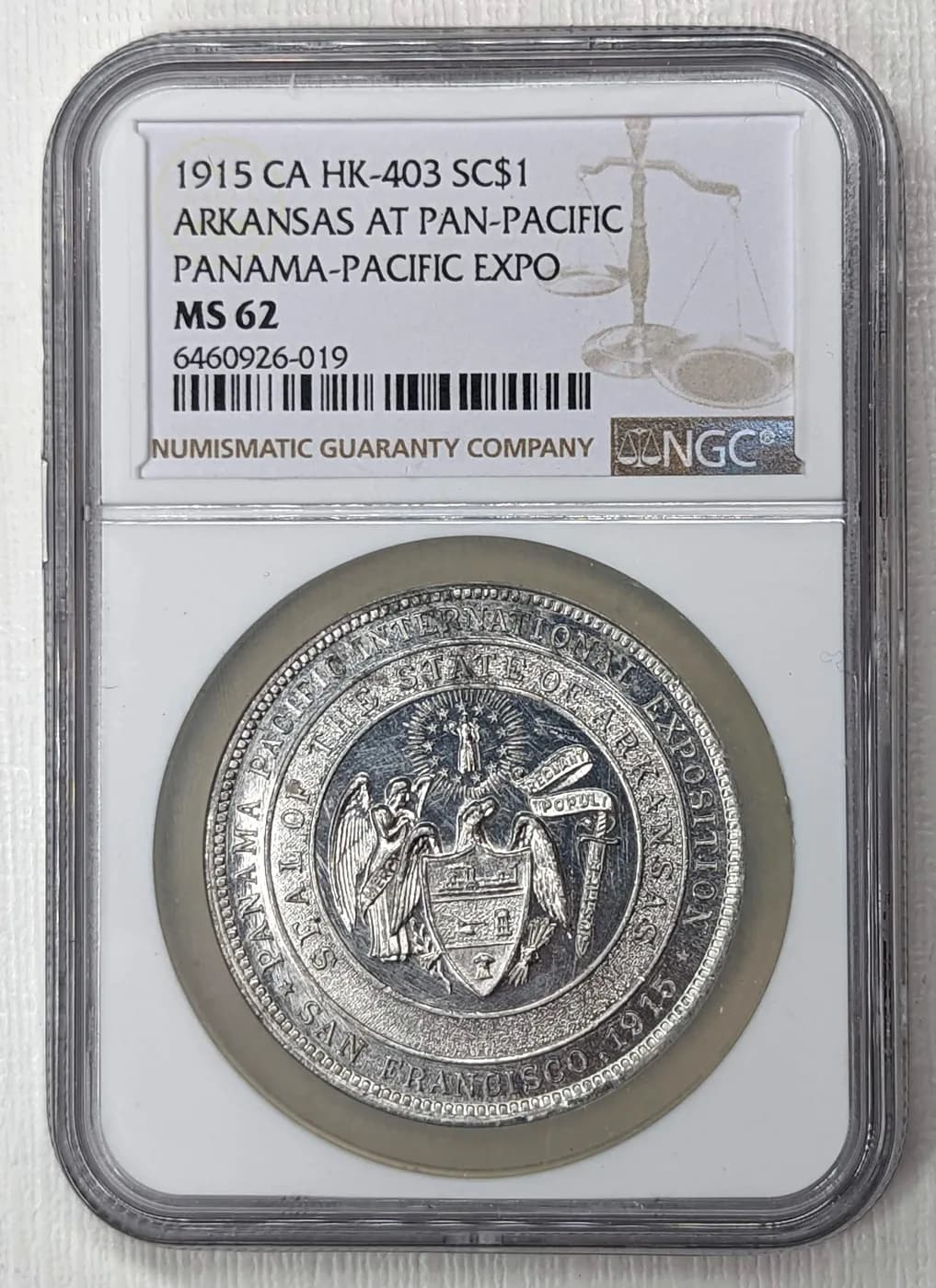
1915 Panama-Pacific So-Called Dollars: Reading HK Numbers and Rarity Ratings
The Panama-Pacific International Exposition opened in San Francisco in 1915 to mark the completion of the Panama Canal, and unofficially to show the world that the city had rebuilt after the 1906 earthquake. It produced the deepest and best-cataloged run of so-called dollars of any American fair, including a series of state-sponsored issues. For collectors it is the ideal field in which to learn HK numbering, rarity ratings and the way metal multiplies a single design into several distinct collectibles.
10 min read
Exposition Medals
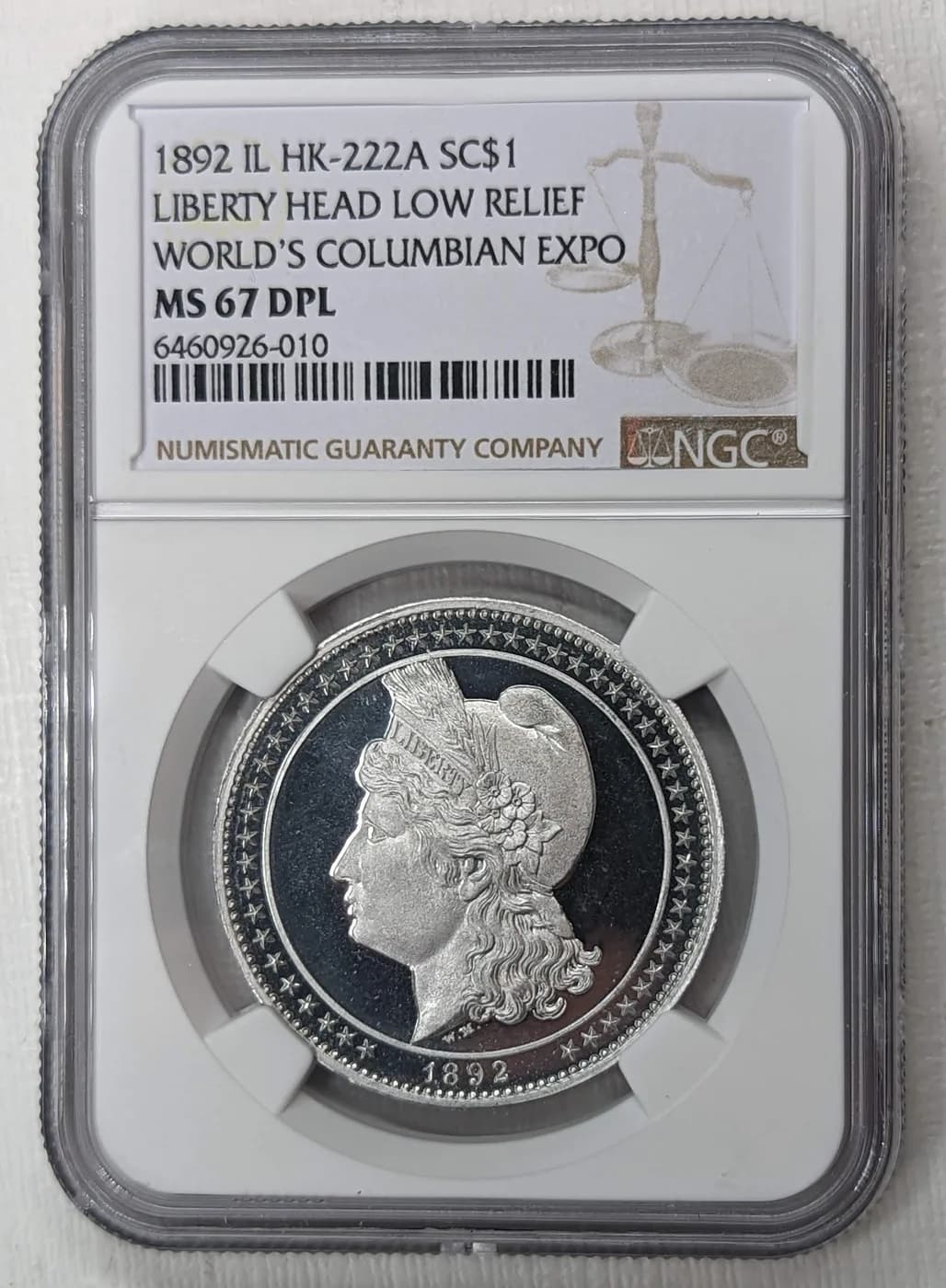
Collecting the World's Columbian Exposition: HK Numbers, Eglit Numbers and What They Mean
Two catalogs cover the medals of the 1893 Chicago fair, and a single piece can carry a number in both. What HK and Eglit each measure, why a missing HK number is usually a ruler rather than a warning, and why prooflike surfaces move the price here more than a grade point does.
11 min read
Exposition Medals
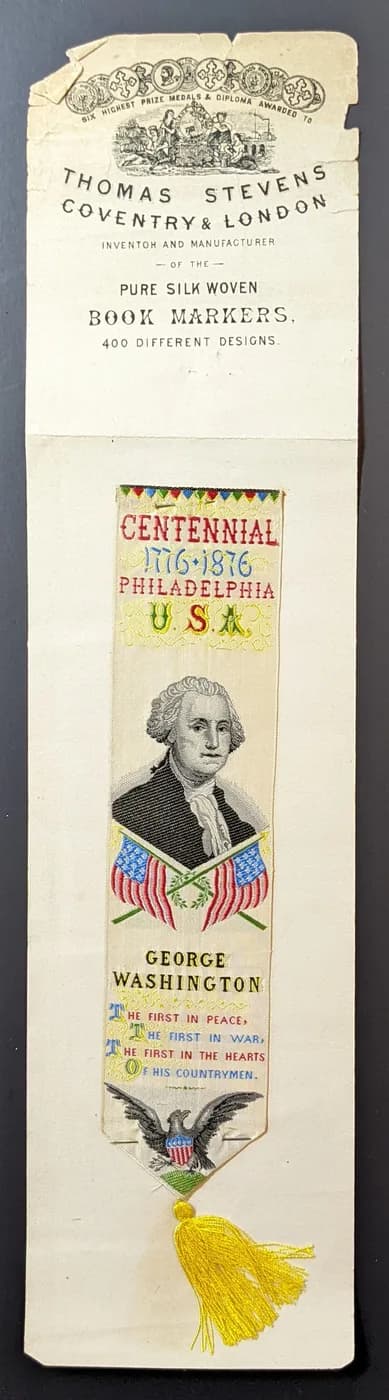
Collecting the 1876 Philadelphia Centennial: Woven Silk, Struck Metal and America's First World's Fair
The Centennial Exhibition gave America its first world's fair and its first mass souvenir trade, in two materials that are collected in completely different ways. What a Stevengraph is, why Washington medals carry two competing numbers, and how to judge condition on a woven silk ribbon.
11 min read