
Campaign Medals
Gilded Age Campaign Medals: Cleveland, Blaine and Harrison, 1884 to 1892
8 min read
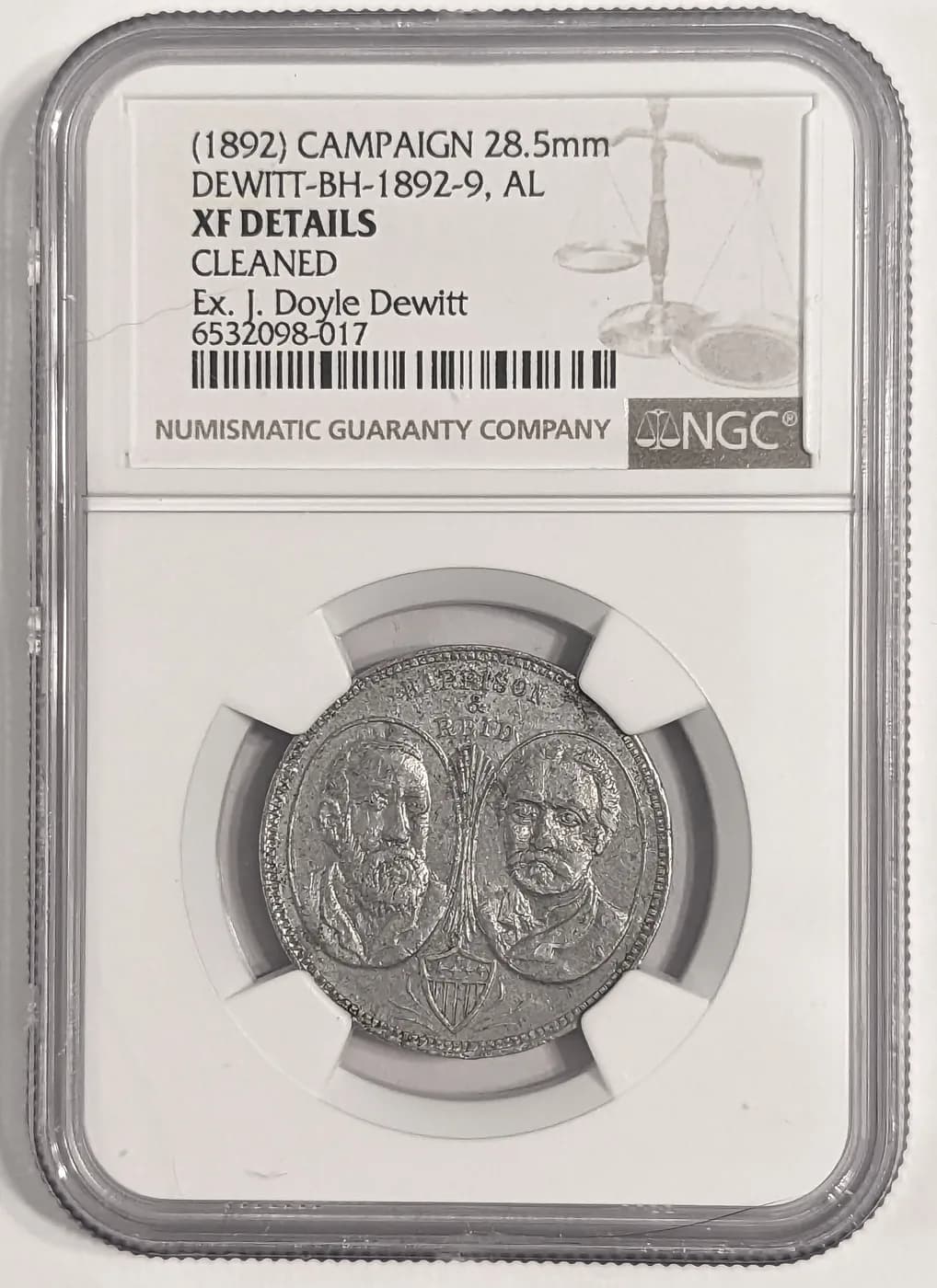
Three elections in eight years, two of them decided by margins thin enough to turn on a single state, and one man who won, lost and won again. The campaigns of 1884, 1888 and 1892 produced the deepest run of campaign medals in the DeWitt cataloge, struck in more metals and more design variations than any earlier period. For a collector this is the sweet spot of nineteenth-century political Americana: abundant enough to build a real collection, varied enough that the variations mean something.
What Happened Across These Three Elections?
1884 pitted Grover Cleveland, the Democratic governor of New York, against James G. Blaine, the Republican former Speaker and Secretary of State. It was a famously vicious campaign fought largely on personal character, and Cleveland won narrowly to become the first Democratic president since before the Civil War.
1888 saw Cleveland lose to Benjamin Harrison despite winning the popular vote, one of the small number of American elections decided against the popular winner.
1892 was the rematch, and Cleveland won it, becoming the only president in American history to serve two non-consecutive terms.
That sequence gives the collector something rare: three consecutive contests featuring overlapping figures, so a run of medals tells a continuous story rather than three disconnected ones.
Why Are There So Many Metals in This Period?
Because manufacturing capacity expanded and novelty sold.
By the 1880s the American die-sinking trade could produce large quantities cheaply, and campaign committees ordered the same design across multiple metals to hit different price points and different uses, a gilt piece for presentation, brass for general distribution, white metal for volume.
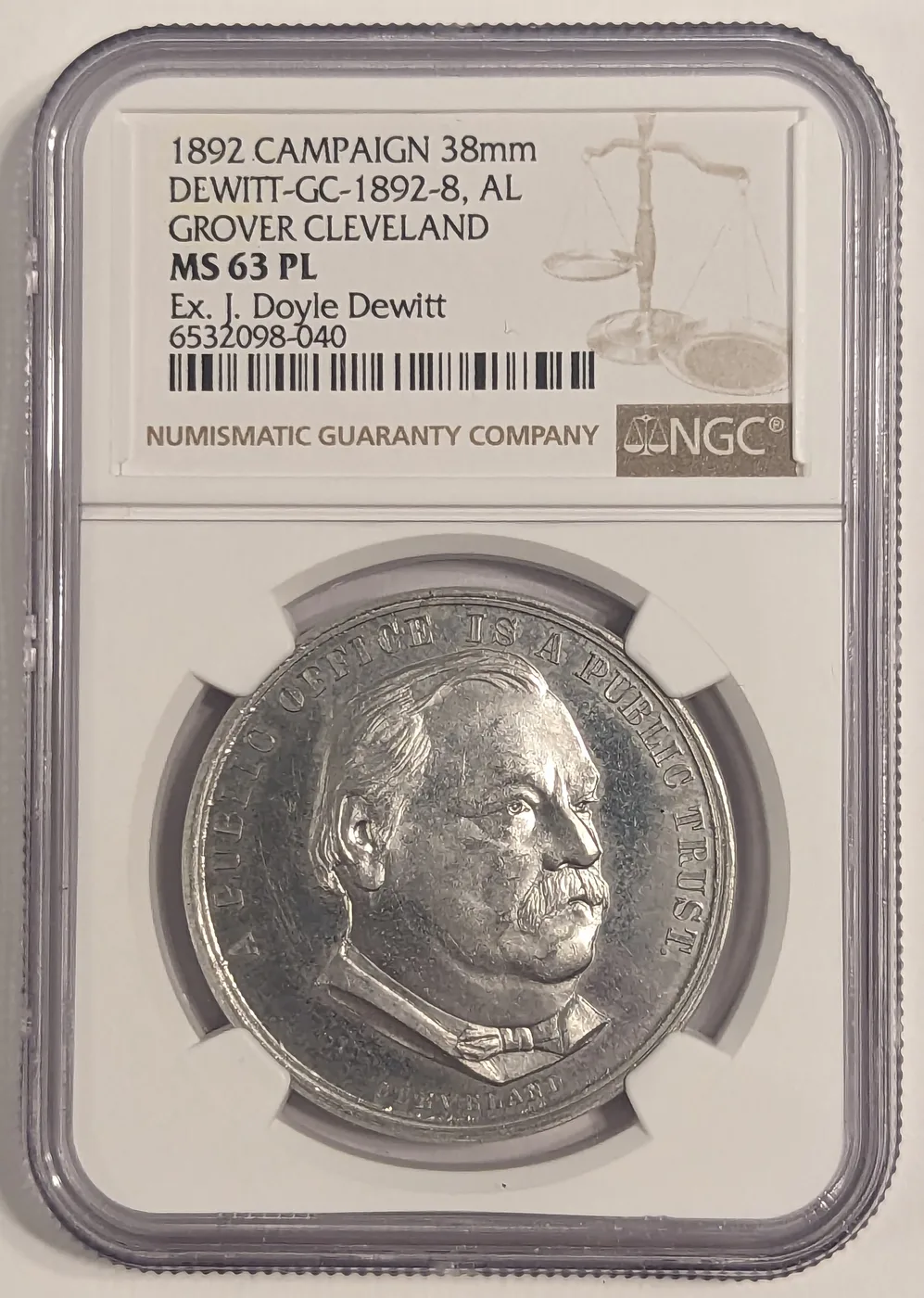
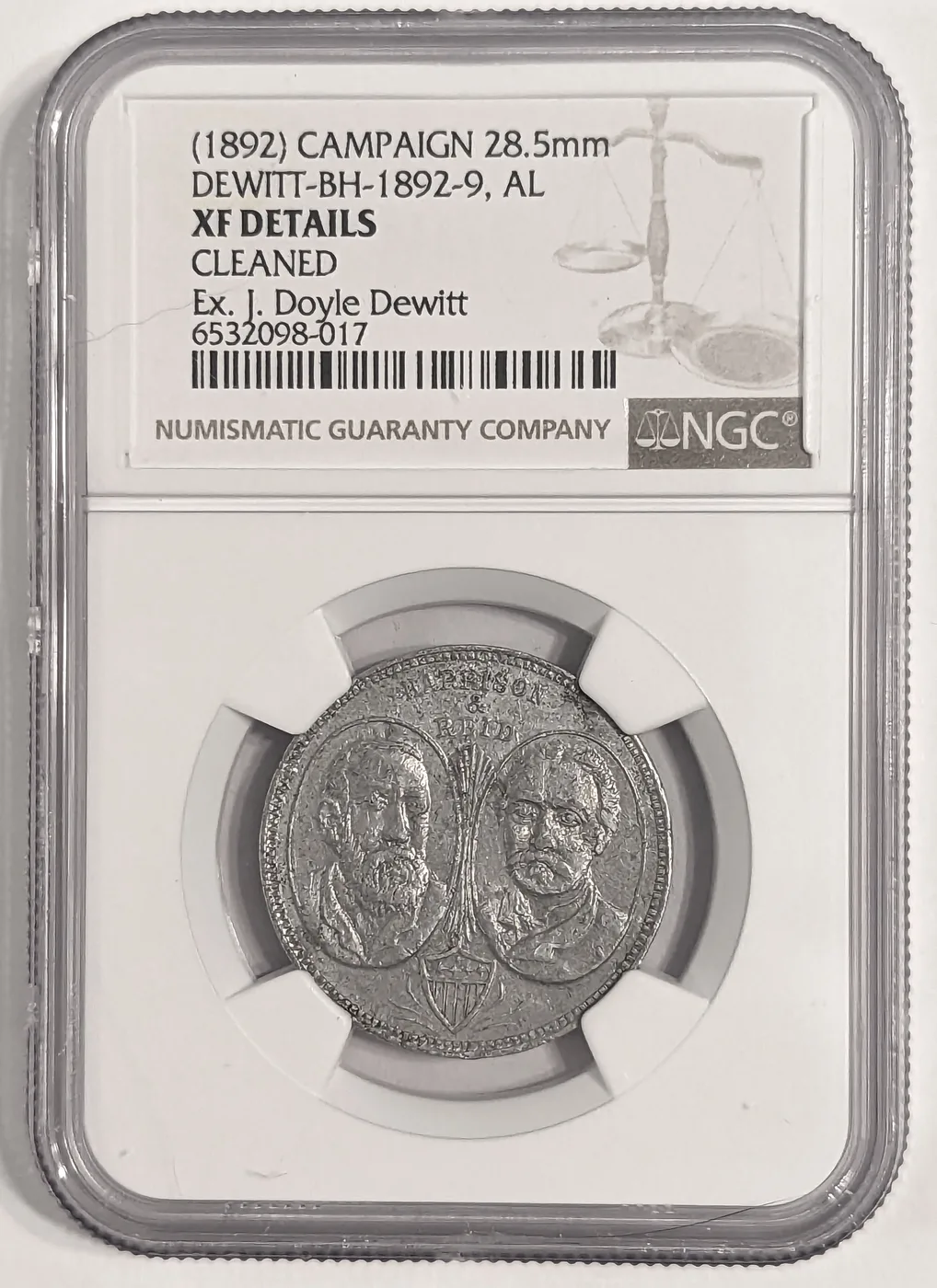
Aluminium is the period's signature. It had been a precious-metal curiosity for most of the nineteenth century, and only became industrially cheap after the Hall–Héroult electrolytic process arrived in 1886. Its appearance in campaign material from the late 1880s onward is a marker of modernity, a candidate distributing aluminium was distributing the future. Our 1892 Cleveland GC 1892-8 and GC 1892-2 are both aluminium, as is the 1892 Harrison BH 1892-9.
The general principle, one number, several metals, each a separate collectible, is covered in why one campaign medal exists in several metals.
| Year | Winner | Loser | Notable |
|---|---|---|---|
| 1884 | Grover Cleveland (D) | James G. Blaine (R) | First Democratic president since 1856 |
| 1888 | Benjamin Harrison (R) | Grover Cleveland (D) | Cleveland won the popular vote and lost |
| 1892 | Grover Cleveland (D) | Benjamin Harrison (R) | Only non-consecutive second term in US history |
How Do You Build a Metal Run?
A metal run is a single DeWitt design collected in every metal it was struck in, and it is one of the most achievable serious projects in this field.
The 1884 Blaine series supports it particularly well. Our stock includes JGB 1884-12 in white metal at NGC MS65 DPL and the same number in brass, plus JGB 1884-13 in white metal and in brass.
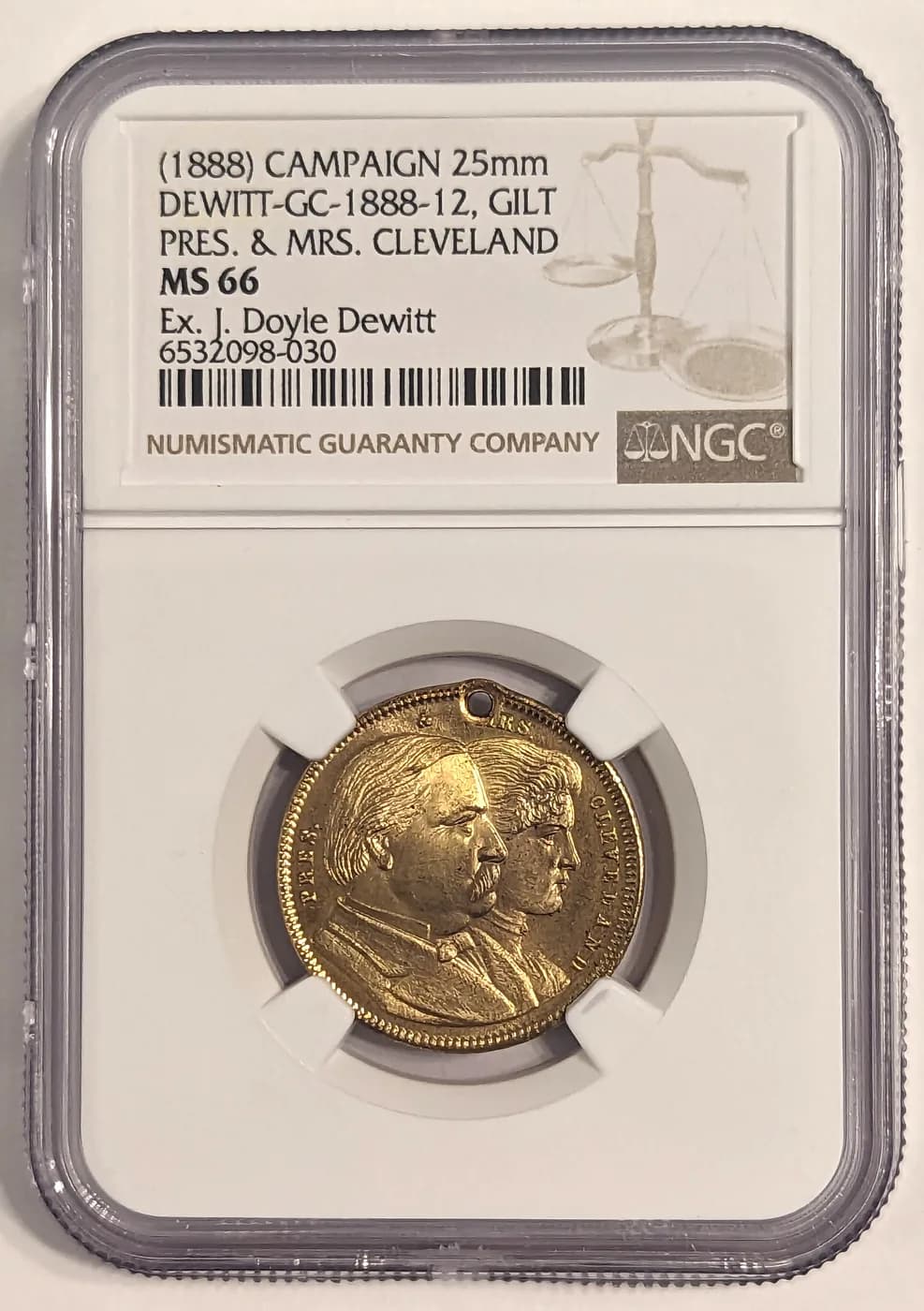
The appeal is that the variable is isolated. Same dies, same design, same campaign, only the metal changes, and you can see directly how the alloy affects strike, surface and how the piece has aged over a hundred and forty years.
DPL and PL on a label mean deep prooflike and prooflike, reflective, mirror-like fields produced by fresh, well-polished dies. On white metal in particular the effect can be striking, and it usually indicates an early strike from a new die pair.
Why Is This Period Good Value?
Because supply is deep and the famous names are elsewhere.
Lincoln material carries an enormous premium. Washington material more so. Cleveland, Blaine and Harrison are consequential figures whom the general public does not collect, which means the medals trade closer to what they are rather than to what the name is worth.
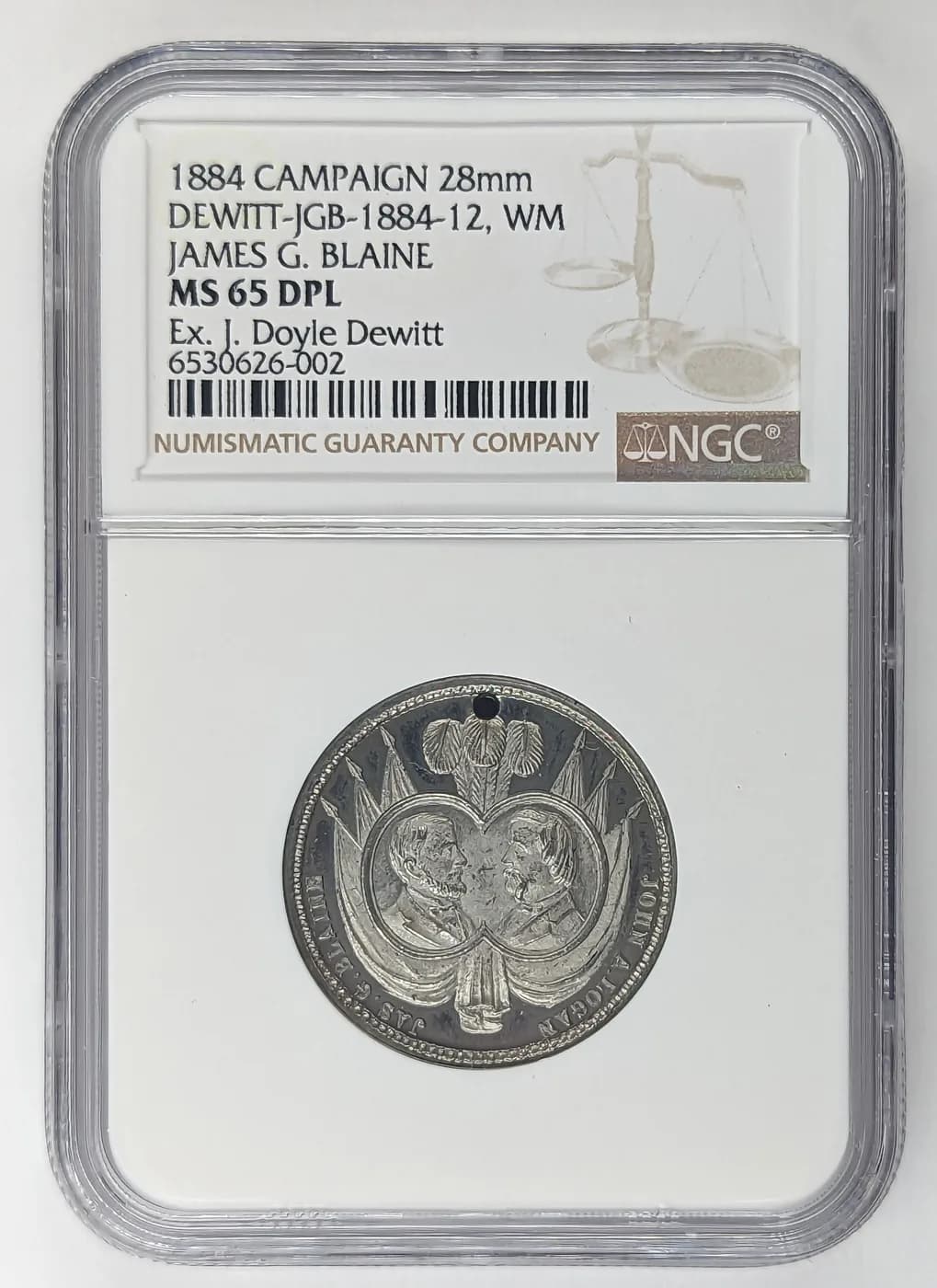
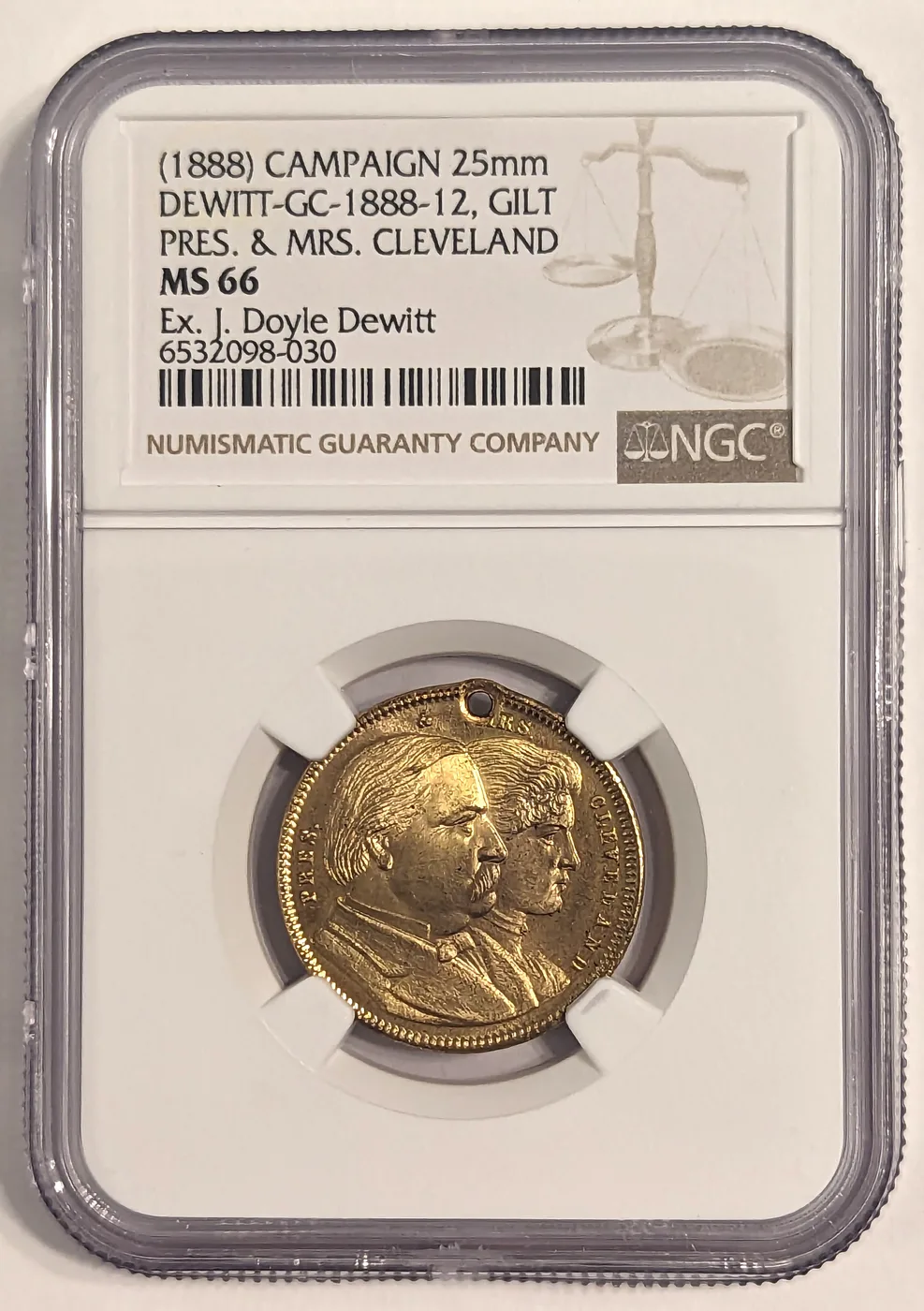
The practical result is that high-grade certified examples are attainable here in a way they are not for 1860. Our stock includes pieces at NGC MS64, MS65 and MS66, grades that would command serious money on a Lincoln medalet and are reasonable on a Cleveland one, such as the 1888 GC 1888-12 in gilt at MS66.
For a collector who wants genuine nineteenth-century political Americana in excellent condition without paying a fame premium, this is where to look.
Why Does the Medal Era End After 1896?
Because something cheaper and more colorful replaced it.
The celluloid pinback button arrived in the mid 1890s, and the 1896 contest between William McKinley and William Jennings Bryan is the campaign where it takes over. A struck medalet had to be engraved, cut and struck in metal. A pinback needed a printed paper disc, a sheet of celluloid and a press, which meant color, photographic portraits, slogans that could be changed in a week, and a unit cost no struck piece could approach.
For the collector this is what makes the Cleveland, Blaine and Harrison years a closed set rather than an arbitrary slice. The three elections of 1884, 1888 and 1892 are the last in which the struck medalet is the dominant campaign object. After 1896 the medals continue, but as a sideline to a button industry, and the center of gravity of political collecting moves with it.
It also explains a practical asymmetry in prices. Pinback collecting is a large, well-organized field with its own catalogs and a deep bench of buyers. Gilded Age medalets are cataloged in DeWitt, traded by a smaller group, and priced accordingly. The same scarcity buys considerably less money here than it would one election later.
What Should You Watch For?
Gilt wear. Gilt pieces were gold-washed over brass, and the wash wears through on high points. Partial gilt is common; the market prefers it complete and even.
Aluminium oxidation. Early aluminium can develop a dull grey film and can pit. Bright, clean aluminium of this age is unusual and worth confirming is original rather than polished.
Cleaned white metal. The most common problem across the whole field. Cleaned white metal loses its lustre permanently and takes on a characteristic flat, chalky look.
Design confusion between 1888 and 1892 Cleveland. He appears in both, and the portraits are similar. Confirm the DeWitt year prefix rather than assuming from the portrait, GC 1888-x and GC 1892-x are different campaigns.
Frequently asked questions
Why did Grover Cleveland serve two non-consecutive terms?
He won in 1884, lost to Benjamin Harrison in 1888 despite winning the popular vote, then beat Harrison in the 1892 rematch. He remains the only American president to have served two terms separated by another president's.
What does aluminium tell me about a campaign medal's date?
That it is probably from the late 1880s or later. Aluminium only became industrially cheap after the Hall-Héroult electrolytic process arrived in 1886; before that it was a precious-metal curiosity, so its use in mass campaign material is a marker of the period.
What do PL and DPL mean on a certification label?
Prooflike and deep prooflike, reflective, mirror-like fields produced by fresh, well-polished dies. They usually indicate an early strike from a new die pair, and on white metal the effect can be dramatic.
Are Gilded Age medals a better buy than 1860 material?
For value, generally yes. Supply is deeper and the names carry no fame premium, so high-grade certified examples are attainable at reasonable cost. For historical resonance, 1860 remains unmatched.
How do I tell an 1888 Cleveland medal from an 1892 one?
By the DeWitt designation rather than the portrait, which is similar across both. GC 1888-x and GC 1892-x denote different campaigns, and the year is part of the cataloge number for exactly this reason.
What is a metal run?
A single design collected in every metal it was struck in, the same DeWitt number in brass, copper, white metal, gilt and so on. It isolates the alloy as the only variable, which makes it one of the most instructive projects in the field.
Pieces from the collection
Examples handled here, cataloged with photographs and, where the piece was certified, its grading label. Sold pieces stay listed as a reference record.
 Sold
SoldMedals · 1884
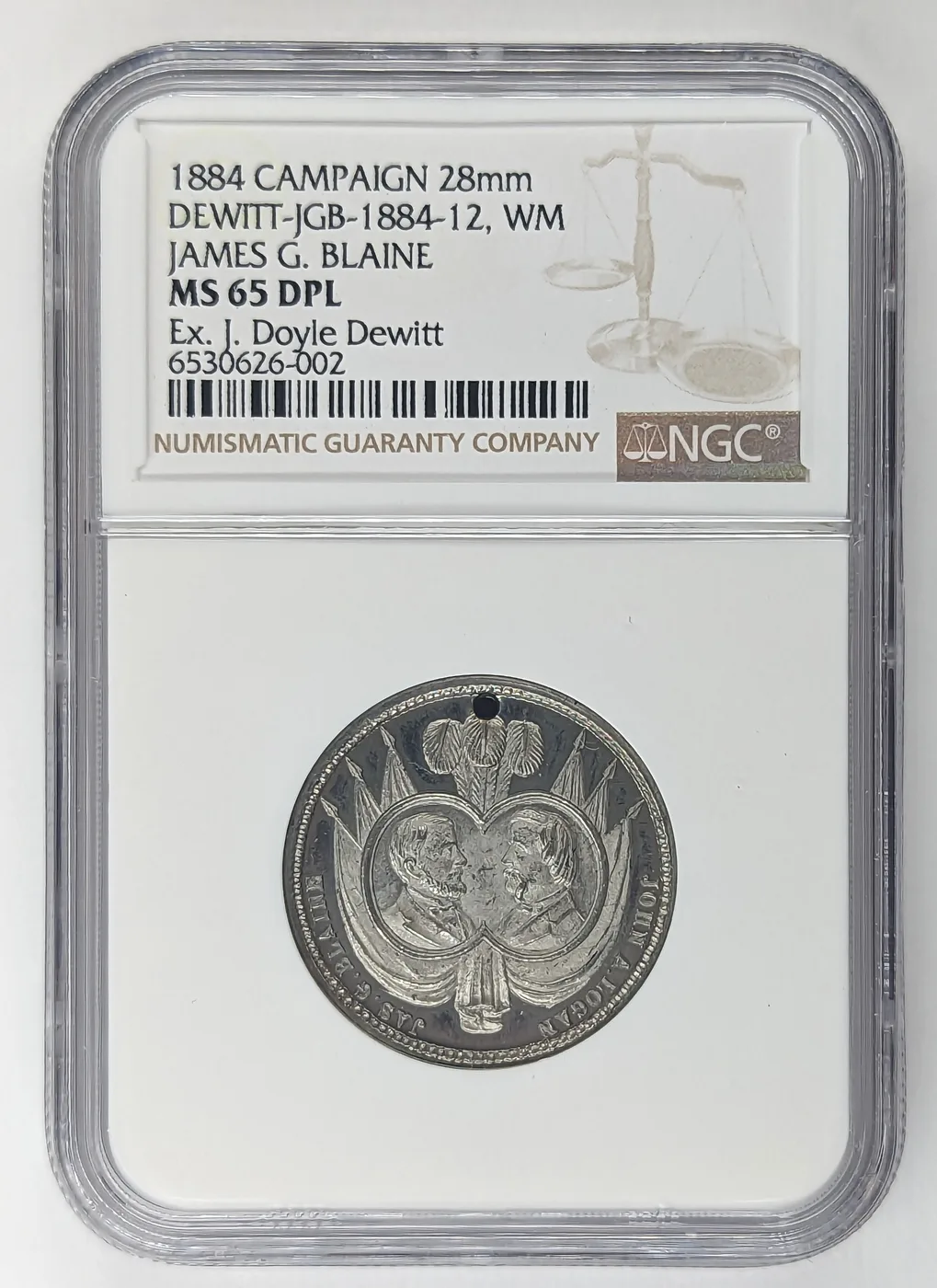
1884 James G. Blaine Campaign Medal DeWitt JGB 1884-12 White Metal
Sold
 Sold
SoldMedals · 1888
1888 Grover Cleveland Campaign Medal DeWitt GC 1888-12 Gilt
Sold
 Sold
SoldMedals · 1892
1892 Grover Cleveland Campaign Medal DeWitt GC 1892-8 Aluminum
Sold
 Sold
SoldMedals · 1892
1892 Benjamin Harrison Campaign Medal DeWitt BH 1892-9 Aluminum
Sold
More guides
Have one of these?
We buy outright, and we will value a piece for you whether or not you sell. Photographs and whatever paperwork you have are enough to start.