
Grading
What a 'Details' Grade Means on a Campaign Medal
7 min read
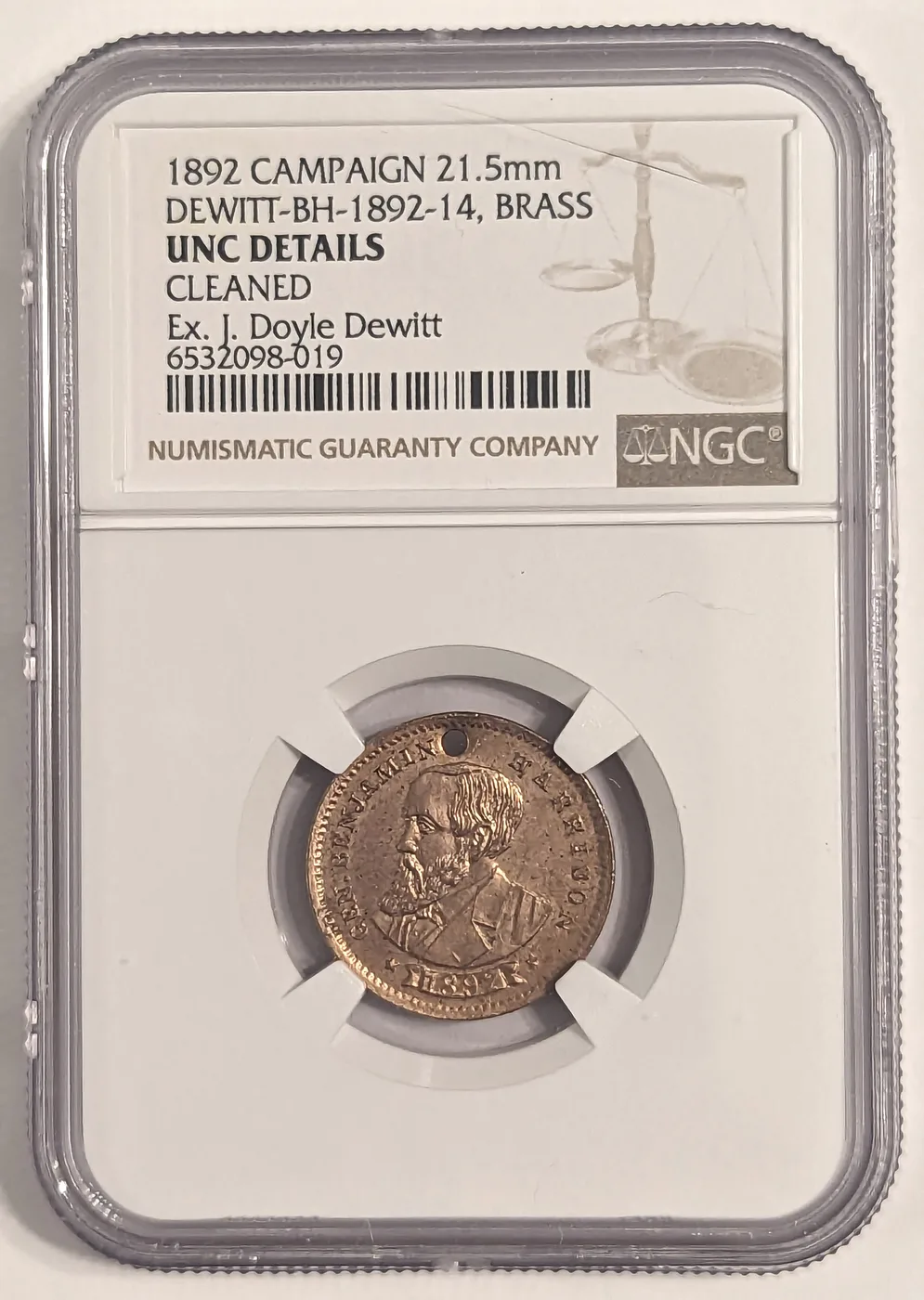
A holder reading UNC Details or XF Details is telling you two separate things: the piece is genuine, and something about it prevented a numeric grade. Cleaning is the most common cause, followed by damage such as bending, mounting or corrosion. The label states the problem plainly, and on scarce campaign material a Details piece is often the only way to own a design at all.
What Does a Details Grade Actually Mean?
Grading services assess a piece on the numeric scale running from 1 to 70. When something on the piece disqualifies it from that scale, the service instead describes the level of wear in words and states the problem, producing labels such as AU Details or UNC Details.
The important part is what a Details grade is not. It is not a verdict of fake. The piece was examined, authenticated and encapsulated. NGC applies Details grading to coins with issues that prevent straight grading, describing them with an adjective attached to the level of detail remaining.
So the label carries two facts at once: how much of the design survives, and what is wrong with the surface.
What Problems Trigger It?
The causes fall into a few recognizable groups, and campaign medals are exposed to all of them because they were worn, carried and stored casually for over a century.
| Label wording | What happened | How recoverable |
|---|---|---|
| Cleaned / Improperly Cleaned | Harsh cleaning left hairlines and stripped original surface | Not recoverable |
| Whizzed | Surface mechanically polished to imitate lustre | Not recoverable |
| Bent | The planchet was physically deformed | Not recoverable without further harm |
| Environmental Damage | Corrosion or pitting from burial, damp or contact | Sometimes stabilised, never reversed |
| Mount Removed | A loop or pin was attached, then taken off | Evidence remains at the point of attachment |
| Scratches / Damage | Discrete post-strike marks | Not recoverable |
Why Is Cleaning Treated So Harshly?
Because it is permanent and it is deceptive.
Cleaning removes the toned original surface that took a century to form and replaces it with a brightness that looks superficially better. Under magnification the cost is visible as fine parallel hairlines. NGC describes the mechanical form of this as improperly cleaned, and distinguishes it from isolated hairlines caused by accidental mishandling.
The market penalty is severe and well established: a cleaned piece commonly sells for a fraction of an equivalent original one, and the effect does not fade with time.
The practical lesson for owners is simple. A dull, evenly toned medal is worth more than a bright, cleaned one, so leaving a piece alone is almost always the profitable decision.
How Much Value Does a Details Grade Cost?
Enough to change what you should pay, though the size of the discount varies with how scarce the design is.
A widely available design in Details condition competes against plenty of straight-graded alternatives, so the discount is steep. A design that appears once every few years has far fewer alternatives, and the discount narrows because buyers have no realistic substitute.
The type of problem matters too. A cleaned piece that still shows full detail reads better to most buyers than a bent one at the same nominal level, because bending is structural and cleaning is a surface event. Corrosion sits at the harsh end, since it removes metal rather than just altering it.
A reasonable way to think about it: the rarer the design, the more of its value survives the problem. The more common the design, the more the problem dominates the price.
One thing not to do is assume the discount is a fixed percentage. It is set by what else is available at the moment you are buying, which for nineteenth-century campaign material can change completely when a single collection comes to market.
When Is a Details Piece Worth Buying?
More often than beginners assume, provided the price reflects it.
Buy one when the design is scarce enough that waiting for a straight-graded example is unrealistic. Buy one when the problem is cosmetically minor and sits away from the focal point of the design. Buy one when it completes a set you are assembling by catalog number rather than by grade.
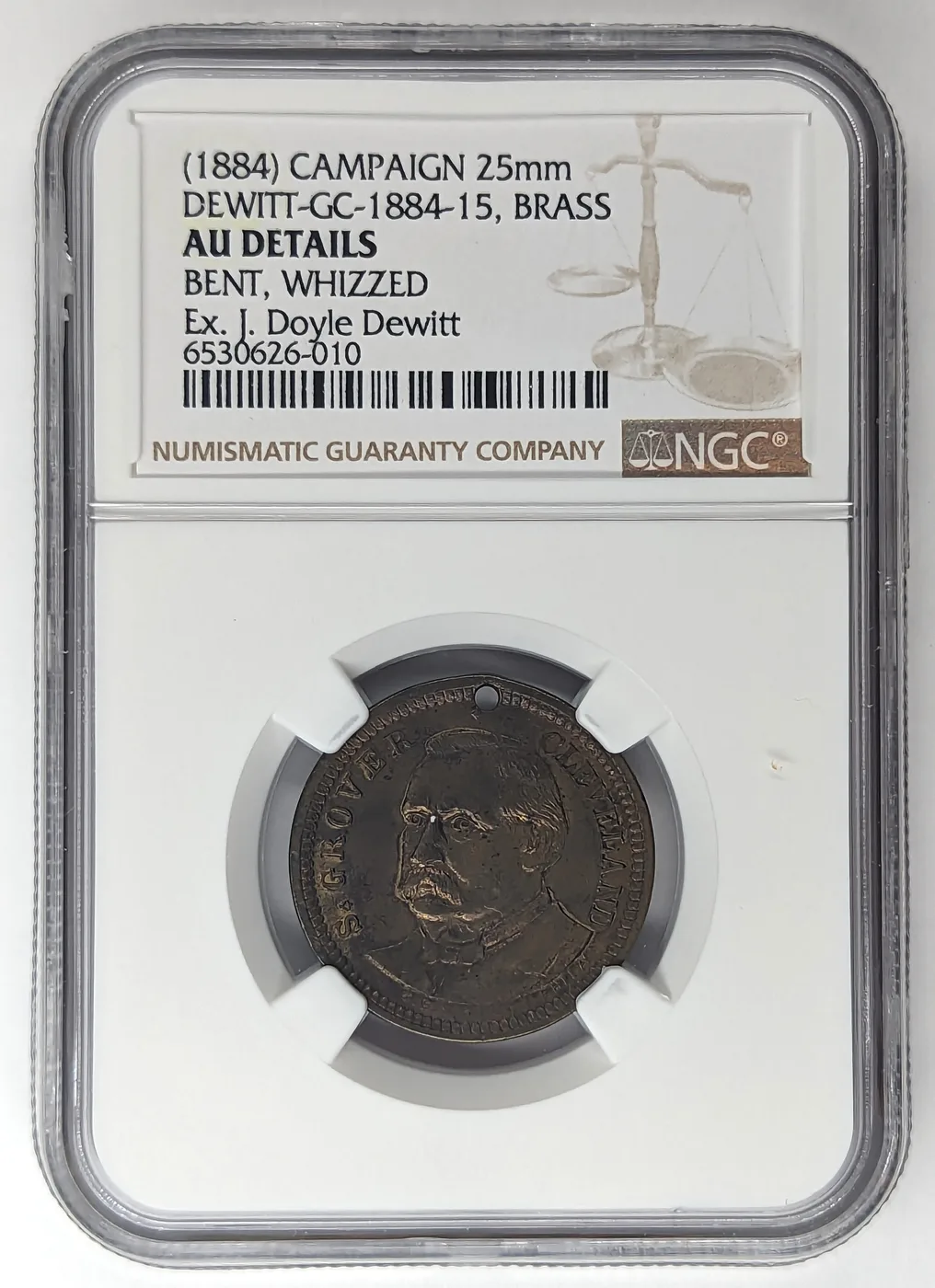
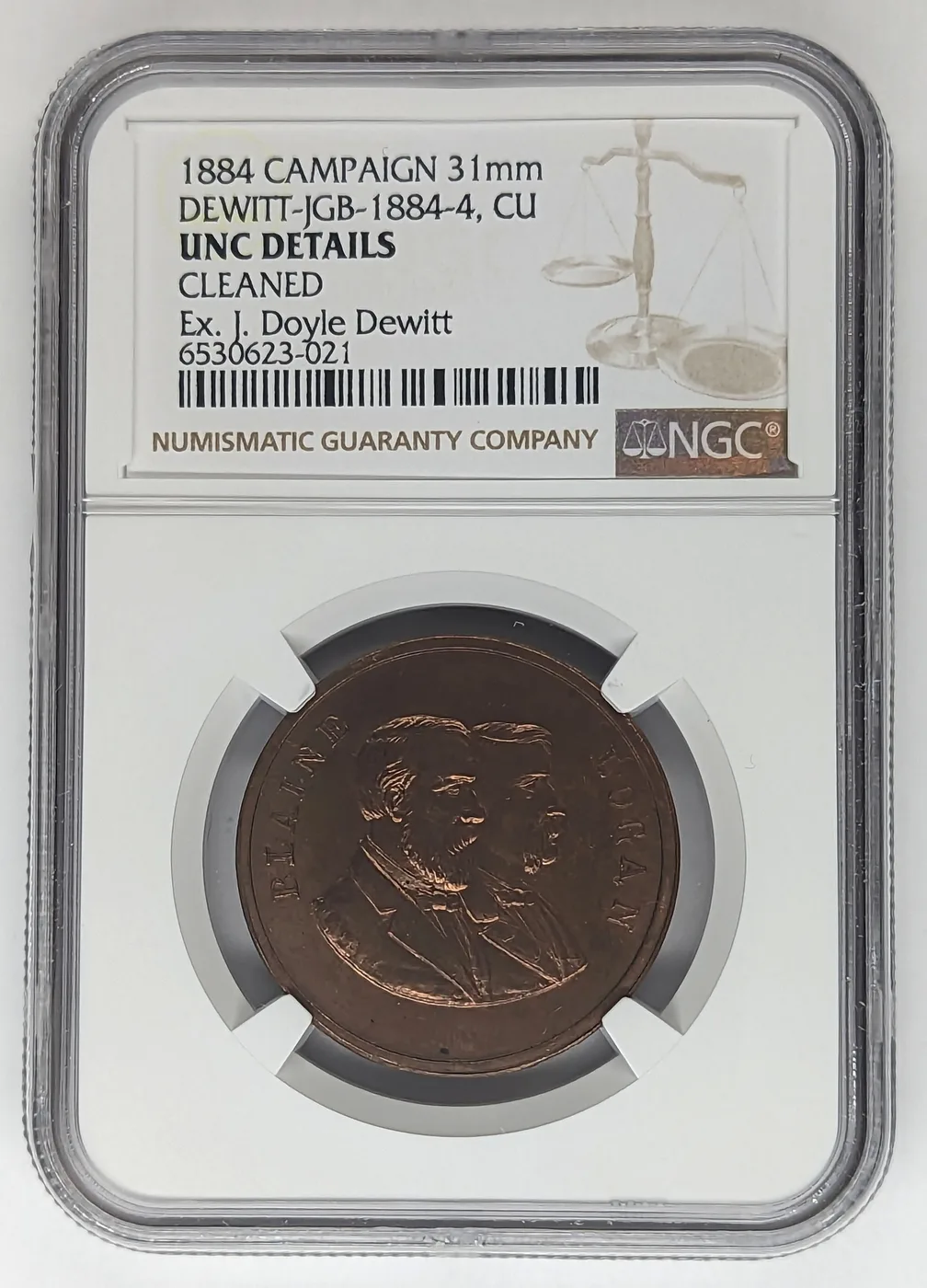
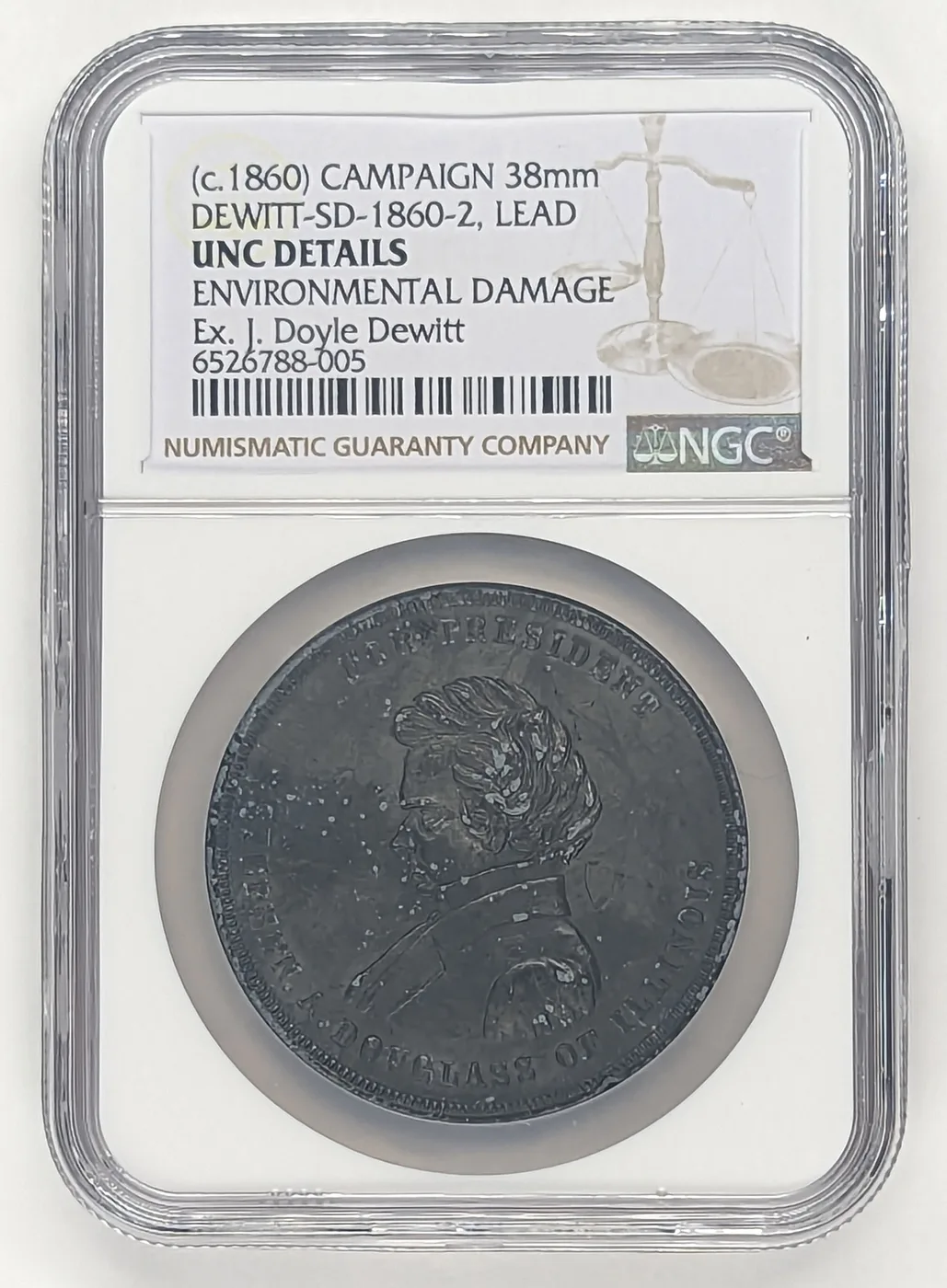
This collection holds several examples that make the point. A lead striking of an 1860 Douglas medal carries environmental damage, which is close to expected for a soft metal that survives poorly. A Blaine medal in copper is noted as cleaned, and an 1884 Cleveland piece is recorded as bent and whizzed, which is unusually candid labelling. Each is an honest, documented survivor of the campaign it came from.
Note also how often the problem correlates with the material. Soft metals take damage, so strikings in white metal and lead appear in Details holders more often than brass of the same design.
Avoid one when the design is common, when the damage sits across the portrait, or when the discount is thin. In those cases patience costs nothing.
Can a Details Grade Ever Be Removed?
Rarely, and not by cleaning it further.
Conservation by a professional service can sometimes remove surface contaminants such as residue or active corrosion without abrading the underlying metal, and a piece stabilised that way can occasionally be resubmitted and straight graded. That applies to contamination, not to hairlines or bends, which are physical alterations to the surface itself.
A grading service will also reconsider a piece on resubmission, since grading involves judgement. Realistically, though, a Details grade for cleaning or damage should be treated as permanent when deciding what to pay.
What you should never do is attempt improvement at home. Every common household method abrades the surface, and a piece that merely looked tired becomes one that is provably damaged. The American Numismatic Association and the grading services are consistent on this point, and the market prices it accordingly.
Storage is where owners actually have influence. Stable humidity, no PVC-containing holders, and minimal handling prevent the environmental problems that produce Details grades in the first place. Prevention is available; correction largely is not.
Frequently asked questions
Is a Details graded medal genuine?
Yes. The grading service authenticated it before encapsulating it. The Details designation refers to the condition, not to whether the piece is real.
How much less is a Details piece worth?
It varies with the design, but a substantial discount is normal and can exceed half the value of a straight-graded equivalent. Scarcer designs retain proportionally more.
What does UNC Details mean?
The piece shows no wear from circulation, so its level of detail is uncirculated, but a surface problem prevented a numeric Mint State grade.
Does Environmental Damage mean the medal was buried?
Not necessarily. It covers corrosion and pitting from any prolonged exposure, including damp storage or contact with reactive materials, not only ground finds.
Should I have a cleaned medal conserved?
Usually not. Conservation can address contamination but cannot restore surface removed by cleaning, so the Details grade generally stands and the fee is wasted.
Is a raw medal better than a Details graded one?
No. A raw piece may have the same problems, undisclosed. A Details holder tells you exactly what a professional grader found, which is information rather than a defect in itself.
Pieces from the collection
Examples handled here, cataloged with photographs and, where the piece was certified, its grading label. Sold pieces stay listed as a reference record.
 Sold
SoldMedals · 1884
1884 Grover Cleveland Campaign Medal DeWitt GC 1884-15 Brass
Sold
 Sold
SoldMedals · 1884
1884 James G. Blaine Campaign Medal DeWitt JGB 1884-4 Copper
Sold
 Sold
SoldMedals · 1892
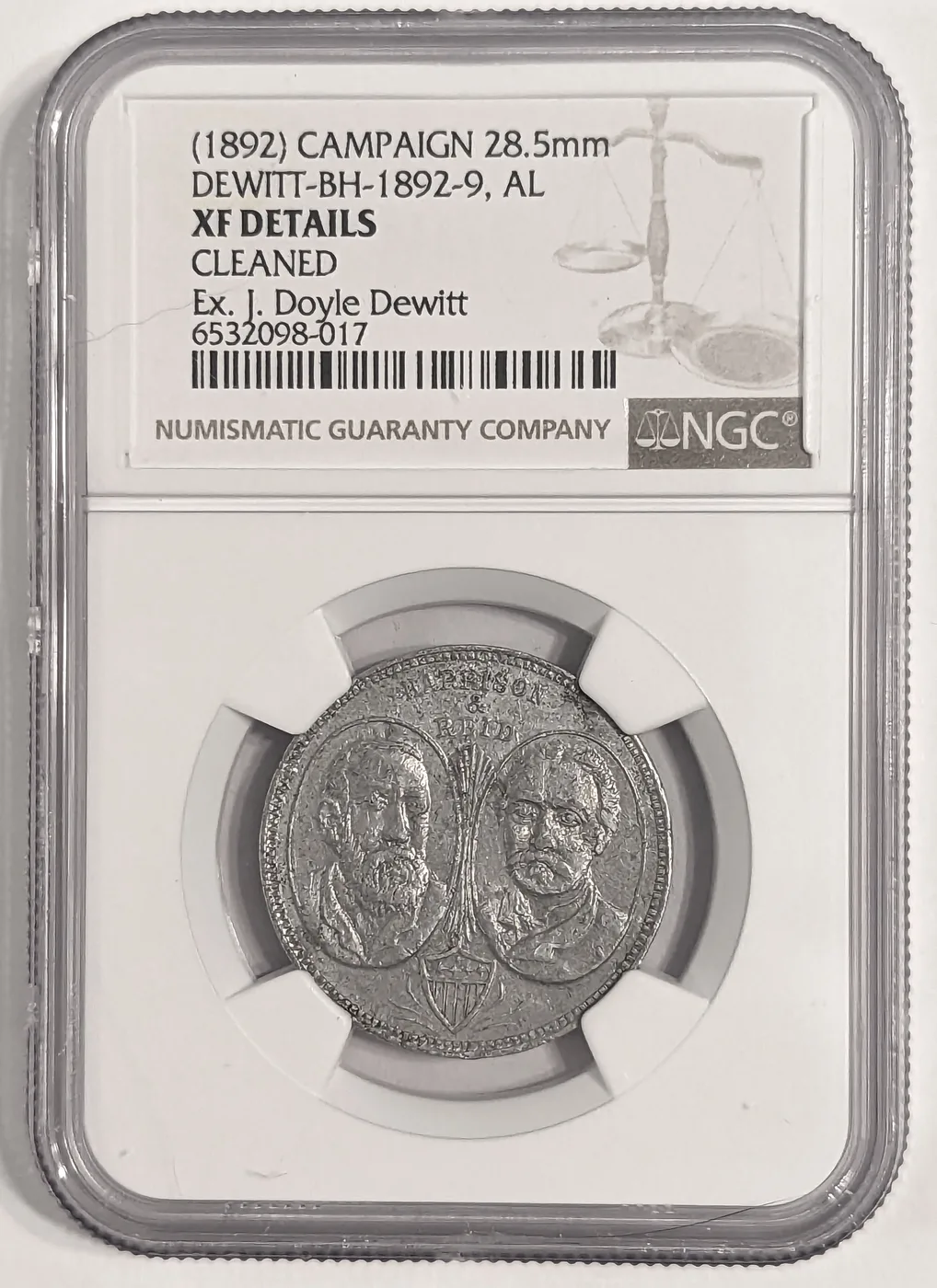
1892 Benjamin Harrison Campaign Medal DeWitt BH 1892-9 Aluminum
Sold
 Sold
SoldMedals · 1860
1860 Stephen A. Douglas Campaign Medal DeWitt SD 1860-2 Lead
Sold
More guides
Have one of these?
We buy outright, and we will value a piece for you whether or not you sell. Photographs and whatever paperwork you have are enough to start.