
Tokens & Medalets
The 1860 'We All Have Our Hobbies' Witch Medal: Satire in Struck Metal
7 min read
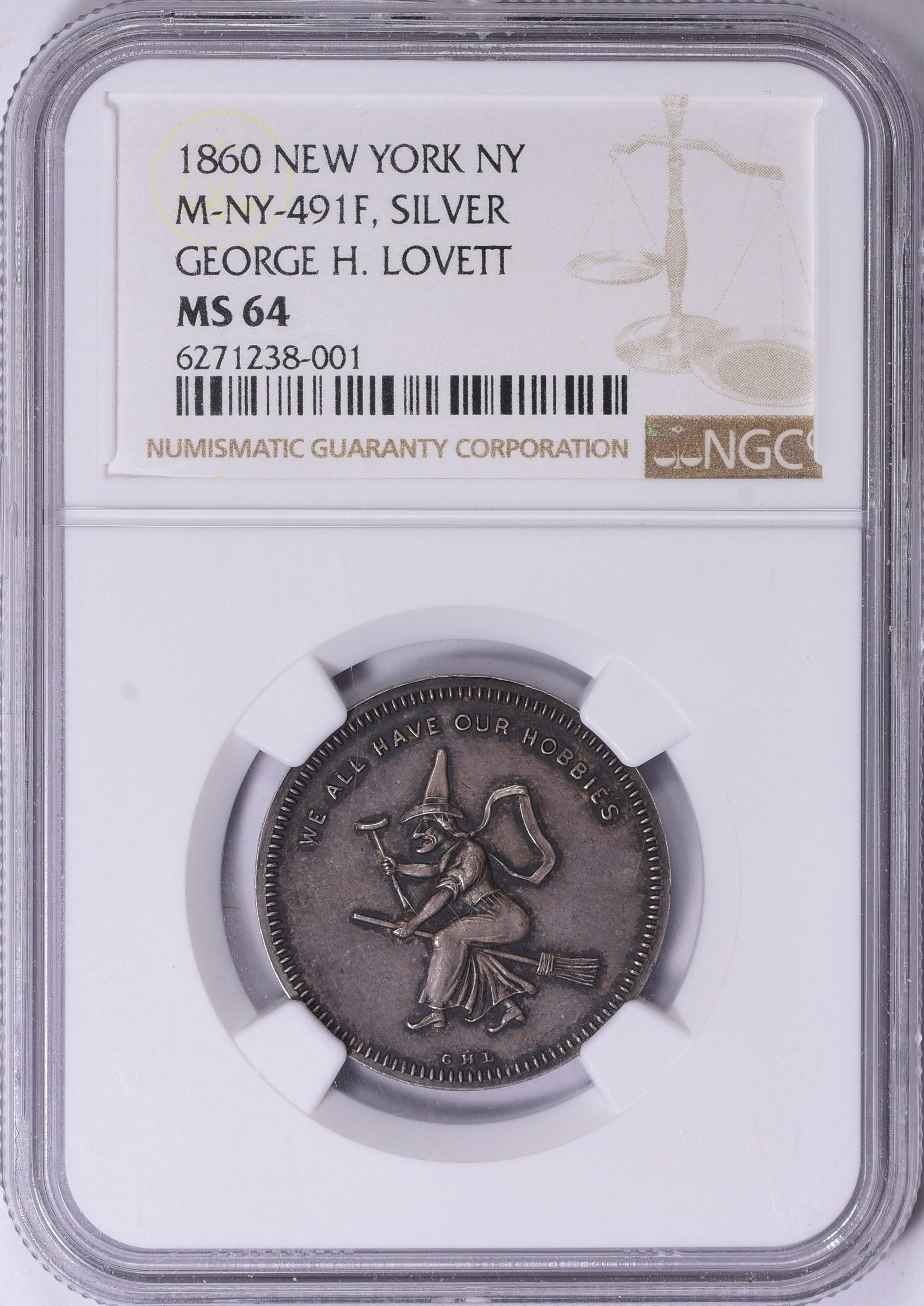
A witch riding a broomstick, the legend WE ALL HAVE OUR HOBBIES, and an 1860 date: this is political satire compressed into a piece of struck silver the size of a coin. It belongs to a nineteenth-century American tradition of satirical medalets that mocked candidates, causes and cranks in the same year that the country elected Abraham Lincoln and began to come apart. Cataloged under a Miller number rather than a DeWitt one, it sits in the store-card and token literature rather than the political-medal literature, a distinction that matters when you go looking for comparables.
What Does 'We All Have Our Hobbies' Actually Mean?
The legend is doing more work than a modern reader assumes, because the word hobby had a sharper edge in 1860 than it does now.
It descends from *hobby-horse*, the child's stick-and-head toy. To ride a hobby-horse, figuratively, was to be carried away by a private enthusiasm that bored everyone else, a fixation, a crotchet, a pet cause. The modern sense of a pleasant pastime is the softened descendant of a term that was originally mildly contemptuous.
So WE ALL HAVE OUR HOBBIES paired with a witch on a broomstick is a compressed joke with a shrug inside it: everyone is riding something, everyone's cause looks like witchcraft to somebody else, and none of us should be too pleased with ourselves. In an election year that had fractured into four presidential tickets, that is a pointed thing to put in a man's pocket.
The witch imagery carries its own American freight. Salem was a hundred and seventy years in the past by 1860 but remained a live shorthand for mass delusion and persecution, exactly the accusation each faction was levelling at the others.
Why Does It Have a Miller Number Instead of a DeWitt Number?
This is the most practically useful thing to understand about the piece, because it tells you where to look for information and comparables.
DeWitt numbers cataloge American political campaign material, the medalets, tokens and lapel devices produced to promote candidates. That is the system behind the AL, GC, JGB and BH numbers on most of the campaign medals in this cataloge, and we cover it in what 'Ex DeWitt' means on a campaign medal.
Miller numbers come from the literature of merchant tokens and store cards, privately struck pieces issued by businesses and die-sinkers, organised by state and number. A designation like M NY-491 places a piece in the New York sequence of that system.
A satirical medalet cataloged under Miller rather than DeWitt is being classified as a privately issued token rather than as campaign advertising. That is a meaningful statement about its origin: it was made to be sold or given away as a novelty and a comment, not to elect anybody.
| System | Covers | Typical prefix | What it implies |
|---|---|---|---|
| DeWitt | Political campaign medalets and devices | The candidate's initials plus the election year, AL 1860 for Abraham Lincoln, GC 1888 for Grover Cleveland, JGB 1884 for James G. Blaine, BH 1892 for Benjamin Harrison | Made to promote a candidate |
| Miller | Merchant tokens and store cards | M plus the state, M NY-491 is number 491 in the New York sequence | Privately issued; commercial or satirical |
| Hibler & Kappen | So-called dollars | HK plus a number, running straight through the cataloge rather than by state or subject | Commemorative, usually exposition-linked |
Why Was 1860 Such a Year for Satire?
Because the political system visibly broke in public, and satire follows breakage.
The 1860 presidential election was contested by four significant tickets: Abraham Lincoln for the Republicans, Stephen A. Douglas for the Northern Democrats, John C. Breckinridge for the Southern Democrats, and John Bell for the Constitutional Union party. The Democratic party had split outright over slavery. Lincoln won the presidency with under forty per cent of the popular vote, and secession began within weeks of the result.
An electorate watching that unfold produced an enormous quantity of struck metal, some of it earnest campaign advertising, some of it commercial opportunism, and some of it, like this piece, commentary at everyone's expense.
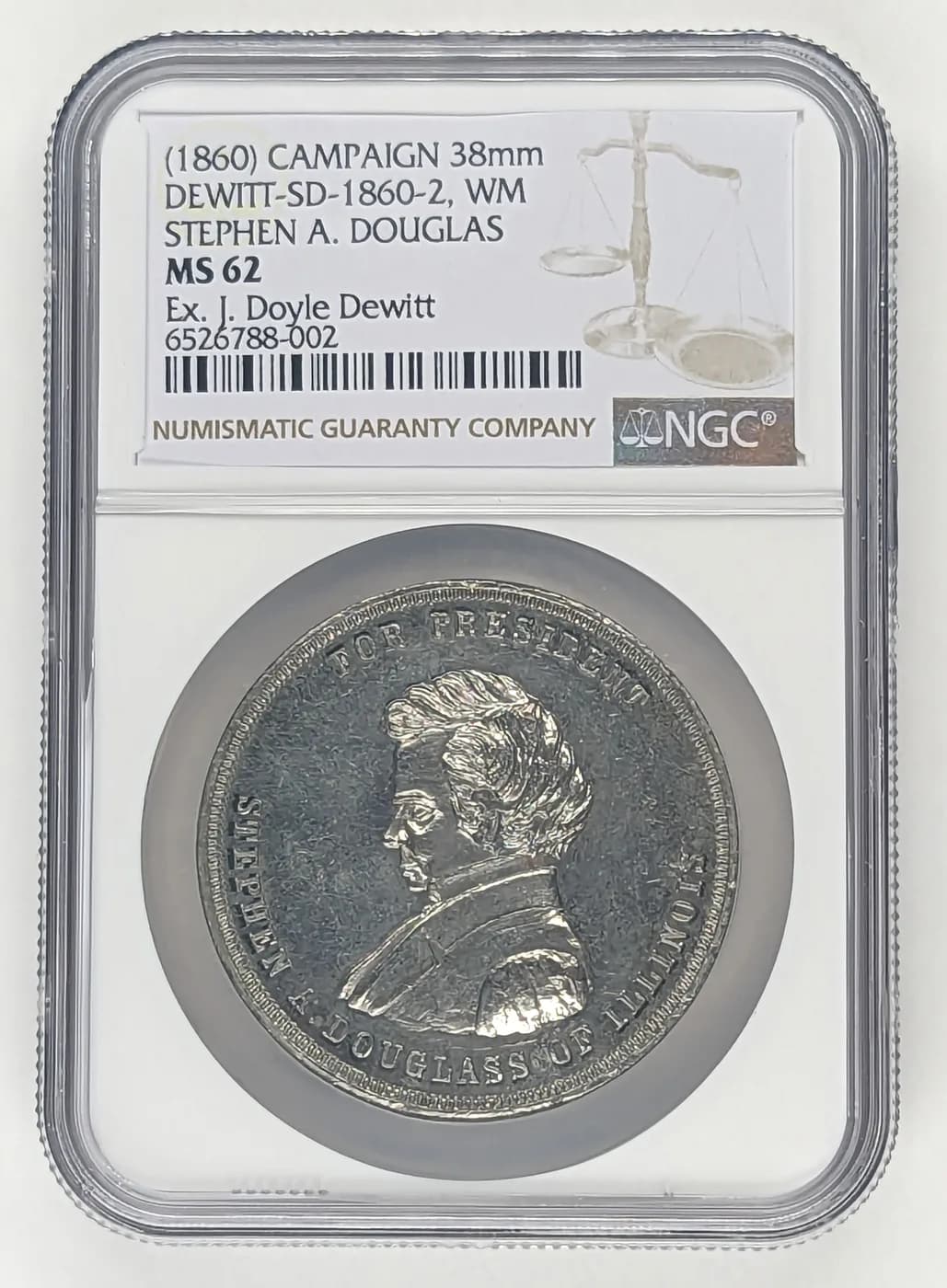
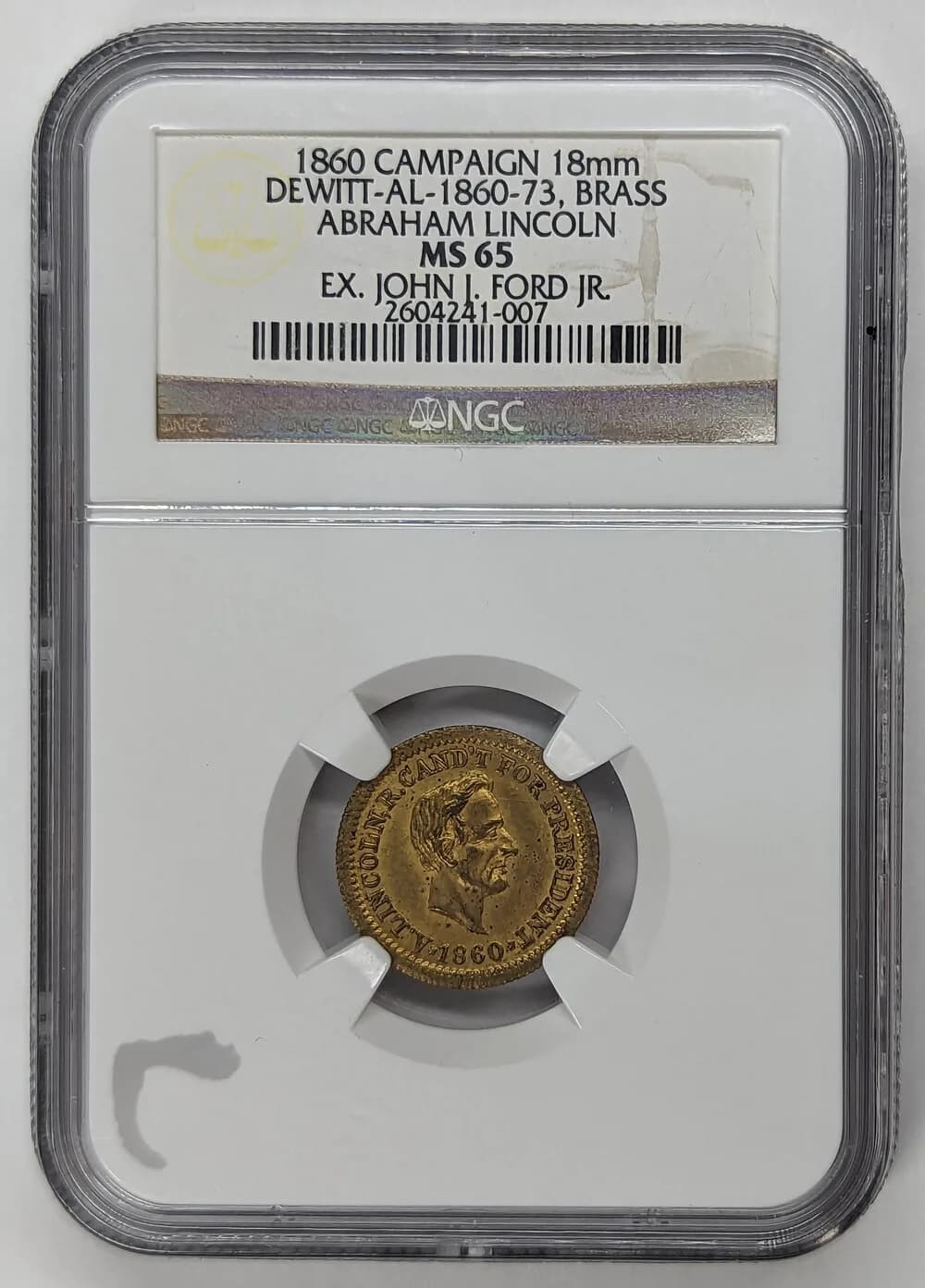
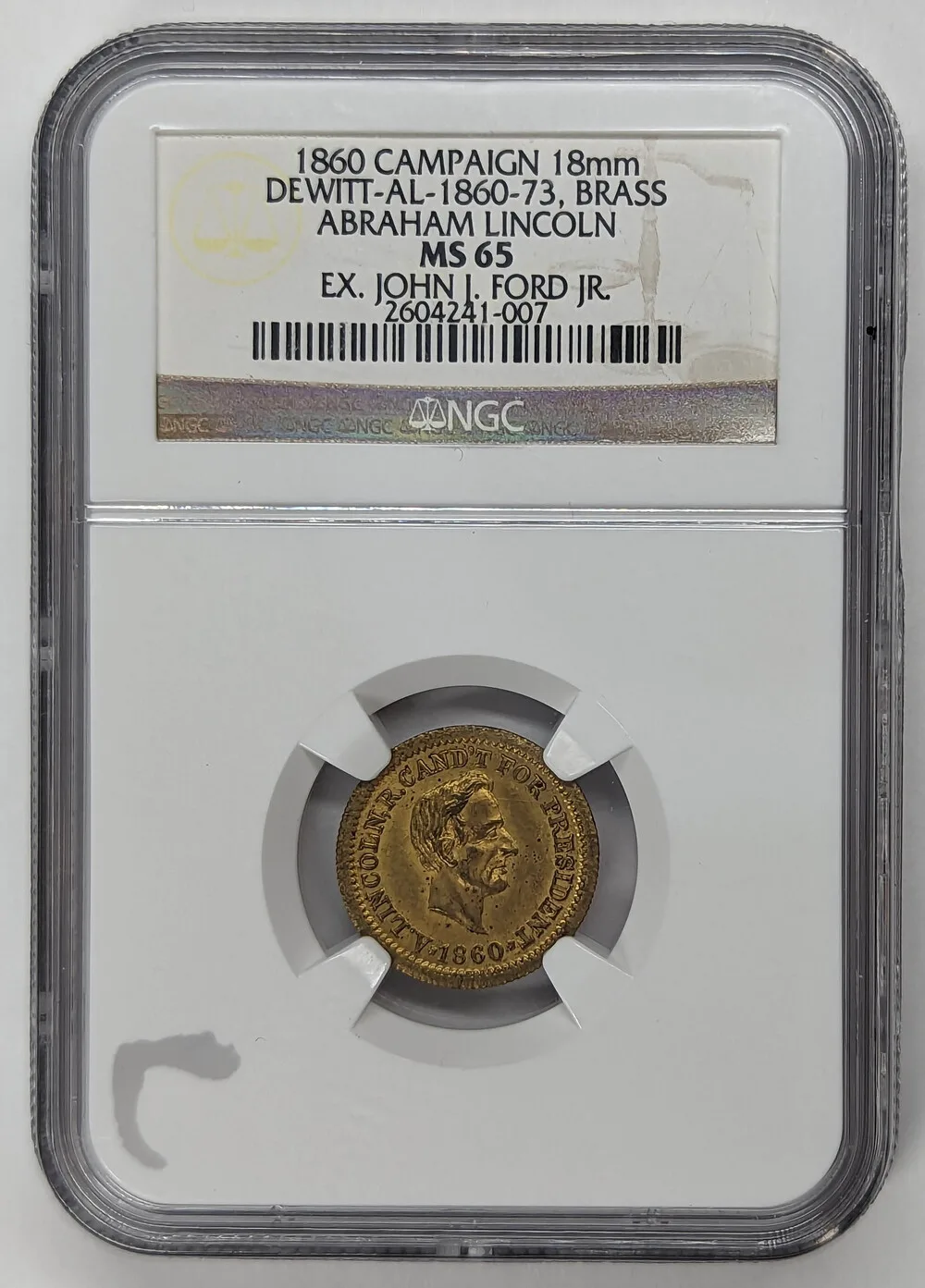
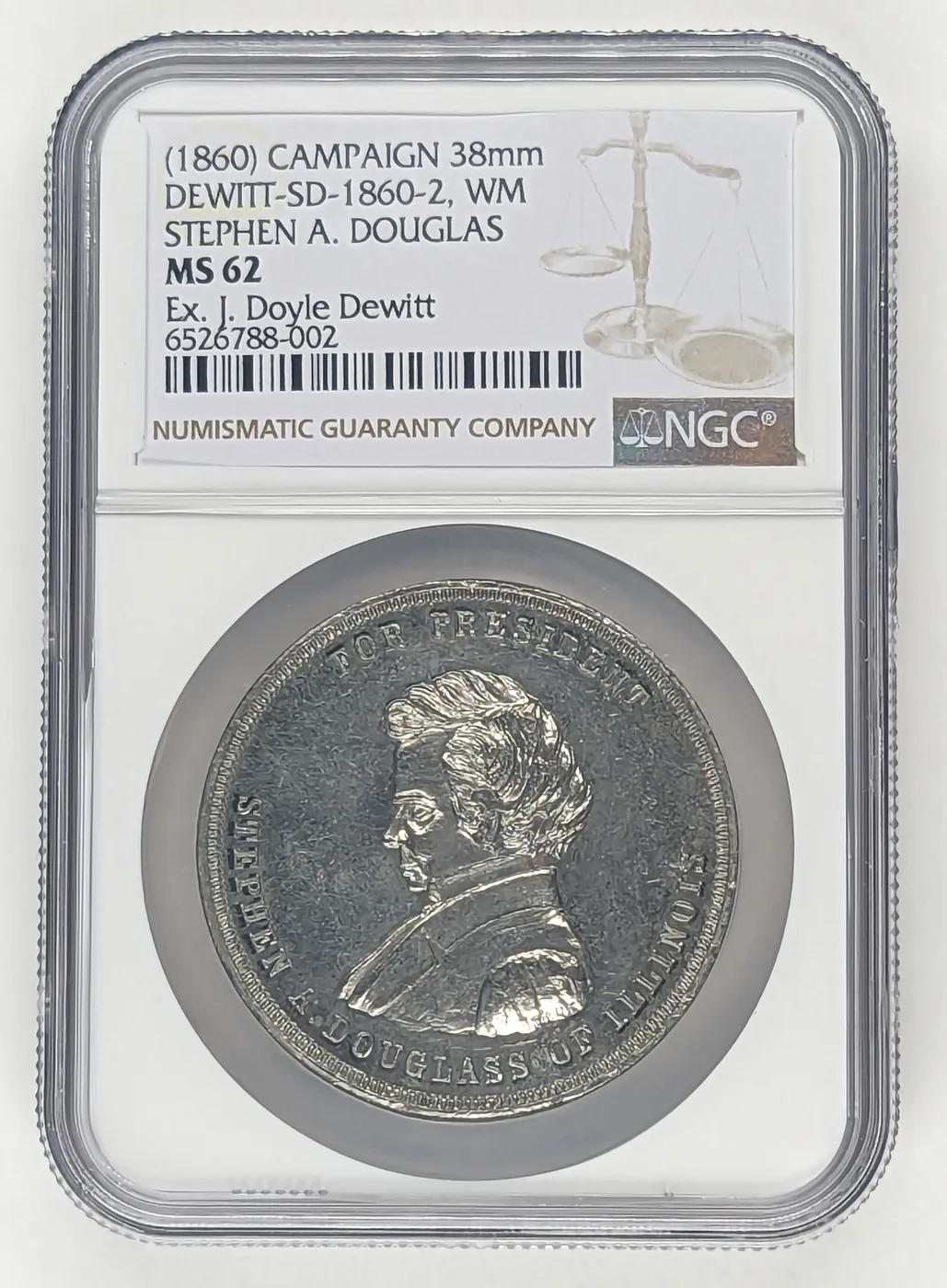
Our available stock includes both major northern candidates of that year: the 1860 Lincoln campaign medal, DeWitt AL 1860-73 and Douglas medals in white metal. A satirical piece from the same year sits between them as the voice of the person who thought both sides were riding a broomstick.
How Much Does the Metal Matter?
A great deal, and more here than on campaign issues.
Satirical and merchant medalets were struck primarily in white metal, brass and copper, cheap alloys suited to an object meant to be handed out or sold for pennies. Silver strikings were made in small numbers, typically for collectors, presentation, or the die-sinker's own reference set, and they survive in correspondingly small numbers.
The same die pair can therefore produce a common object and a genuinely scarce one. This is the same principle that governs campaign medals, which we treat separately in why one campaign medal exists in several metals, and it applies with more force to pieces that were never mass-distributed in the first place.
When assessing one of these, establish the metal before anything else. A silver example of a design normally seen in white metal is not a slightly better version of the same thing; it is a different collecting proposition.
Can You Trust an Attribution to a Named Die-Sinker?
Treat it as a claim to be checked, not a fact to be inherited, and this deserves saying bluntly, because the field is loose about it.
Nineteenth-century American die-sinkers such as J. A. Bolen of Springfield, George Hampden Lovett and others produced substantial bodies of tokens and medalets, and their work is cataloged in specialist literature. Where a piece is signed, carrying the maker's name or initials in the die, attribution is straightforward and secure.
Where a piece is unsigned, attribution rests on stylistic comparison, die linkage to signed work, or documentary evidence such as the maker's own sales lists. Some of those chains are solid. Others are dealer tradition that has been repeated until it acquired the appearance of authority.
The practical rule: ask what the attribution rests on. A signature in the die, a die link to signed work, or a citation in the standard reference for that maker are all answers. "It has always been called that" is not. On satirical medalets in particular, where several shops produced similar material for the same market, confident attribution without evidence should reduce your price rather than raise it.
What Should You Look For in an Example?
Legibility of the legend before technical grade. The joke is the object. A piece where WE ALL HAVE OUR HOBBIES is weak or partly struck up has lost the thing you are buying.
Surface originality. Small silver medalets were often carried, polished or cleaned. Original surface, even with honest wear, beats a bright cleaned piece.
Evidence of mounting. Holed, looped and ex-mounted examples are common, since these were pocket objects. A filled hole is a repair, and it should be disclosed.
Cataloge agreement. The Miller number, the metal and the described design should all agree with one another and with the standard reference. Where they do not, the seller has copied a listing rather than examined a piece.
Frequently asked questions
What does the witch on a broomstick represent?
It is a visual pun on the word hobby, which descends from hobby-horse and originally meant a private obsession that others found tiresome. Putting a witch on a broom makes the point that everyone rides some hobby of their own, and that one person's cause looks like witchcraft to somebody else.
Is this a campaign medal for a particular candidate?
No. It carries a Miller number rather than a DeWitt number, which places it among privately issued tokens and store cards rather than candidate campaign material. It is commentary rather than advertising.
What does M NY-491 mean?
It is a cataloge reference from the merchant-token literature, identifying the piece within the New York sequence of that system. The prefix tells you which cataloge is being cited and therefore where to look for comparable examples.
Why does the metal matter so much on these?
Because satirical and merchant medalets were struck mainly in cheap alloys for wide distribution, while silver examples were made in small numbers for presentation or collectors. The same design can be common in white metal and genuinely scarce in silver.
Was this made by J. A. Bolen?
That attribution is sometimes made, but unsigned satirical medalets of this period were produced by several shops working the same market. Unless the piece is signed in the die, links to signed work, or is documented in the standard reference for that maker, treat the attribution as unverified.
Why were so many satirical medals struck in 1860?
Because the 1860 election was the most fractured in American history, with four significant presidential tickets and a Democratic party that had split outright over slavery. Public political breakdown on that scale produced an unusual volume of struck commentary alongside the ordinary campaign material.
Pieces from the collection
Examples handled here, cataloged with photographs and, where the piece was certified, its grading label. Sold pieces stay listed as a reference record.
More guides
Have one of these?
We buy outright, and we will value a piece for you whether or not you sell. Photographs and whatever paperwork you have are enough to start.