
Collecting Basics
Why One Campaign Medal Exists in Several Metals
7 min read
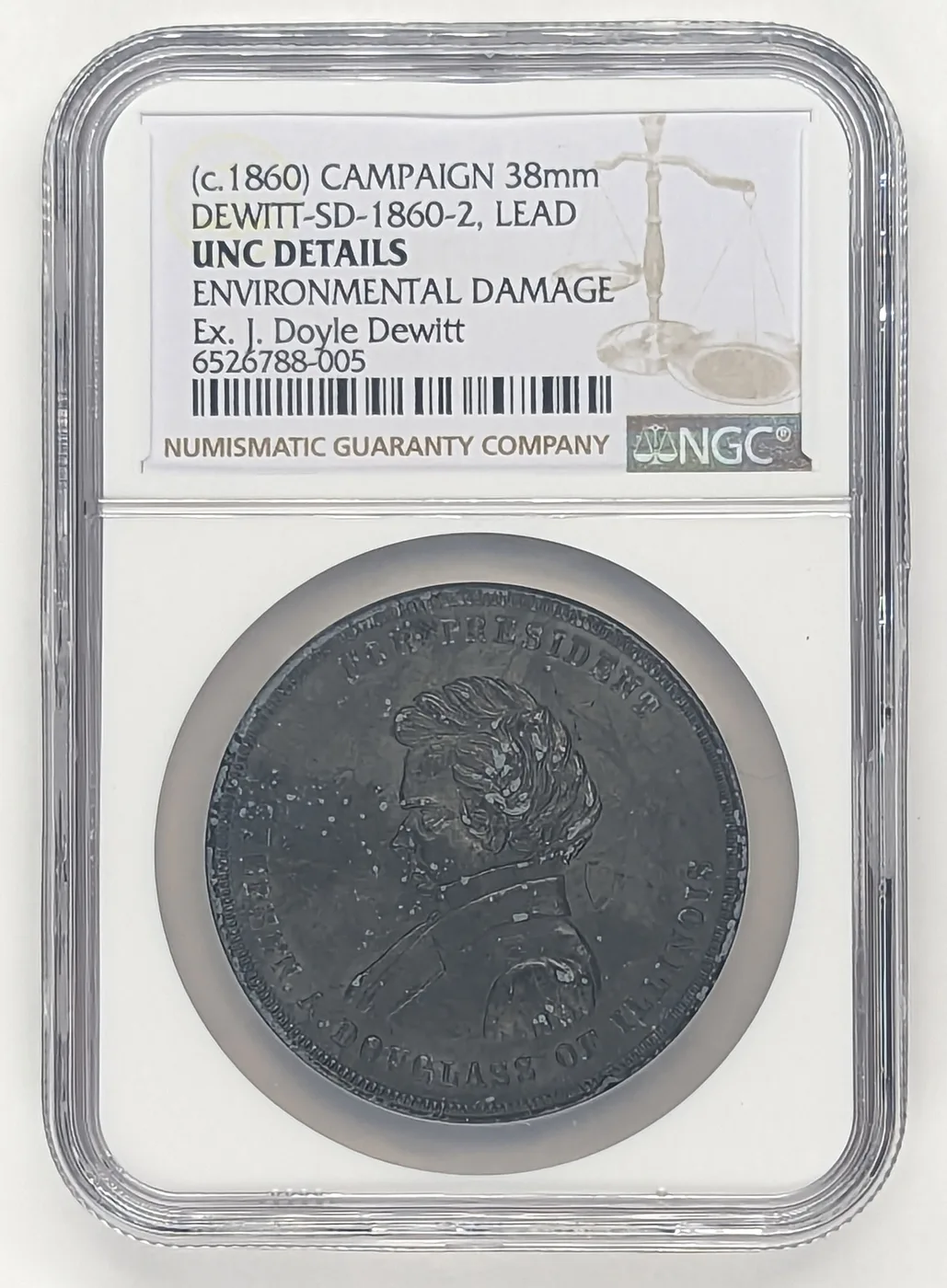
A campaign medal catalog number describes a design, not an object. The same dies were regularly used to strike the design in brass, copper, white metal and gilt, and each of those is a separate collectible piece with its own scarcity, its own grade and its own price. Reading a catalog number without reading the metal alongside it is the most common way collectors buy the wrong medal.
What Does the Metal Tell You That the Number Does Not?
The catalog number answers what the design is: whose campaign, which year, which obverse and reverse pairing. It says nothing about what the piece in the holder is physically made of.
That matters because the same dies were used across multiple metals. A die pairing cataloged once might be struck in brass for the crowd, copper for a slightly better keepsake, white metal because it was cheap and took an impression well, and gilt or silver for presentation to people the campaign wanted to flatter.
The result is one number describing four or more genuinely different objects. They differ in how many were made, how well they survived, and what collectors will pay.
Which Metals Were Actually Used?
Nineteenth-century campaign medals turn up most often in a small set of materials, each chosen for cost or effect rather than aesthetics alone.
The economics were straightforward. A campaign needed volume, and volume meant base metal. Brass and white metal could be struck cheaply enough to hand out at rallies, which is why they dominate surviving populations. Copper sat slightly above them. Gilt and silver were made in small numbers for people the campaign wanted to impress, which is precisely why they are scarce now.
Lead sits outside that logic. It appears occasionally as a trial striking or an oddity rather than a distribution piece, and because it is so soft, examples that survive at all tend to carry damage.
| Metal | Label abbreviation | Typical role | Survival characteristics |
|---|---|---|---|
| Brass | BRASS | General distribution, the workhorse metal | Durable, often found with wear and rim knocks |
| Copper | CU | Slightly better general issue | Tones over time; color designation affects value |
| White metal | WM | Cheap, takes a sharp impression | Soft, marks easily, high grades are scarce |
| Gilt | GILT | Presentation or premium issue | Gilding wears at the high points first |
| Silver | AR | Presentation, smallest numbers | Scarcest striking of most designs |
| Lead | LEAD | Trial or uncommon striking | Very soft, frequently damaged or corroded |
A Worked Example: One Number, Three Metals
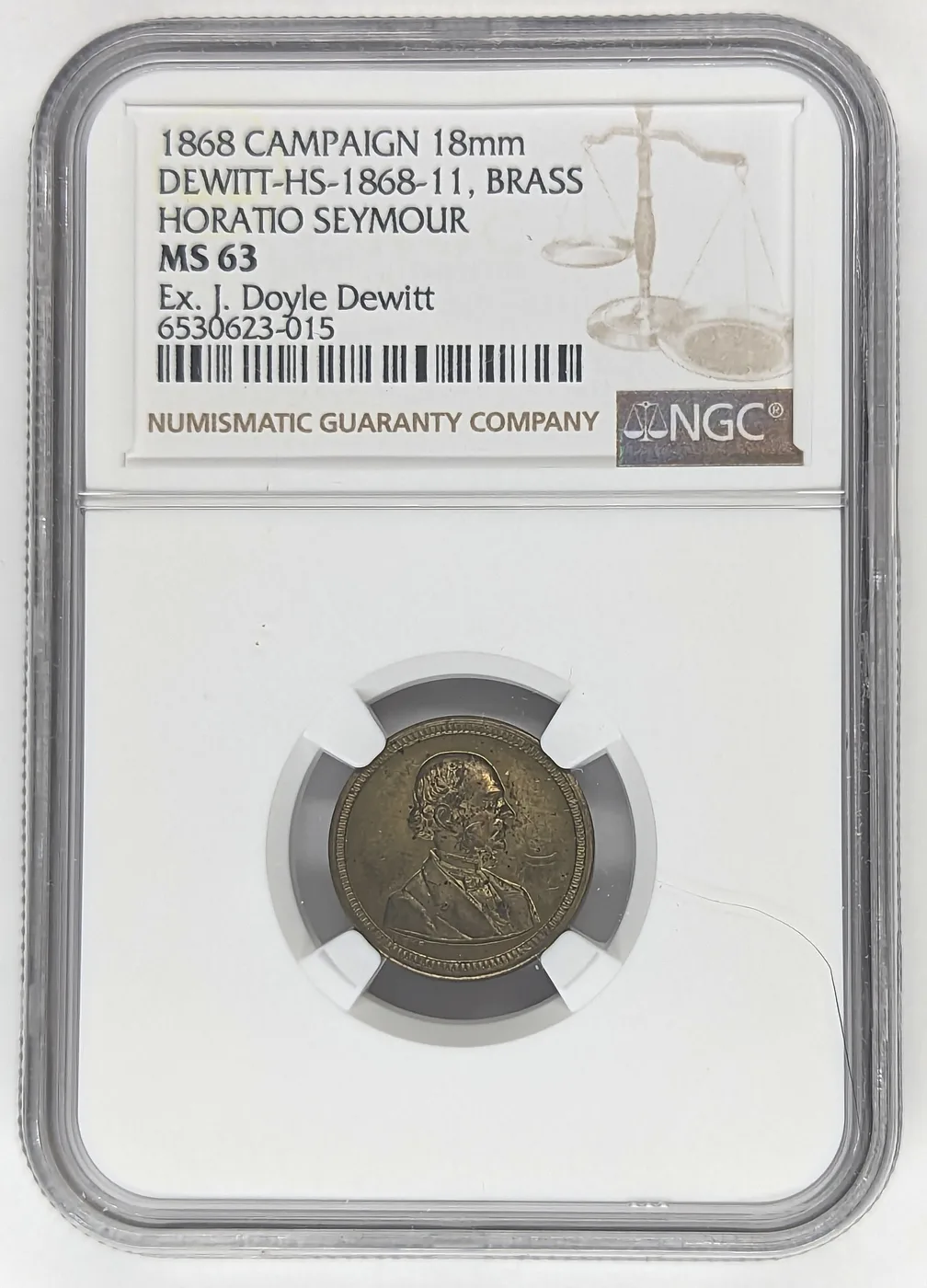
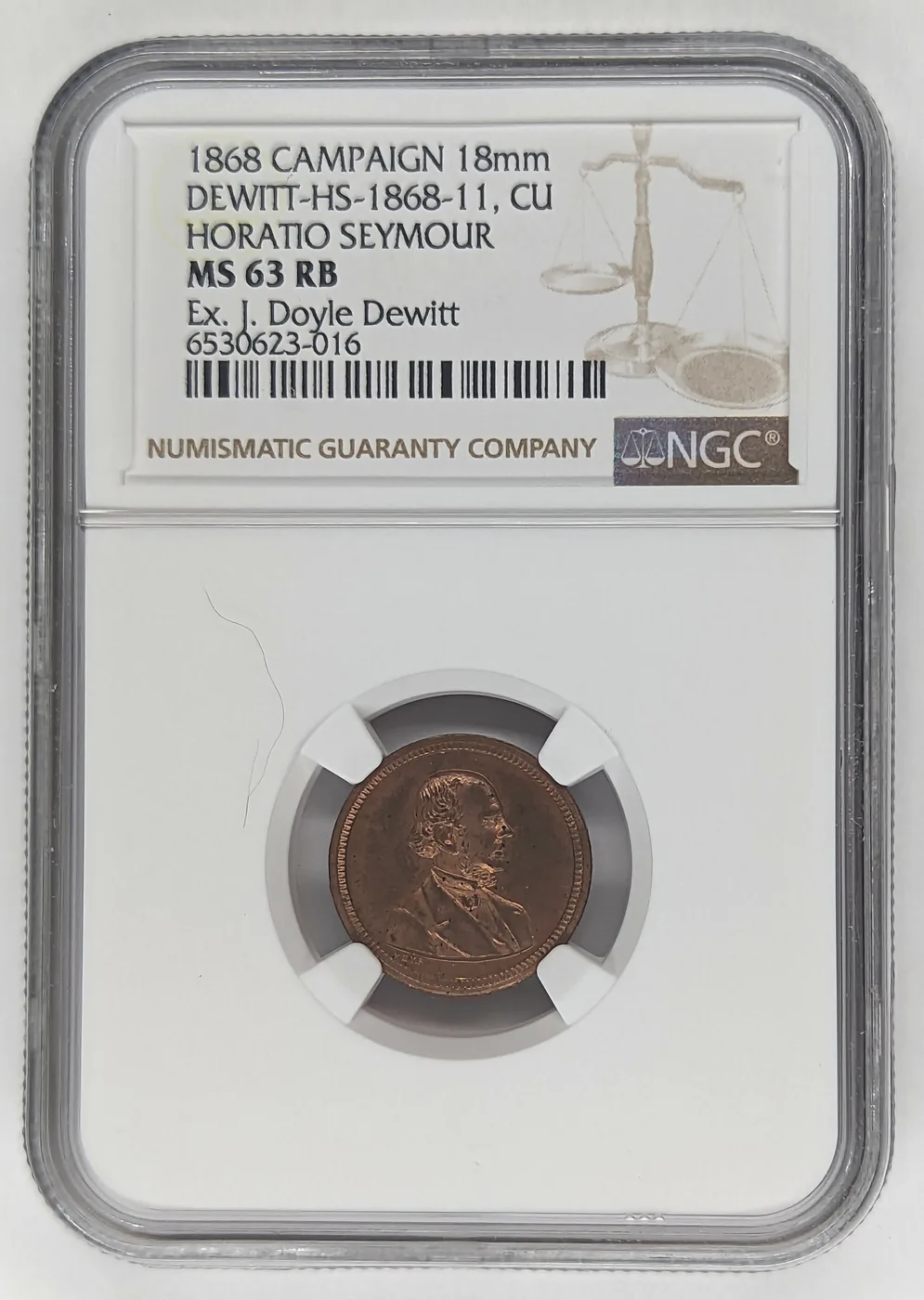
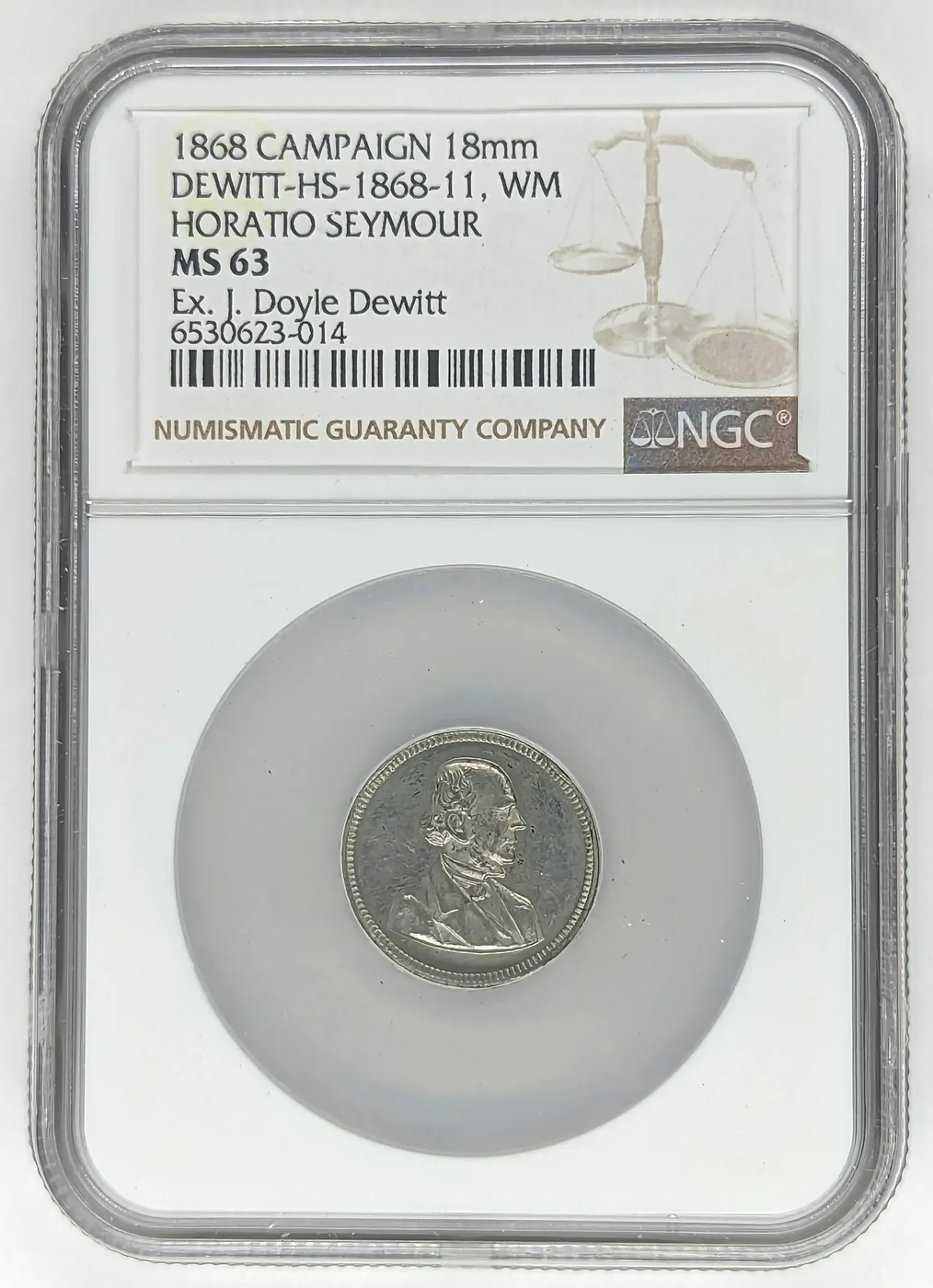
The Horatio Seymour design cataloged as DeWitt HS 1868-11 is a clean illustration because this collection holds three strikings of it at once.
All three are the same 18 millimetre design from the 1868 campaign, and all three graded Mint State 63. What separates them is entirely the metal: one in brass, one in copper, one in white metal. The copper example carries an additional RB color designation that the others cannot have.
Line them up and the point is obvious. Same design, same grade, three different pieces, three different markets. A collector working a Seymour set may want all three; a collector working a type set wants whichever is most attractive.
The pattern repeats wherever a design was struck across a price range. An 1888 Cleveland design exists here in both brass and silver, and the silver is the one that was never made in quantity. Neither label is more correct than the other; they simply describe different objects that happen to share a number.
Why Do Copper and Brass Get Extra Letters?
Copper-based pieces change color as they age, and grading services record that as part of the grade because it drives value.
RD means red, the original mint color retained. RB means red brown, partially toned. BN means brown, fully toned. The numeric grade measures preservation; the color designation measures how much original surface remains.
Two medals can both be MS 63 and be worth very different amounts if one is RD and the other BN. On nineteenth-century campaign material, full red is genuinely uncommon, so BN and RB are the normal expectation rather than a disappointment.
White metal, gilt and silver take no color designation, which is why their labels look shorter. That absence is informative in itself: if you see a color letter, you are looking at a copper-based piece regardless of what the surface looks like under gallery lighting.
NGC publishes the full grading scale and its designations, which is worth reading once rather than inferring from listings.
Is the Rarest Metal Always the Most Valuable?
Not reliably, and this is where collectors overpay.
A silver striking is usually the scarcest of a design, and often the most valuable. But scarcity only converts to price where demand exists. A scarce striking of a design nobody collects stays cheap, while a common striking of a famous design stays expensive.
Condition frequently outweighs metal. A white metal piece in exceptional preservation can beat a silver example with problems, because the soft alloy makes high grades genuinely hard to find. A surface problem carries its own penalty regardless of material, which is covered in what a Details grade means. Provenance is a third axis again, independent of both.
The practical approach is to compare like with like: same catalog number, same metal, same grade. Anything else is comparing different objects.
How Do You Confirm the Metal on a Piece You Own?
On a certified piece, the metal is printed on the label and you should treat that as the answer, since it was assessed with the piece in hand and out of its holder.
On a raw piece, weight and color are the practical guides. White metal is noticeably light for its size and rings dull. Brass is yellow and heavier. Copper shows warm brown tones under good light. Gilt shows a different color where the plating has worn at high points, which is often the giveaway.
Avoid destructive testing. A campaign medal is a struck historical object, and a scratch test to satisfy curiosity permanently reduces what it is worth. Where the metal genuinely matters to a purchase, certification is the cheaper answer, and NGC sets out what its Details designations cover if a test goes wrong. Collector education from the American Numismatic Association is a reasonable starting point for handling and storage.
You can compare strikings side by side across the available campaign medals to get a feel for how differently the same design reads in different materials.
Frequently asked questions
Does the metal change the catalog number?
No. The number stays the same because it describes the design. The metal is recorded separately, which is why holders print both.
What does WM mean on a campaign medal holder?
White metal, a soft tin-based alloy used widely for nineteenth-century campaign pieces because it was inexpensive and took a sharp impression from the dies.
Is white metal the same as silver?
No. White metal is a base alloy that merely looks silvery. Genuine silver strikings are abbreviated AR and are typically far scarcer.
Why is a gilt medal sometimes worth more than a silver one?
Because value follows demand and condition as well as scarcity. A well-preserved gilt example of a popular design can outsell a problem silver striking of the same number.
What do RD, RB and BN mean?
They are color designations for copper and brass pieces: red, red brown and brown. They describe how much original surface color survives and can change value significantly at the same numeric grade.
Should I clean a dull white metal medal?
No. Cleaning removes original surface and will earn a Details grade rather than a straight grade, which usually costs more value than the improved appearance gains.
Pieces from the collection
Examples handled here, cataloged with photographs and, where the piece was certified, its grading label. Sold pieces stay listed as a reference record.
 Sold
SoldMedals · 1868
1868 Horatio Seymour Campaign Medal DeWitt HS 1868-11 Brass
Sold
 Sold
SoldMedals · 1868
1868 Horatio Seymour Campaign Medal DeWitt HS 1868-11 Copper
Sold
 Sold
SoldMedals · 1868
1868 Horatio Seymour Campaign Medal DeWitt HS 1868-11 White Metal
Sold
 Sold
SoldMedals · 1888
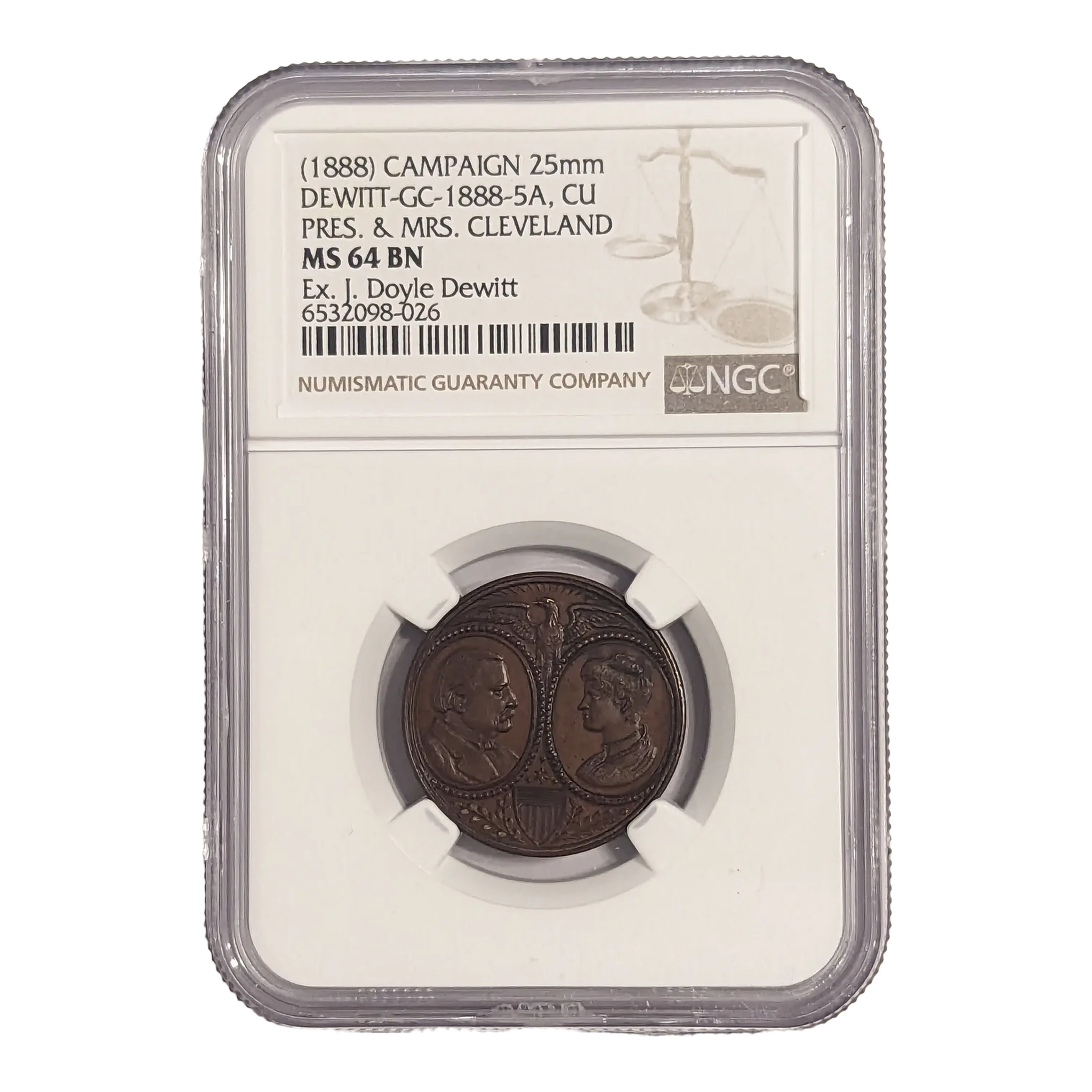
1888 Grover Cleveland Campaign Medal DeWitt GC 1888-5 Copper
Sold
More guides
Have one of these?
We buy outright, and we will value a piece for you whether or not you sell. Photographs and whatever paperwork you have are enough to start.