
Exposition Medals
Collecting the 1876 Philadelphia Centennial: Woven Silk, Struck Metal and America's First World's Fair
11 min read
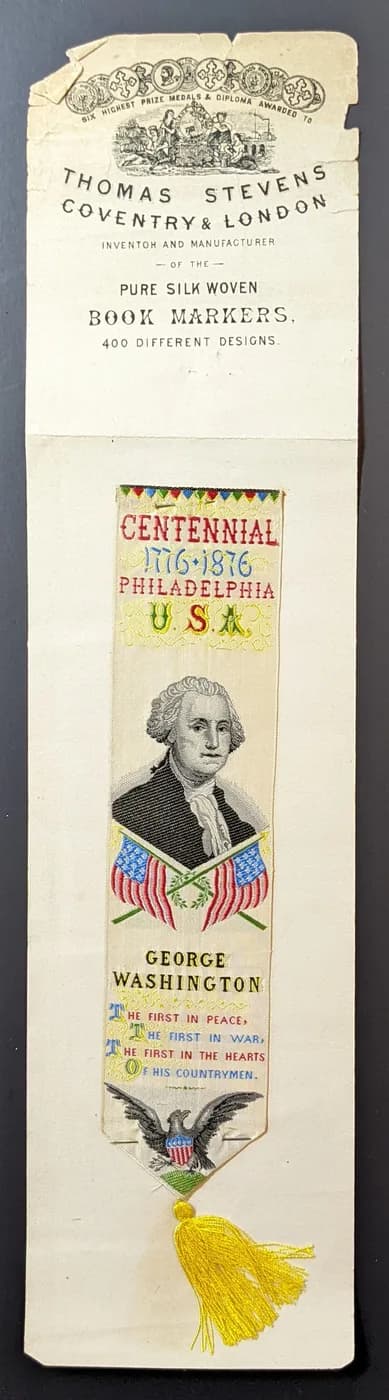
The Centennial Exhibition gave America its first world's fair and its first mass souvenir trade, in two materials that are collected in completely different ways. What a Stevengraph is, why Washington medals carry two competing numbers, and how to judge condition on a woven silk ribbon.
What Was the 1876 Centennial Exhibition?
The first official world's fair held in the United States, staged in Fairmount Park in Philadelphia to mark one hundred years since the Declaration of Independence. It opened on May 10, 1876 and closed on November 10, and drew close to ten million visitors at a time when the entire country held about forty-five million people.
What visitors came to see has become shorthand for the age. The Corliss engine in Machinery Hall, seven hundred tons of it, driving the shafting for the whole building. Alexander Graham Bell demonstrating the telephone. The arm and torch of the Statue of Liberty, standing alone on the grounds while the rest of the statue was still being paid for.
For a collector, though, the important thing about the Centennial is quieter: it was the moment the American souvenir became an industry.
Why Does the Fair Matter to Collectors?
Because it set the pattern that every later American exposition followed, and because it produced its souvenirs in two materials that have almost nothing in common.
On one side is struck metal: medals in white metal, bronze and gilt, sold at the grounds and by mail, cataloged today in the Washington and so-called dollar literature. On the other is woven silk: ribbons, bookmarks and small pictures made on Jacquard looms, which sit outside numismatic references entirely.
A collection of 1876 material that contains only the metal is missing half the fair. A collector who understands only coin condition language will also misjudge the silk badly, which is the most common way people overpay or underpay for it.
What Is a Stevengraph?
A picture woven in silk rather than printed, produced on a Jacquard loom, and named for Thomas Stevens of Coventry in England, who lived from 1828 to 1888 and made the technique famous.
Stevens produced his first multicolored bookmarks in 1862 and registered more than nine hundred designs before the firm's output tailed off in the early twentieth century. The appeal was partly the image and partly the sheer technical novelty: the loom could render pictorial detail in silk at a fidelity that contemporaries found genuinely startling.
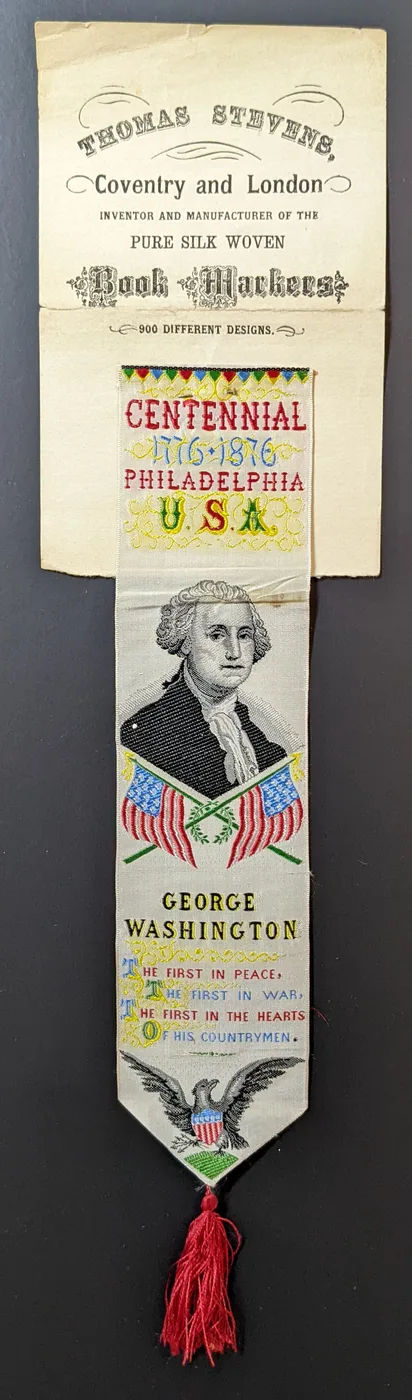
The American connection runs directly through this fair. Stevens produced a substantial series aimed at the American market around the Centennial, and they sold heavily to visitors wanting a souvenir that was decorative, patriotic and cheap all at once. The Washington and eagle bookmarks are the type most often met today.
How Do You Judge Condition on Woven Silk?
Not the way you judge a medal, and this is where money is won and lost.
There are no high points to wear. What degrades a silk ribbon is light, damp and handling, so you are looking at four things: fading of the dyes, especially the reds and blues; fraying or loss at the fringe and tassel; staining and foxing from damp or from the acid in old paper mounts; and breaks along fold lines where the piece was kept in a book for a century.
An original Thomas Stevens paper mount, where one survives, materially helps a piece. It confirms the maker and it usually means the ribbon spent its life flat and protected.
One practical consequence: almost none of this material is certified, so you are buying on photographs and a description rather than on a label. Ask the seller for an image shot in raking light across the surface rather than flat on. Raking light reveals fold breaks, thinning and old creasing that an evenly lit photograph hides completely, and those are the faults that decide what a ribbon is worth.
A Worked Example: Two Bookmarks, One Design
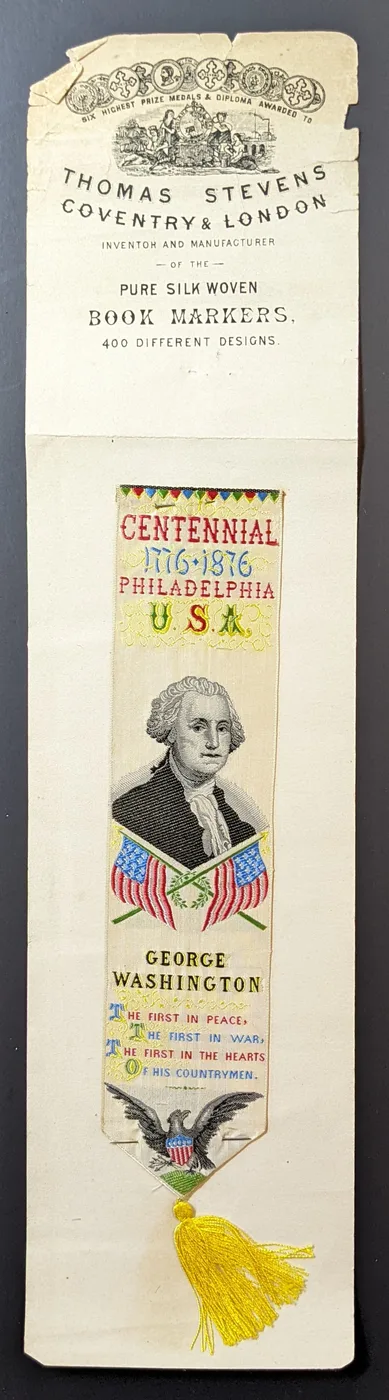
This catalog handled two examples of the Washington and eagle Centennial bookmark side by side. Same woven design, same maker, same year. One retained its yellow tassel; the other did not.
On a struck medal that difference would not exist, because a medal has no detachable parts. On silk it is most of the condition question. The tassel is the first thing to go, it cannot be replaced without the piece becoming a made-up object, and its presence tells you the ribbon was handled gently and stored flat.
So the ranking between the two was decided by something a coin grader has no vocabulary for. That is the practical lesson of collecting this fair: read the material before you read the grade.
What About the Struck Metal?
The Centennial produced medals in quantity, and a large share of them put George Washington on the obverse rather than any image of the fair.
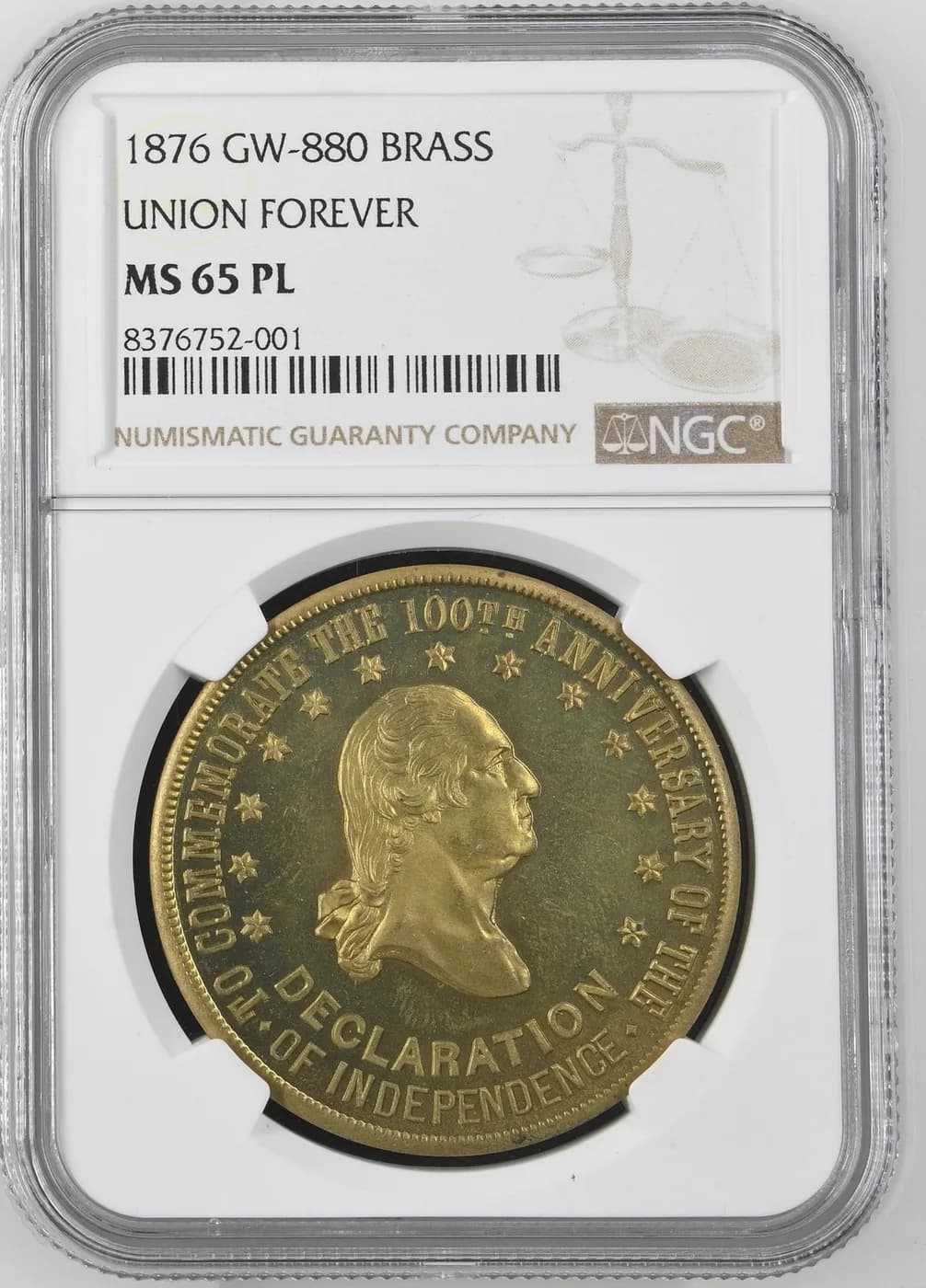
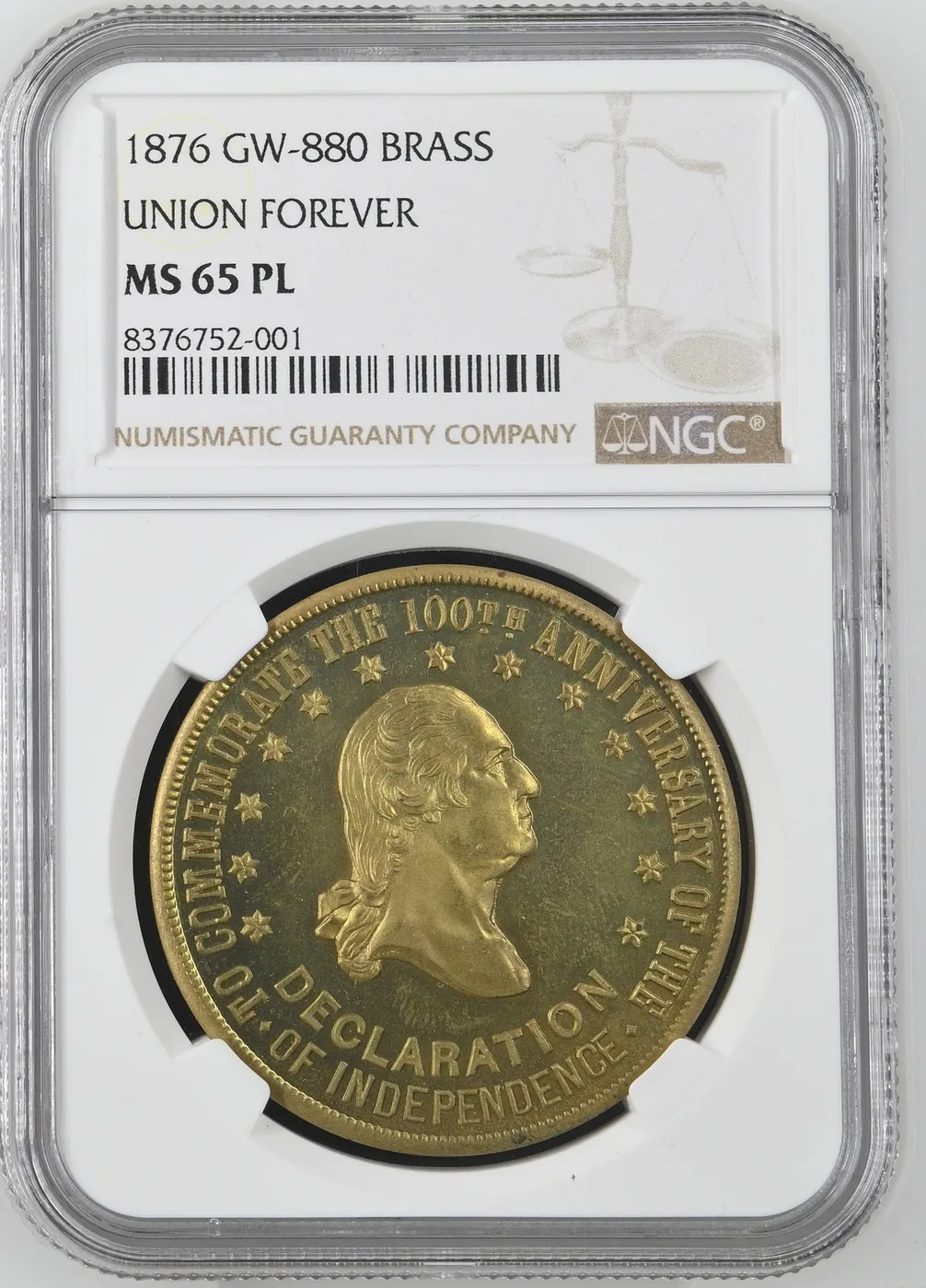
That can look strange until you remember what was being celebrated. The anniversary was of independence, not of Philadelphia, and Washington was the available emblem for it. Medals reading legends such as Union Forever belong to this impulse: patriotic rather than descriptive, sold to people marking a national birthday.
These pieces are collected today within the Washington medal series rather than within exposition medals, which is a distinction worth knowing before you go looking for comparables.
The Barbers, Father and Son, at Both Fairs
The official Centennial medals were the work of William Barber, fifth Chief Engraver of the United States Mint, who held the post from 1869 until his death in 1879. Two official designs were struck for the exposition, and both were his.
There is a neat and slightly unkind symmetry in what followed. When Barber died the post passed to his son, Charles E. Barber, who held it until 1917. And it was Charles who supplied the replacement reverse for the World's Columbian Exposition award medal, after Augustus Saint-Gaudens's own reverse was rejected on grounds of propriety.
So the two great American fairs of the century each carry a Barber. The father did the official work at Philadelphia unopposed. The son got the Chicago commission in circumstances the sculptor involved never forgave.
For a collector this is more than an anecdote. Official Mint medals from either fair are a different class of object from the souvenirs sold on the grounds: struck by the Mint, issued in defined designs, and documented in Mint records rather than reconstructed from surviving examples. Establishing whether a piece is official or private is the first question to settle, not the last, because the two do not price against each other.
Why Do Washington Medals Carry Two Different Numbers?
For the same reason Columbian material does: two references, written a long way apart, both still in use.
William S. Baker published Medallic Portraits of Washington in 1885 and numbered the series from his own collection. Those Baker numbers held for well over a century, through reprints and revisions by George Fuld and Russell Rulau, who kept Baker's arrangement and added letters for new pieces and for metal varieties. The result worked but grew awkward.
Neil Musante's Medallic Washington, published in 2016, renumbered the series chronologically with GW numbers and has become the current standard. A piece can therefore be quoted either way, and older holders and catalogs will often carry the Baker number while newer listings carry the GW.
As with HK and Eglit on the Columbian material, neither number is wrong. If you are comparing two sales, make sure you are comparing the same piece and not two numbering systems.
| Baker (with Rulau and Fuld) | GW (Musante) | |
|---|---|---|
| First published | 1885 | 2016 |
| Basis | Baker's own collection, expanded by later editors | A fresh chronological arrangement |
| Handling of new finds | Letters added around existing Baker numbers | Given their own sequential numbers |
| Where you meet it | Older catalogs and older holders | Current listings and the current standard reference |
What Came After: The Centennial Decade
The impulse did not stop when the gates closed in November 1876. The following years produced a run of anniversary pieces that collect naturally alongside the fair.
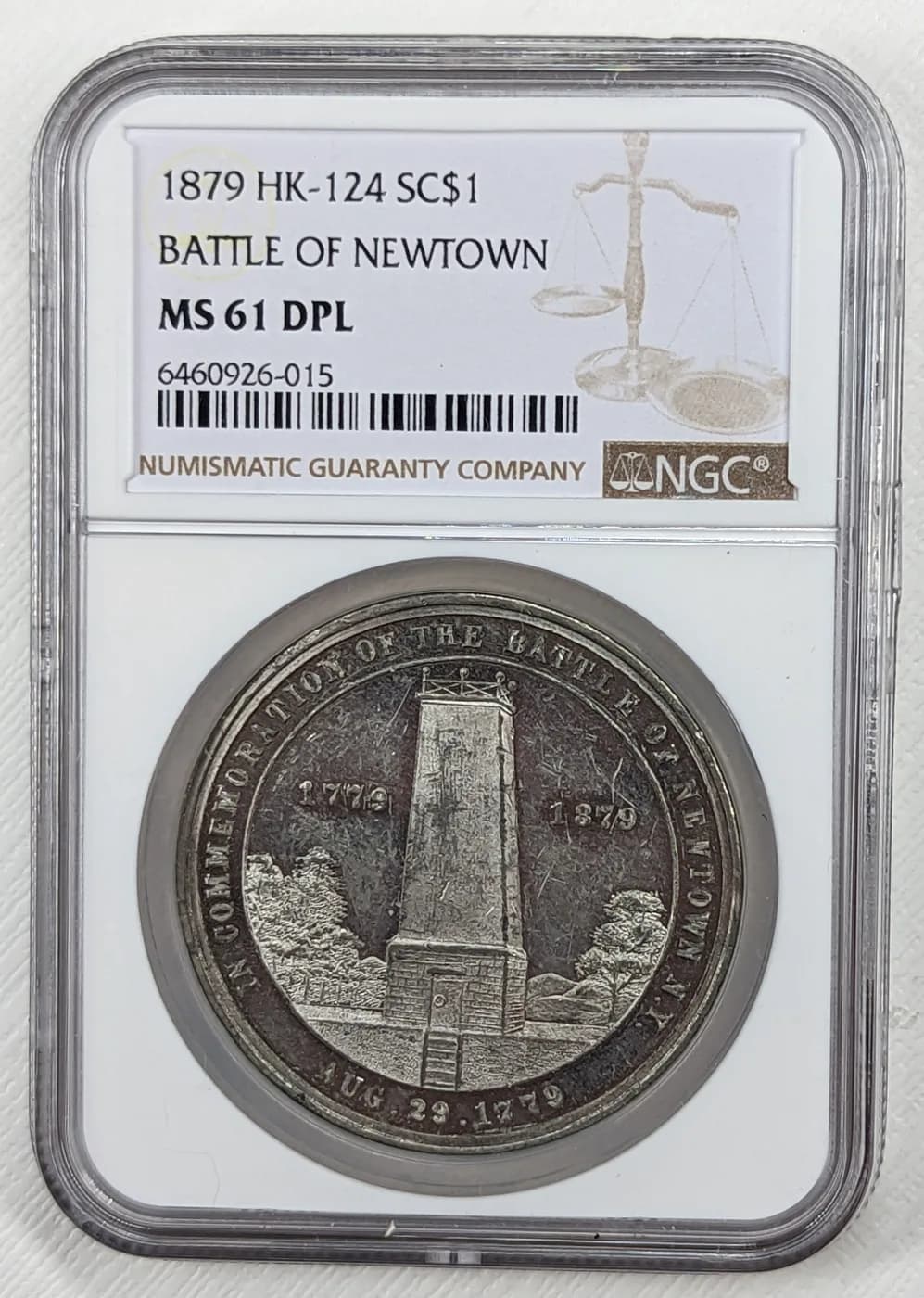
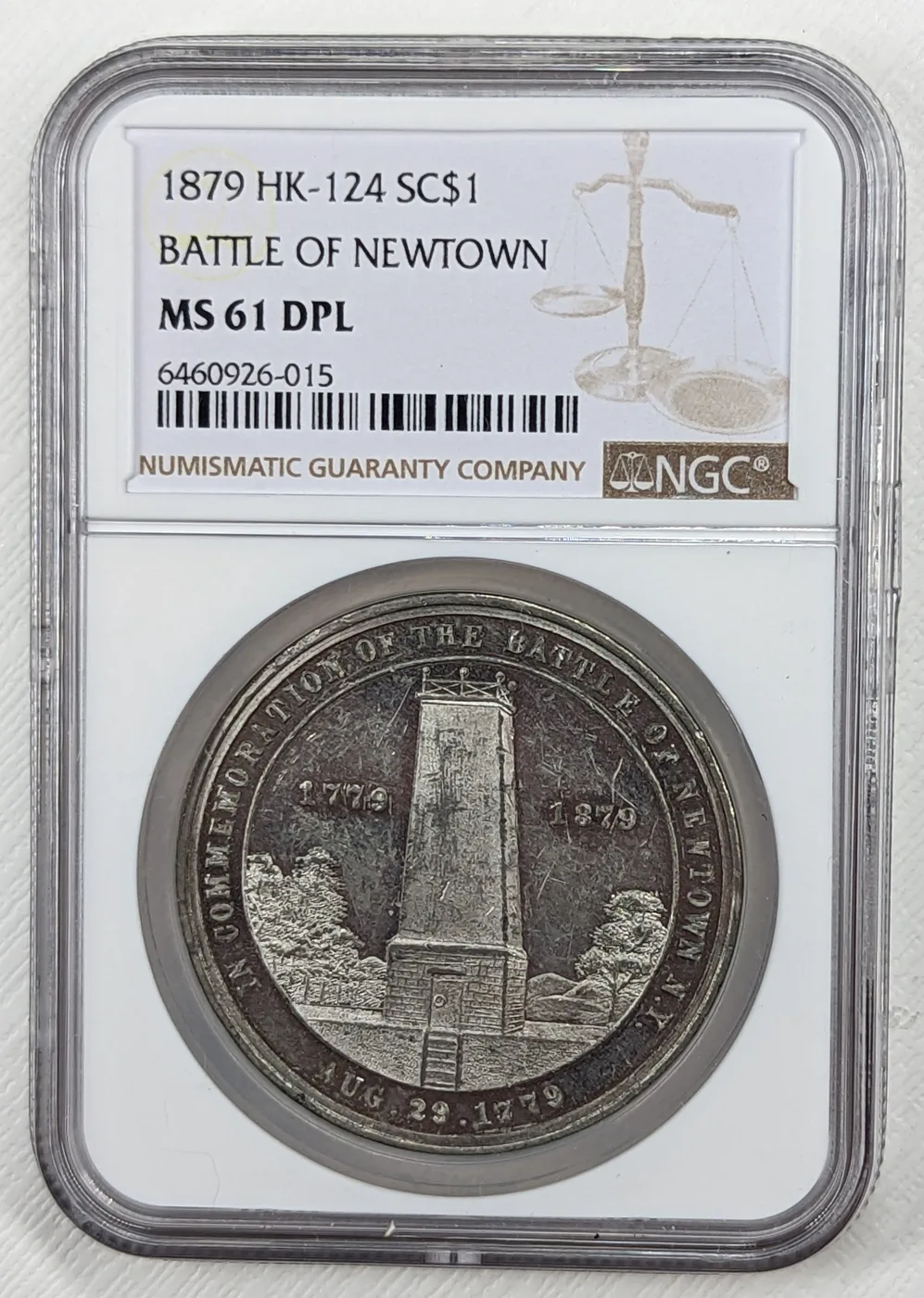
There were centennials of Revolutionary battles, struck as so-called dollars and carrying HK numbers: the Battle of Newtown medal of 1879 is one, and pieces like it are often genuinely scarce because they were made for local observances rather than national ones. There was a centennial of the Great Seal in 1882. There were regional expositions borrowing the format, such as the Industrial and Cotton Centennial Exposition of 1884 in New Orleans.
And in 1889 came the centennial of Washington's inauguration, which produced its own medals and ribbons, including work by George Lovett, one of the better American die sinkers of the period.
What Drives Price in This Material?
It splits by material, which is why a single answer misleads.
For the struck pieces the drivers are familiar: rarity rating where the piece carries one, surface quality including prooflike mirrors, grade, and metal. An R-6 so-called dollar from a small local centennial can outprice a far prettier piece from a famous fair simply because few were made and fewer survived.
For the silk the drivers are completeness and color retention. An intact fringe and tassel, unfaded dyes, no foxing, and ideally the original mount. Grade numbers barely enter into it, because almost none of this material is certified.
Across both, anything that ties a piece to a specific person, exhibit or presentation adds materially, in the same way an award medal outranks a souvenir.
How Does 1876 Compare With 1893?
The Centennial invented the American formula and the World's Columbian Exposition perfected it. Seventeen years apart, the difference in output is enormous.
Chicago produced so much struck material that two separate catalogs were eventually needed for it, and prooflike so-called dollars from that fair are common enough to be collected by variety. Philadelphia produced far less metal and rather more textile, so 1876 collections tend to be smaller, more mixed in format, and harder to complete.
If you are building across both, the Columbian material will teach you the numbering systems and the Centennial material will teach you patience. See the Columbian Exposition guide for how that fair is cataloged.
Where Should a Collector Start?
With one Stevengraph and one medal, bought at the same time, so the contrast is in front of you.
The bookmarks are the more affordable entry and the more fragile long-term holding, so buy the best-preserved example you can rather than the cheapest. On the metal side, a Washington piece with a clear GW or Baker number gives you a foothold in a well-documented series with real comparables behind it.
From there the natural expansion is chronological rather than thematic: follow the centennial impulse forward through 1879, 1882, 1884 and 1889, and the collection ends up telling the story of how a country marked its own hundredth birthday over more than a decade.
Frequently asked questions
Was the 1876 Centennial the first world's fair?
Not the first anywhere. That distinction belongs to London's Great Exhibition of 1851. But it was the first official world's fair held in the United States, and it set the template that Chicago in 1893 and later American expositions followed.
What exactly is a Stevengraph?
A picture woven in silk on a Jacquard loom, rather than printed. The name comes from Thomas Stevens of Coventry, England, who produced his first multicolored bookmarks in 1862 and registered more than nine hundred designs. A substantial American series was made around the 1876 Centennial.
How should I store a silk Centennial ribbon?
Flat, out of direct light, away from damp, and not in contact with untreated paper or card. Light fades the dyes permanently and acidic mounts stain the silk. If a piece came on an original Thomas Stevens paper mount, keep them together but consider an inert barrier between them.
What is the difference between a Baker number and a GW number?
They catalog the same Washington medal series. Baker numbers come from William S. Baker's Medallic Portraits of Washington of 1885, later revised by George Fuld and Russell Rulau. GW numbers come from Neil Musante's Medallic Washington of 2016, which renumbered the series chronologically and is now the standard. Older holders often carry the Baker number.
Why is George Washington on so many 1876 souvenirs rather than images of the fair?
Because the anniversary being marked was one hundred years of independence, not the exhibition itself. Washington was the ready emblem for that, so patriotic legends and his portrait appear far more often than views of the Philadelphia buildings.
Are Centennial so-called dollars from later local anniversaries collectible in the same way?
Yes, and often they are scarcer. Pieces struck for local Revolutionary centennials in the years after 1876 were made in small numbers for regional observances. The 1879 Battle of Newtown medal, rated R-6, is a good example of how a minor occasion can produce a genuinely rare piece.
Pieces from the collection
Examples handled here, cataloged with photographs and, where the piece was certified, its grading label. Sold pieces stay listed as a reference record.
 Sold
SoldEphemera · 1876
1876 Philadelphia Centennial George Washington Eagle Stevengraph Bookmark Ribbon Yellow Tassel
Sold
 Sold
SoldMedals · 1876
Scarce 1876 GW-880 Union Forever Washington Medal NGC MS65 PL Proof Like
$599
 Sold
SoldEphemera · 1876
1876 Philadelphia Centennial George Washington Eagle Stevengraph Bookmark Ribbon 2
Sold
 Sold
SoldMedals · 1879
1879 Battle of Newtown HK 124 NGC MS61 DPL Centennial Medal Deep Proof Like R6
Sold
More guides
Have one of these?
We buy outright, and we will value a piece for you whether or not you sell. Photographs and whatever paperwork you have are enough to start.