
Exposition Medals
1901 Pan-American Exposition Collectibles: The Fair Where a President Was Shot
10 min read
The Pan-American Exposition opened in Buffalo in May 1901 as a celebration of electricity and hemispheric trade. On 6 September, William McKinley was shot at the fair's Temple of Music; he died eight days later, and Theodore Roosevelt was sworn in as president in a Buffalo house. Every souvenir struck for that exposition was therefore made for one event and is now collected for another. It is the only American world's fair whose material carries that particular double meaning.
What Was the Pan-American Exposition?
A world's fair staged in Buffalo, New York, from May to November 1901, built around two themes: commercial union across the Americas, and electricity.
The electricity theme was not decorative. Buffalo had access to power generated at Niagara Falls, and the exposition used it spectacularly, the Electric Tower and the outlining of buildings in thousands of bulbs made the fair a demonstration that electric light had arrived as public infrastructure rather than a novelty.
Buffalo at the time was one of the largest and wealthiest cities in the United States, which is easy to forget now and is essential context for why the fair was there at all.
It was a substantial exposition with a substantial souvenir trade, and it would be remembered as a moderately successful regional fair had nothing else happened.
What Happened to McKinley?
On 6 September 1901, President William McKinley was greeting the public at the exposition's Temple of Music when Leon Czolgosz, an anarchist, shot him twice at close range with a revolver concealed under a handkerchief.
McKinley initially appeared to be recovering. Gangrene set in around the wounds, and he died in Buffalo in the early hours of 14 September.
Theodore Roosevelt was sworn in as president that same day, at the Wilcox House in Buffalo, having rushed back from the Adirondacks. He was forty-two, and remains the youngest person ever to hold the office.
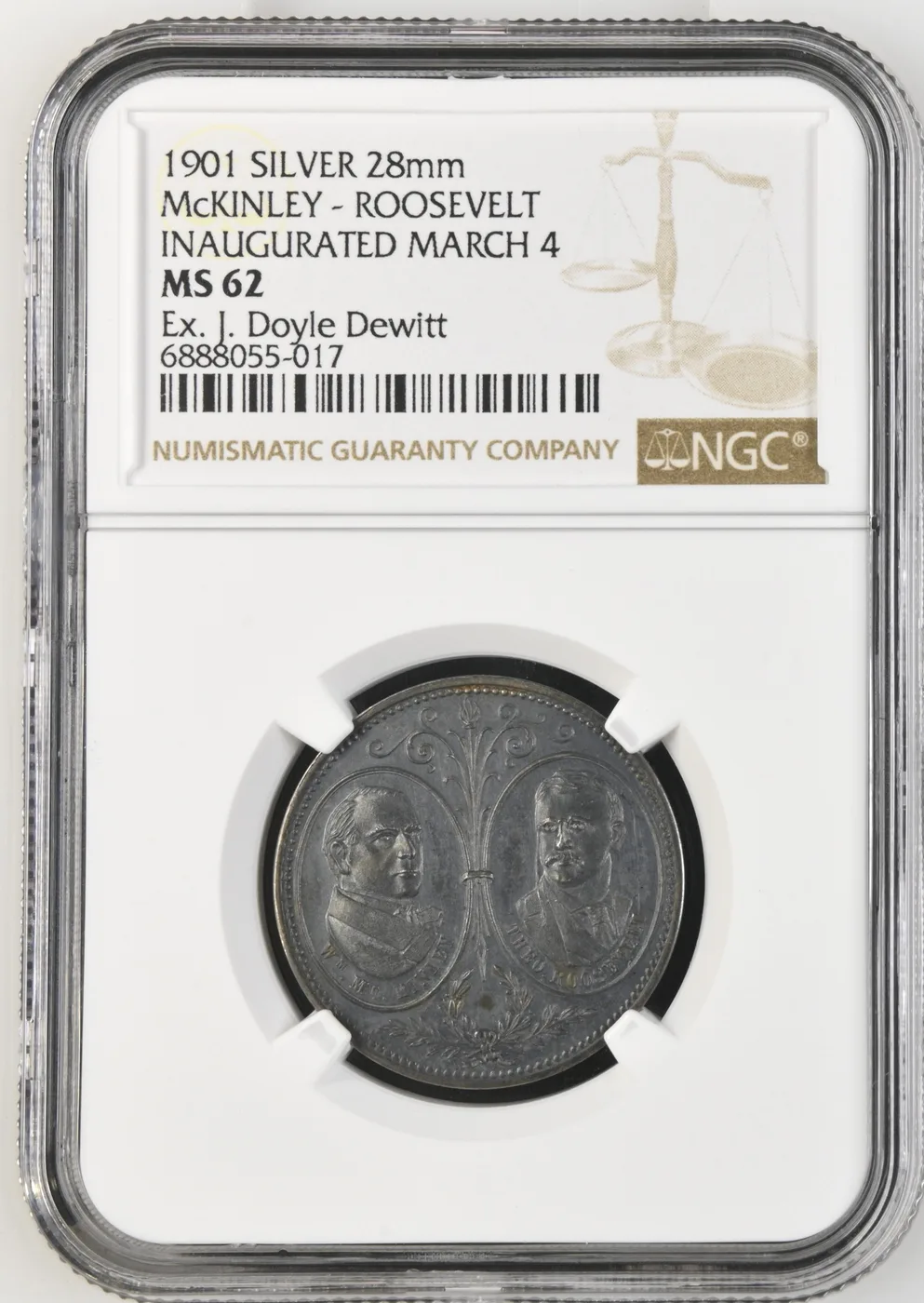
Our archive holds the 1901 Roosevelt–McKinley inaugural medal in silver at NGC MS62, struck for the March 1901 inauguration of the pair, six months before Buffalo. It shows the ticket as it was elected, and is now read entirely through what happened afterwards.
How Did the Assassination Change the Material?
It divided the exposition's output into before and after, and collectors read the two differently.
Pre-September material was made in the ordinary spirit of a world's fair: buildings, the Electric Tower, the buffalo emblem, exhibitor advertising. None of it anticipates anything.
Post-September material includes mourning pieces, memorial issues and souvenirs that fold the assassination into the fair's identity. The market treats these as a distinct category.
The interesting consequence is that ordinary souvenirs acquired significance retroactively. A concessionaire's token struck in June 1901 to advertise a Buffalo shop is now an artefact of the last weeks of McKinley's presidency, without having been made to be anything of the kind.
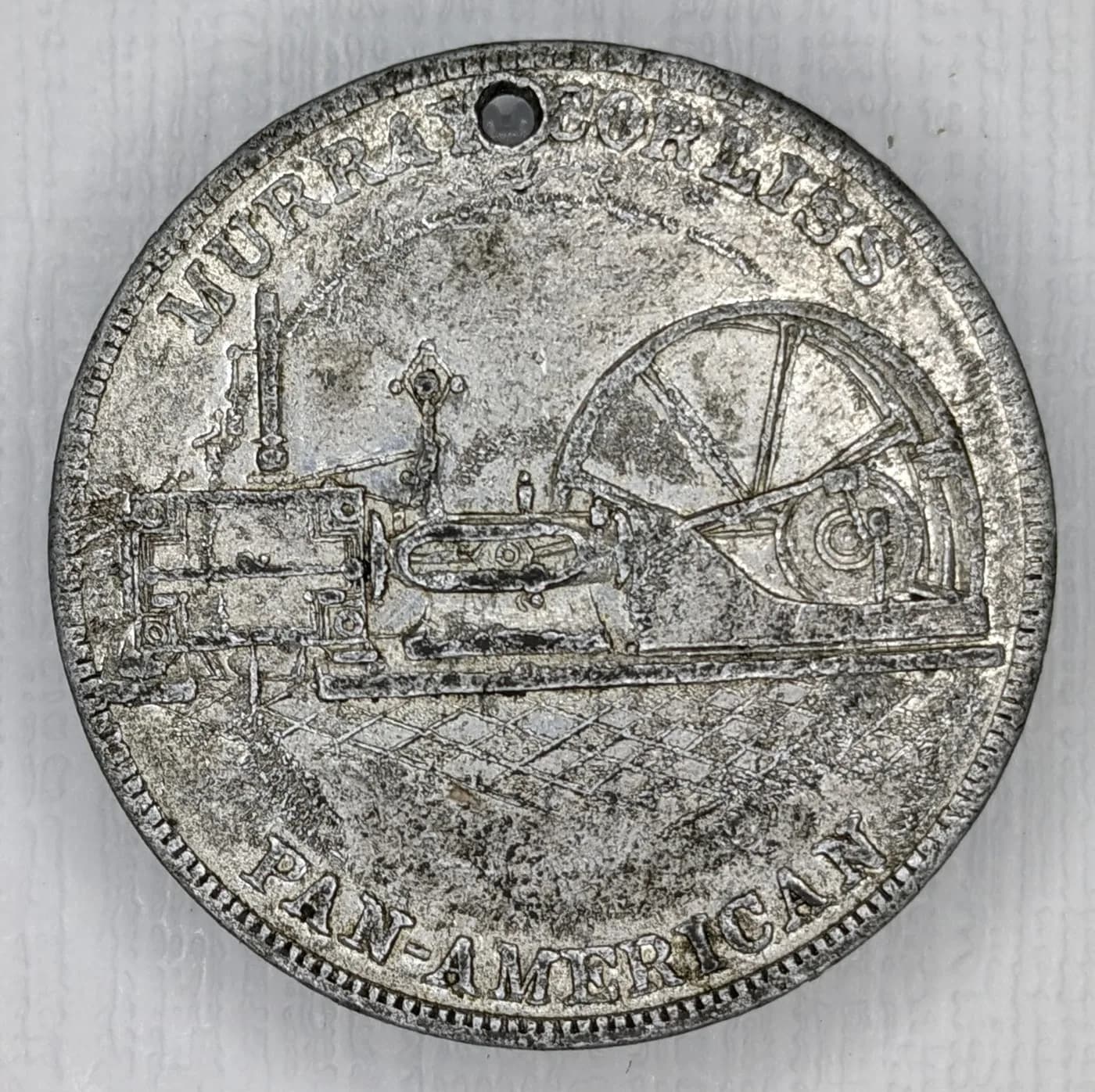
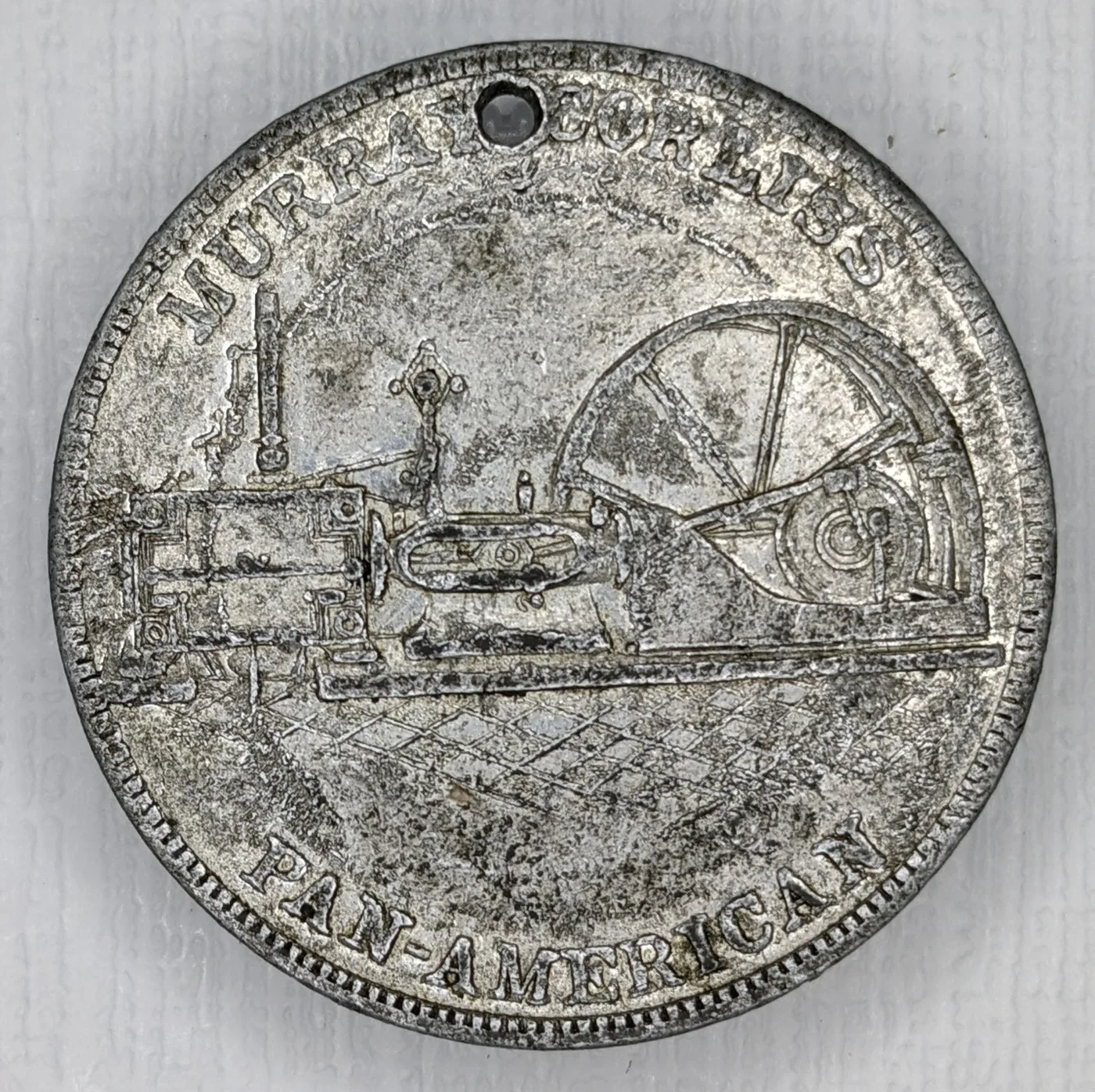
Our Kleinhans Co token and Murray Iron Works so-called dollar are both exhibitor pieces of exactly this kind, commercial advertising that history reclassified.
| Category | Example | Collector note |
|---|---|---|
| Official exposition issues | Award and commemorative medals | Controlled production, documented |
| Exhibitor / concessionaire tokens | Kleinhans Co, Murray Iron Works | Named businesses; local Buffalo interest |
| So-called dollars | Dollar-sized private souvenirs | Cataloged with HK numbers |
| Memorial and mourning pieces | Post-September 1901 issues | Separate market from celebratory material |
What Are Exhibitor Tokens and Why Collect Them?
An exhibitor token was struck by a business exhibiting at the fair, to advertise itself to visitors. They are the most underrated category of exposition material.
The appeal is specificity. A generic souvenir tells you a fair happened. An exhibitor token tells you that a particular named business paid for a stand, commissioned dies and handed metal to strangers, it is documentary evidence of commercial life at a fixed point in a specific city.
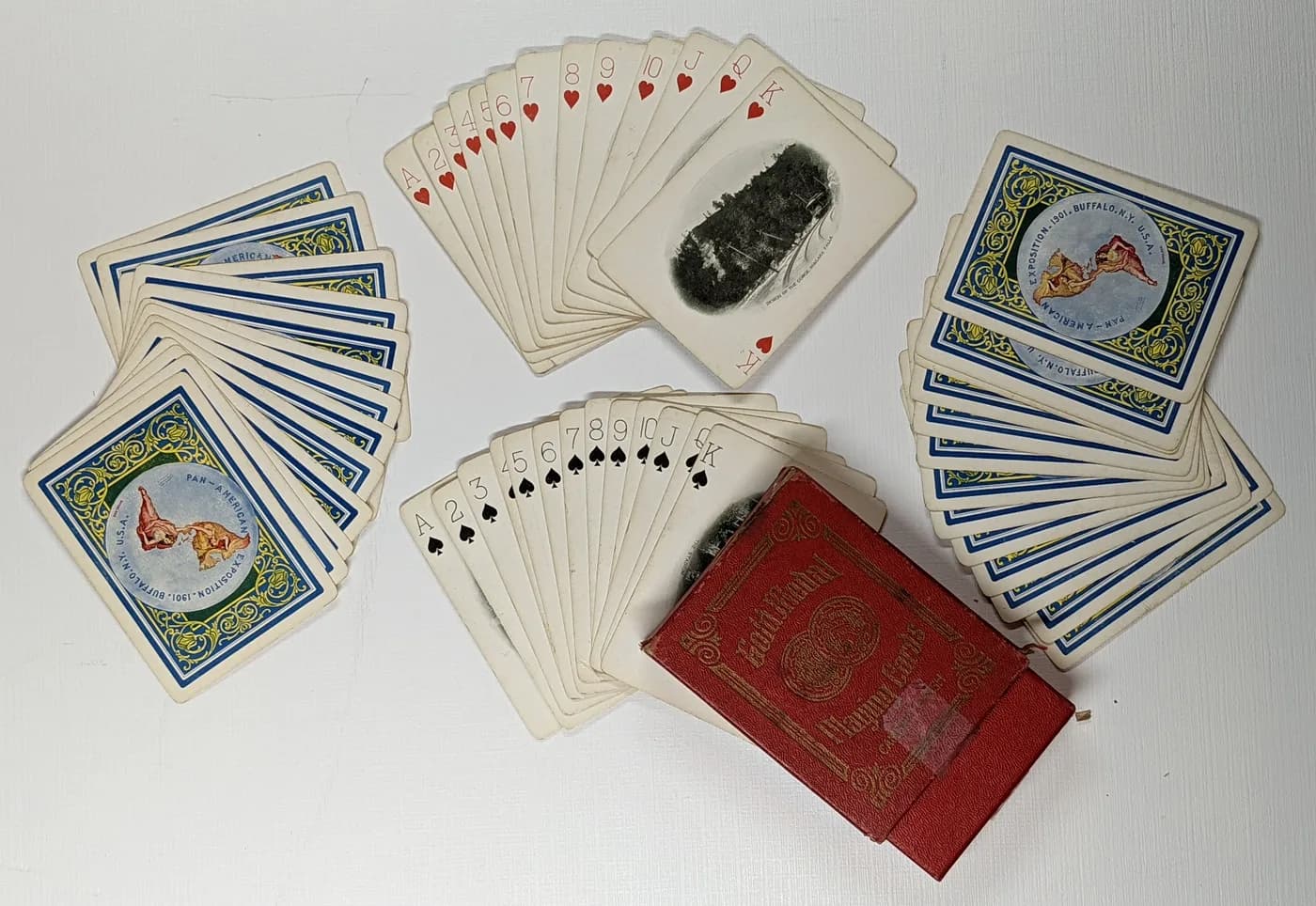
For Buffalo in 1901 that documentary quality is unusually strong, because the city's commercial peak and the fair coincided. Kleinhans was a Buffalo clothing business of substance; the family name survives on Kleinhans Music Hall, built in the 1930s and now a National Historic Landmark. Murray Iron Works was an industrial exhibitor of exactly the sort the fair existed to showcase.
These pieces also tend to be cheaper than official issues, because the collector base is smaller. That is an opportunity rather than a verdict on quality.
Can You Buy Top-Population Examples Affordably?
In this field, more easily than almost anywhere else in American numismatics, and it is worth understanding why.
Top pop means the highest grade recorded by a grading service for that piece, with no examples graded higher. On a Morgan dollar that status attracts fierce competition and prices to match, because thousands of collectors are chasing the same registry sets.
Exposition tokens have no comparable registry culture. The population reports are thin because few examples have ever been submitted, and the competition for the finest known is correspondingly light.
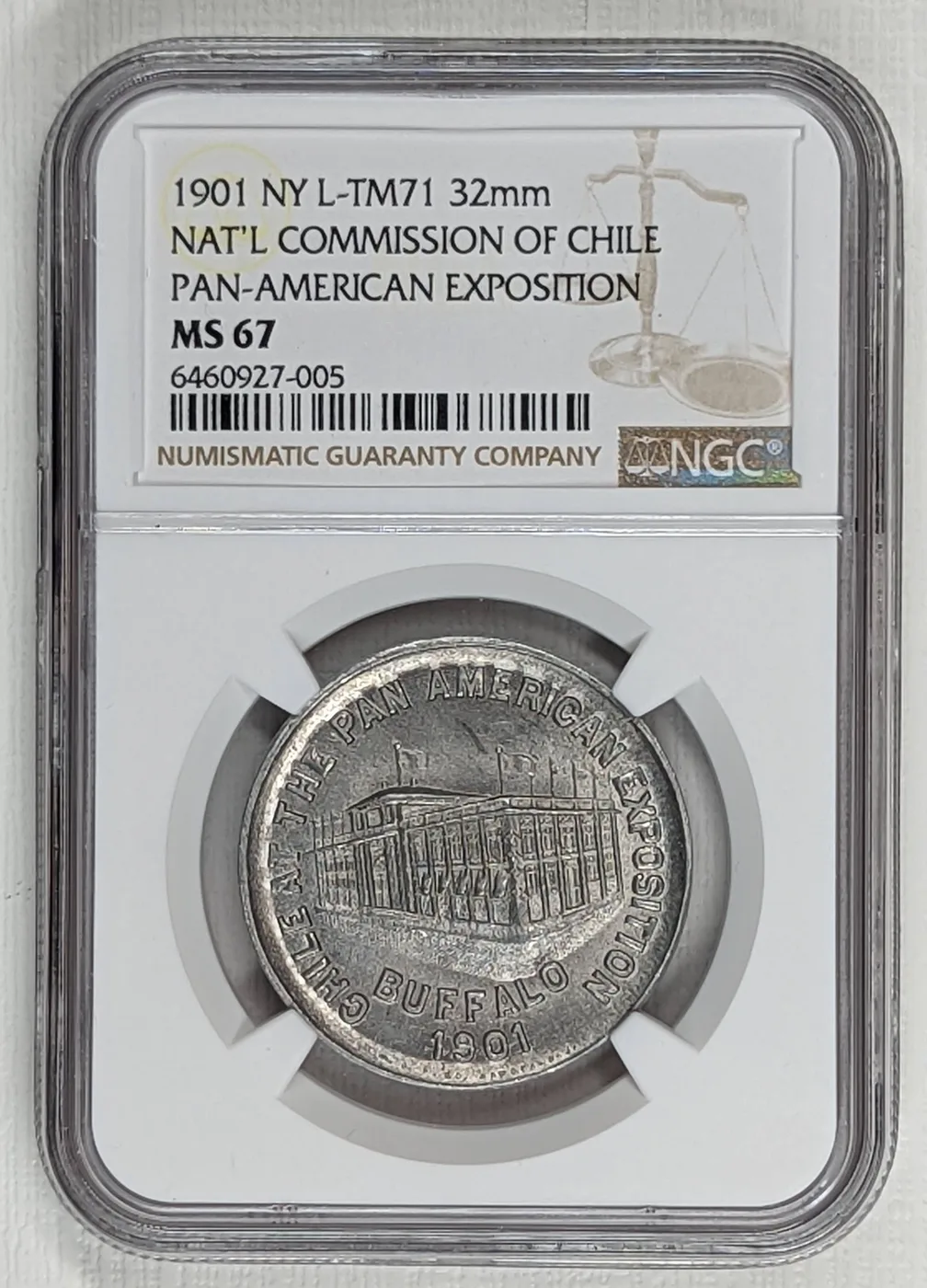
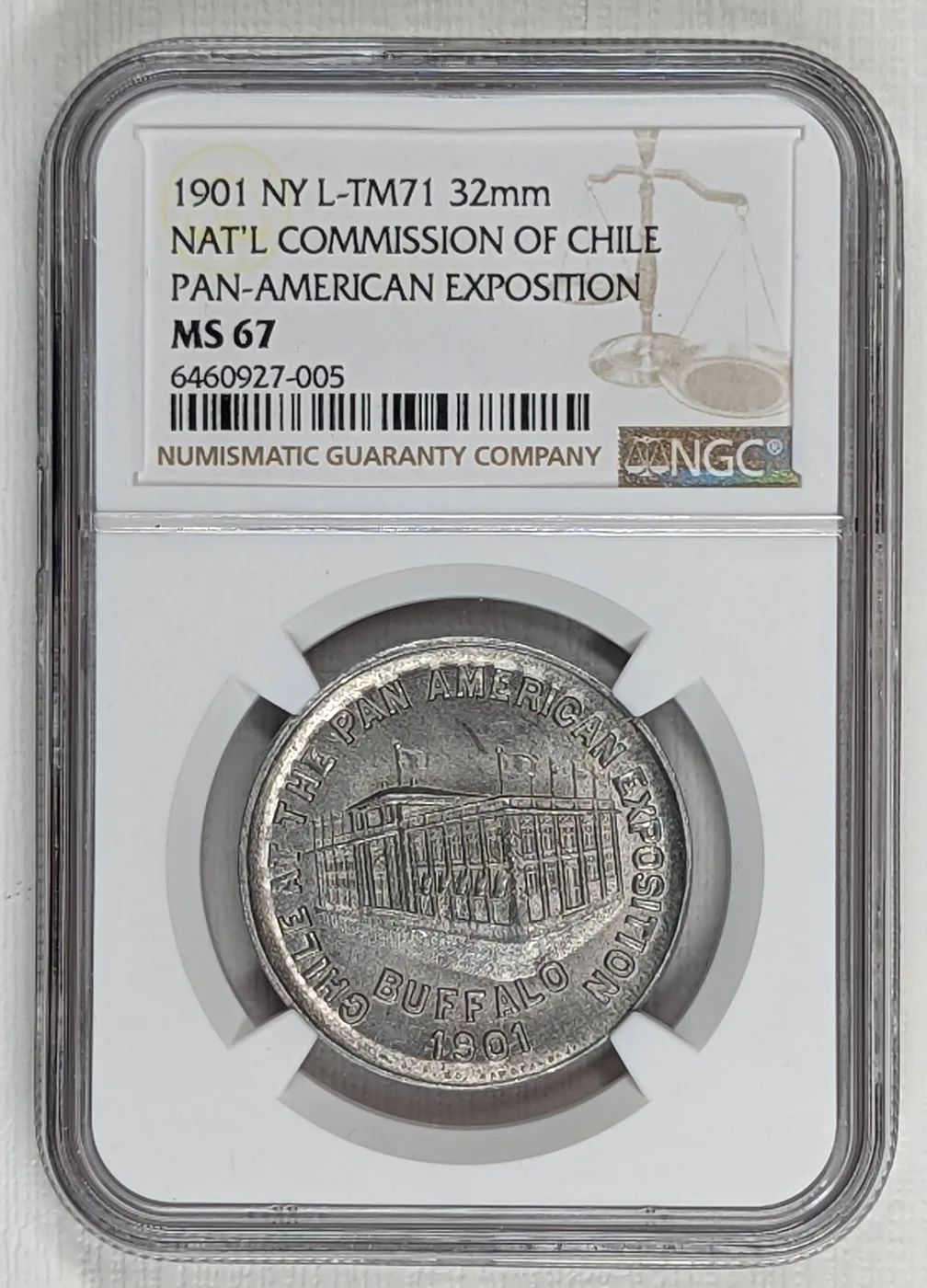
Our 1901 Pan-American Chile piece at NGC MS67, noted as top population illustrates the point: an MS67 grade and finest-certified status on a piece from a field where that combination remains attainable.
The caveat: thin populations cut both ways. Top pop on a piece with six graded examples is a weaker claim than top pop on one with six hundred, and a single new submission can displace it. Treat it as a description of the current record, not a permanent rank.
What Was the Fair Actually Like?
Loud, colorful and lit, which was the entire point of holding it where they did.
Buffalo's case for the exposition rested on electricity. Hydroelectric power from Niagara Falls, a short distance away, could be delivered to the site in quantities no earlier fair could match, and the organizers built the whole design around that fact. The centerpiece was the Electric Tower, outlined at night in thousands of bulbs, at a moment when most American homes had no electric light at all.
The buildings were not the white plaster of Chicago in 1893. Buffalo used a deliberate polychrome scheme, bright enough that the fair was nicknamed the Rainbow City, with an extensive sculptural program running through the courts and along the approaches.
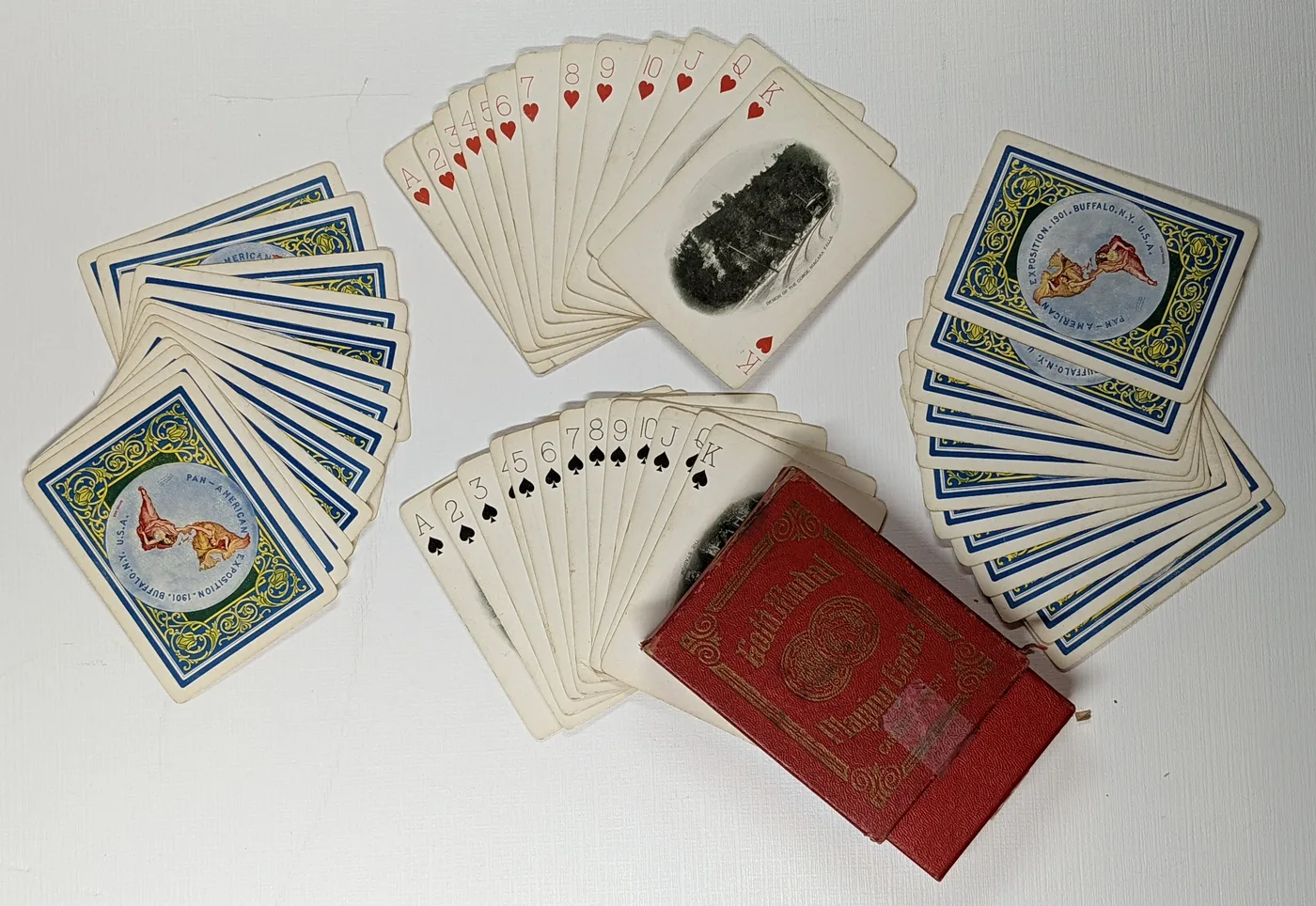
This matters for collecting because it shapes the imagery. The Electric Tower, the buffalo, and the fair's Pan-American theme of two continents joined appear again and again across medals, tokens and souvenirs. Recognizing the motifs is often the fastest way to attribute an unmarked piece, and to separate genuine 1901 material from the later Buffalo souvenirs that borrow the same animal.
How Does 1901 Compare With 1904 St. Louis?
St. Louis was much larger, and Buffalo is much more collectible per dollar.
The Louisiana Purchase Exposition ran for most of 1904 on a far bigger site, drew far more visitors, and generated a correspondingly larger body of medals, tokens and souvenirs. If you want variety and volume, St. Louis supplies both, and its official medals are readily available.
Buffalo's advantage is coherence. It ran a single season, cut short by the assassination, around a tight set of themes and a small geography. The material is therefore a defined body rather than an open-ended one, which makes a complete-looking collection achievable in a way that St. Louis rarely is.
There is also a narrative difference that shows up in prices. St. Louis material is exposition material. Buffalo material is exposition material attached to the death of a president and the arrival of the one who followed, and pieces that sit on that seam, such as the 1901 Roosevelt and McKinley inaugural medal in silver, carry a weight no St. Louis souvenir does.
How Do You Build This on a Budget?
Start with the exhibitor tokens, which are the cheapest genuinely interesting things the fair produced.
A collector with a modest budget can own several attributed, cataloged 1901 pieces for what one certified so-called dollar in high grade costs. Exhibitor tokens were struck in quantity by companies advertising at the fair, they survive in reasonable numbers, and they are frequently sold as unattributed junk by people who do not recognize what they are.
The second move is to accept mid grade on the scarcer types rather than high grade on the common ones. An About Uncirculated example of a difficult issue teaches you more, and holds value better, than a Mint State example of something that appears in every dealer's box.
The third is to buy the certified pieces last. Certification is worth paying for at the top of a collection, where the difference between grades is real money and the forgery risk is meaningful. Early on it mostly adds cost to objects whose value rests on being interesting rather than on being perfect.
How Does Buffalo Fit the Wider Exposition Series?
It sits between Chicago's overwhelming scale in 1893 and St Louis's popular success in 1904, and it is the smallest of the three by output.
That makes it a good field for a collector who wants a completable project. Where Columbian and Panama-Pacific material runs to hundreds of cataloged varieties, the Pan-American body of material is finite enough to know thoroughly.
It also has the strongest single narrative hook of any American fair. Every other exposition is collected for what it displayed; Buffalo is collected for what happened there, and for the fact that the transfer of the presidency to Theodore Roosevelt, the man who would define the next decade of American politics, took place a few miles from the fairground.
Broader context on the series, the HK numbering and the official-versus-private distinction is in collecting American world's fair medals and tokens.
It is also the fair that most rewards reading around the objects. The exposition ran for six months, ended in a national emergency, and left a city with a reputation it spent decades living down. Almost every piece in the series carries some part of that story, and the collectors who enjoy this material most are the ones who know which part.
Frequently asked questions
Where exactly was McKinley shot?
At the Temple of Music on the Pan-American Exposition grounds in Buffalo, on 6 September 1901, while greeting members of the public. He died on 14 September, and Theodore Roosevelt was sworn in as president in Buffalo the same day.
Does the assassination make all 1901 Buffalo material more valuable?
It raises interest across the board, but memorial and mourning pieces form their own market. Ordinary souvenirs struck before September gained significance retroactively without having been made to commemorate anything of the kind.
What is an exhibitor token?
A token struck by a business exhibiting at the fair to advertise itself to visitors. Unlike generic souvenirs they name a specific company, which makes them documentary evidence of commercial life in that city at that moment.
What does top pop mean and how much should it matter?
It means no example has been graded higher by that service. In a thinly submitted field it is a weaker claim than in a heavily collected one, and a single new submission can displace it. Treat it as the current record rather than a permanent rank.
Why was the Pan-American Exposition held in Buffalo?
Because Buffalo was then one of the largest and wealthiest cities in the United States, and it had access to hydroelectric power from Niagara Falls, which made the fair's electricity theme a practical demonstration rather than an aspiration.
Is Pan-American material a good project for a new collector?
Yes, particularly for someone who wants a finite field. Its output is far smaller than Chicago 1893 or Panama-Pacific 1915, which makes thorough knowledge achievable, and its central narrative is the strongest of any American fair.
Pieces from the collection
Examples handled here, cataloged with photographs and, where the piece was certified, its grading label. Sold pieces stay listed as a reference record.
 Sold
SoldMedals · 1901
1901 Pan American Expo NGC MS67 Chile L Tm71 Top Pop Buffalo World's Fair Rare
Sold
 Sold
SoldMedals · 1901
1901 Pan American Exposition Buffalo Murray Iron Works So Called Dollar
Sold
 Sold
SoldTokens · 1901
1901 Pan American Expo NGC Kleinhans Co L Tm85 Buffalo World's Fair Token
Sold
 Sold
SoldMedals · 1901
Rare Silver 1901 Roosevelt McKinley NGC MS62 Inaugural Medal March 4 1901
$1,095
More guides
Have one of these?
We buy outright, and we will value a piece for you whether or not you sell. Photographs and whatever paperwork you have are enough to start.